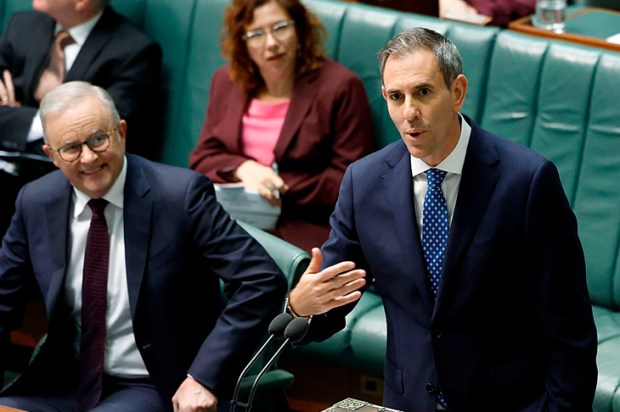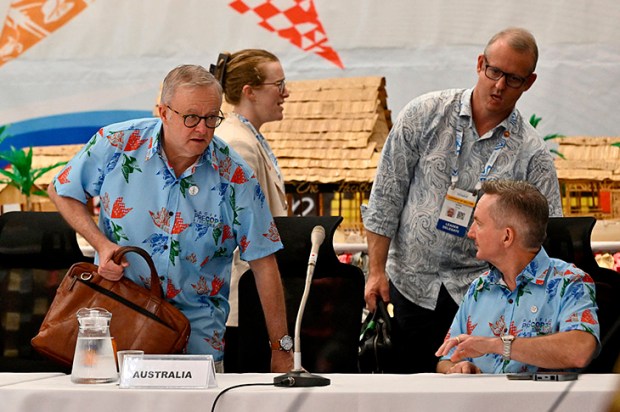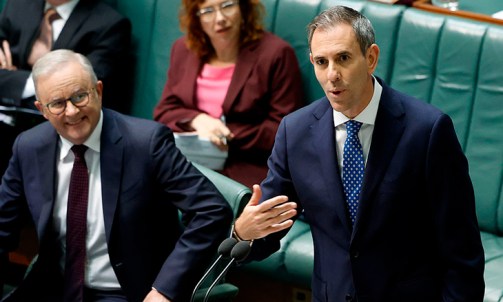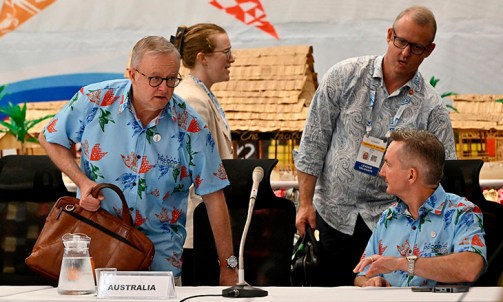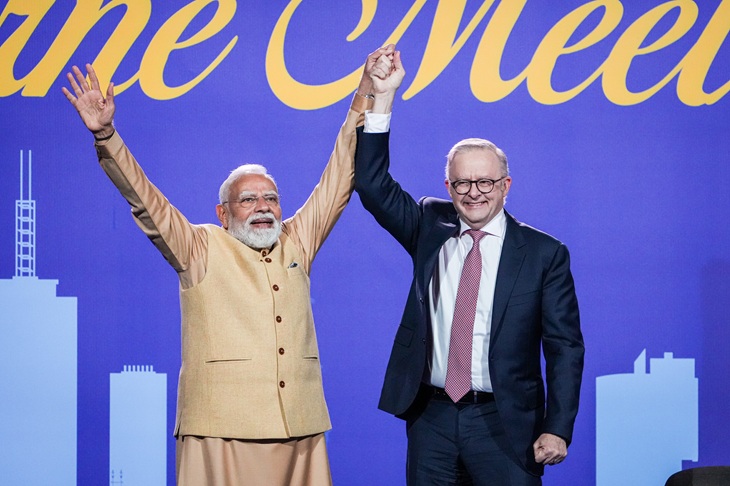
This week in Melbourne, Prime Ministers Anthony Albanese and Narendra Modi signed the agreement that opens the door to Australian uranium exports to India.
It is great news for our uranium miners.
Every export contract supports jobs, investment and regional communities. Australia should be a trusted supplier of uranium to India and to other countries seeking reliable, low-emissions energy.
But the agreement exposes three serious problems with Australia’s current position on uranium.
The first is that we want to become a larger exporter while continuing to ban uranium mining across large parts of the country.
Most of Australia’s uranium remains locked in the ground by state law. Western Australia has refused to approve a new uranium mine since 2017, despite sitting on roughly 226,000 tonnes of known resources and four projects that already hold ministerial approval. Queensland has banned uranium mining since 2015; New South Wales allows exploration but prohibits mining, while Victoria prohibits both.
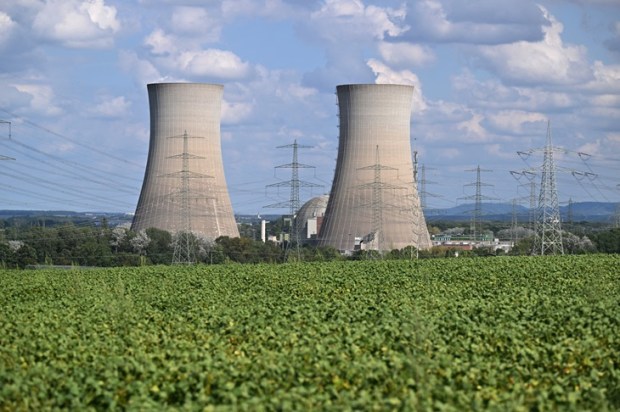
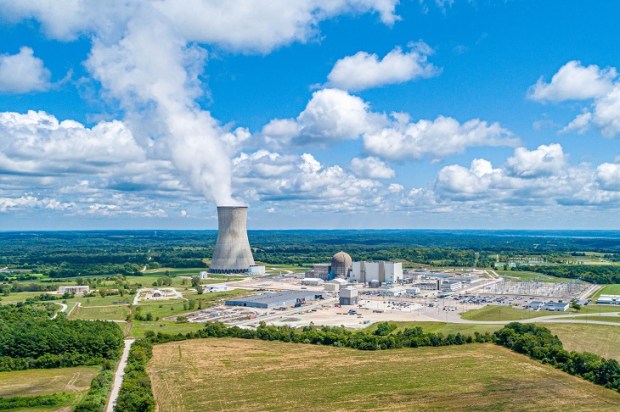
We hold close to a third of the world’s known uranium resources, yet operate only four active mines, all in South Australia.
In 2024, Australia produced about 4,600 tonnes of uranium – less than 8 per cent of global supply – compared with more than 23,000 tonnes from Kazakhstan and 14,300 tonnes from Canada.
India’s Central Electricity Authority projects that its 100-gigawatt nuclear target will require around 9,000 tonnes of uranium a year by 2047 – double Australia’s entire current output. Our output is already committed under long-term contracts to the United States, Japan, South Korea, and Europe, while global uranium demand is forecast to nearly double by 2040. Lifting the Western Australian ban alone could generate more than $1 billion a year in exports and up to 9,000 jobs.
Without new mines, the India agreement is just a press release. Canberra cannot boost uranium exports while state governments keep the deposits closed. Something has to give.
The second problem is that Australia captures only the first and least valuable part of the nuclear fuel cycle.
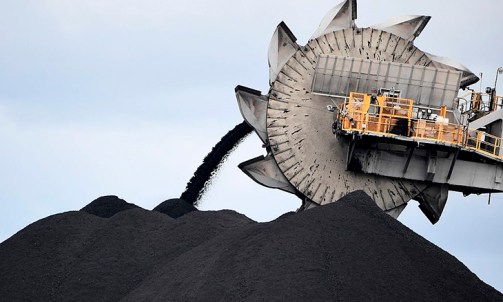
We mine uranium, process it into yellowcake and place it on a ship. This is where Australia’s involvement largely ends. We sell it at the globally traded price of US$70-80 a pound. Our entire uranium export industry is worth about $1.6 billion a year. But the real value lies beyond the mine, in conversion, enrichment and fuel fabrication – enrichment alone accounts for almost half the cost of nuclear fuel.
Around these activities grows an entire industrial ecosystem: advanced manufacturing, precision engineering, specialist construction, digital systems, software, research institutions, universities, and highly skilled workforces. These are the industries that create intellectual property, sophisticated exports, long-term contracts and globally competitive companies.
One example is Orano, France’s nuclear fuel-cycle champion, which generated about $9 billion in revenue last year, employing around 18,500 people and holding an order book above $50 billion – one French company earning several times Australia’s entire uranium export income from the stages we skip. Ironically, Australia invented one of the world’s most advanced enrichment technologies, SILEX, the laser enrichment process developed at Lucas Heights in Sydney, licensed to an American venture because there is nothing it is permitted to do at home.
And the world urgently needs that capacity. Russia still controls more than 40 per cent of global uranium enrichment; the United States has banned Russian uranium from 2028 and in January committed US$2.7 billion more to rebuild its own enrichment industry. Our closest allies are looking for trusted, non-Russian nuclear fuel – a strategic vacuum that Australia, stable, safeguarded and resource-rich, is uniquely placed to help fill, and has chosen not to. Harvard’s Atlas of Economic Complexity ranks Australia near the bottom of the OECD for export sophistication for precisely this reason: we ship raw commodities and buy back the high-value products made from them.
Australia continues to capture only the value of the mine. While our government speak constantly about adding value to our critical minerals, our uranium policy is specifically designed to prevent us from adding value to uranium. Commonwealth law prohibits the approval of uranium enrichment, nuclear fuel fabrication, reprocessing and civil nuclear power plants.
The third problem is the hardest one to reconcile.
We are happy to fuel everyone’s nuclear future except our own. India understands what Australia still refuses to acknowledge: nuclear energy is industrial policy. Its 100-gigawatt program, backed by a ₹20,000 crore small modular reactor fund and new legislation opening the sector to private capital, will create demand for engineers, manufacturers, researchers and universities, and deliver reliable power for the industries of this century, from artificial intelligence to defence. Every tonne of Australian uranium will help build that capability, that independence and those jobs. In India.
Meanwhile at home, a federal prohibition dating from the late 1990s makes it illegal even to consider nuclear power. Australian households pay around 30 cents per kilowatt-hour, among the highest prices in the developed world, while energy-intensive manufacturers relocate in search of cheaper, more reliable power. We have an experienced regulator in ARPANSA, growing nuclear expertise through Aukus and one of the world’s most stable investment environments.
Ultimately, this is about what kind of country Australia wants to be, and whether our laws still reflect our national and economic interests.
We can choose to remain a quarry, exporting the raw material that allows other nations to build prosperous economies, or we can decide that our natural advantages should become the foundation for building that prosperity here. The nuclear economy offers Australia the chance not simply to dig wealth out of the ground, but to create it. The question is whether we are prepared to participate.
Sources
1. Australia–India civil nuclear cooperation arrangement, signed by Prime Ministers Albanese and Modi, Melbourne, 9 July 2026.
2. Government of Western Australia, Department of Mines, Petroleum and Exploration: “no uranium” condition on mining leases since 2017; four projects retaining State ministerial approval (Mulga Rock, Wiluna, Kintyre, Yeelirrie). WA resource estimate of ~226,000 tonnes: WA Parliamentary Opposition, media releases 9 June and 10 July 2026.
3. Queensland uranium mining ban reinstated 2015; Nuclear Activities (Prohibitions) Act 1983 (Vic); NSW Uranium Mining and Nuclear Facilities (Prohibitions) Repeal Bill, passed Legislative Council May 2026 (Australian Mining Review, 7 May 2026).
4. 2025 production: Australia ~4,500 t U, Kazakhstan ~24,900 t, Canada ~15,000 t (GlobalData / Mining Technology, June 2026). Geoscience Australia, Australia’s Energy Commodity Resources 2025 (4,686 tU in 2023; fourth-largest producer). Resource share ~28–33% of world recoverable uranium: World Nuclear Association / Geoscience Australia.
5. Central Electricity Authority (India), roadmap to 100 GW nuclear capacity by 2047: projected PHWR uranium demand of 8,029 t/yr plus 1,045 t/yr of enriched uranium (reported October 2025). India currently consumes ~1,884 t/yr and imports about 70 per cent of requirements.
6. World Nuclear Association, The Nuclear Fuel Report: uranium demand forecast to roughly double by 2040, driven by reactor construction and the COP28 pledge by more than 30 countries to triple nuclear capacity by 2050.
7. Industry estimates cited by the WA Parliamentary Opposition, June 2026: more than $1 billion in annual exports and up to 9,000 jobs over the life of approved projects.
8. IBISWorld, Uranium Mining in Australia, 2025–26: industry revenue ~A$1.6 billion. Uranium spot price ranged approximately US$69–80/lb over the past year (Mining Technology / TradingEconomics).
9. World Nuclear Association, Uranium Enrichment: “Enrichment accounts for almost half of the cost of nuclear fuel.”
10. Orano FY2024 results: revenue €5.87 billion (~A$9–9.7 billion); ~17,500 employees; order backlog €32.4 billion (~A$53 billion). Check against Orano’s FY2025 release before filing.
11. Silex Systems Ltd (ASX: SLX): SILEX laser enrichment technology developed at ANSTO Lucas Heights, exclusively licensed to Global Laser Enrichment (US), backed by Cameco.
12. Rosatom holds ~40–44% of global uranium enrichment capacity (World Nuclear Association data); Prohibiting Russian Uranium Imports Act 2024 (US), full ban from 2028; US Department of Energy, January 2026: US$2.7 billion for domestic enrichment expansion (contracts to American Centrifuge Operating, General Matter, Orano Federal Services).
13. Harvard Growth Lab, Atlas of Economic Complexity: Australia ranks near the bottom of the OECD for economic complexity.
14. Government of India, Union Budget 2025–26: Nuclear Energy Mission, ₹20,000 crore for small modular reactors, five indigenous SMRs by 2033; SHANTI Act 2025 opening the sector to private participation.
15. Environment Protection and Biodiversity Conservation Act 1999 (Cth) s.140A; Australian Radiation Protection and Nuclear Safety Act 1998 (Cth) s.10.
16. Australian Energy Regulator / ABS household electricity price data.