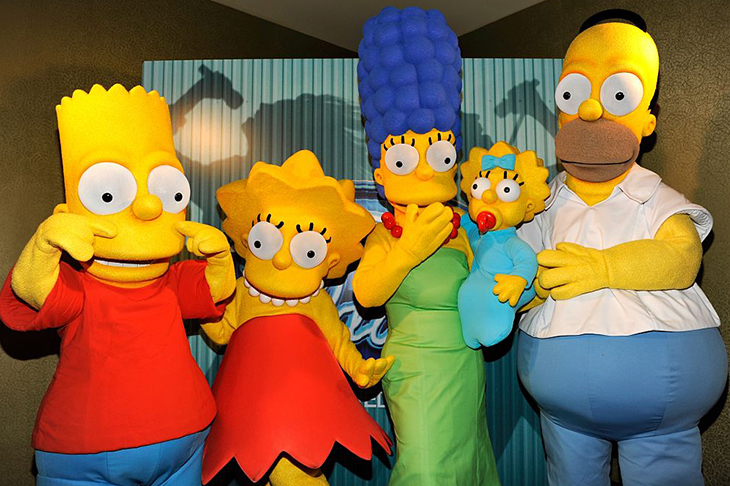
I once heard a clever quote that The Simpsons had run out of content because it had successfully deconstructed its source material. The 1990s norm – nuclear families in two-storey houses – is today a fantasy. Looking at the shelves of a bookshop or library implies a similar problem. Where are the literary giants of today – or even yesterday? They are conspicuous in their absence. Fewer people today read, certainly; most consume video content as they consume sugary treats. Leisure is largely passive for great swathes of society. But much of the blame lies with elite approaches to literature and art, an approach replete with suspicion and contempt. We study such things, particularly older and classical forms, the way a coroner approaches an infectious corpse.
I found myself confronted with this problem while briefly teaching English at a difficult secondary school. Students were reading Scar Town, a young adult novel set in Australia. The book was typical of the type tailor-made for English classes; full of organs ripe for dissection. Absent entirely from student work were questions they might find interesting. Instead, they wrote endlessly on ‘audience positioning’, author intent, and why chapters were left on cliffhangers. You could hardly but regard the author, who presumably simply enjoys writing books for young people, as a scoundrel for shamelessly manipulating his readers.
Apart from the obvious reasons – this is how universities treat English literature, a legacy of French deconstructionists – one intention was to prevent the students from being ‘propagandised’ in the future. They would be taught to ruthlessly pluck out the heart of any mystery. Unmediated encounters with the heroic or the sublime might tempt readers to draw comparisons to our own mediocre time and draw incorrect conclusions. Thus, we were proofing them against the stirring of the soul for vaguely metapolitical reasons. In this, they have already been thoroughly propagandised.
Such problems plague the approach taken by many English curricula. The reading of literature, once considered a consolation of civilisation, has been turned into an exercise with mechanical and measurable outputs. We deconstruct rather than encounter books; we look for author intent, audience manipulation, techniques and strategy, and ideological positioning. This lends itself well to the rubric-based assessment now in vogue everywhere; did the student examine the author’s purpose? Instead of asking ‘what happened?’ students are encouraged to autopsy rather than enjoy a book, examining the author’s approach as though he were responsible for a murder.
The temptation here is obvious. Mass bureaucratic systems like measurable outcomes, and a template that can be applied to any work of fiction is too powerful to resist. That this leads to mundanity and cynicism does not appear to be relevant. Any book can be taken apart to examine themes, techniques, effects; to dwell within great literature and risk inward formation is more difficult. Students thus anatomise literature rather than feel it. C.S. Lewis wrote about this in The Abolition of Man:
When the man said, ‘This is sublime’, he appeared to be making a remark about the waterfall… Actually… he was not making a remark about the waterfall, but a remark about his own feelings.
Students taught this way conclude not only that objectivity is undesirable but also that it is impossible outside empirical pursuits; in other words, that there are no facts outside science and maths. It is not only to presume that a thing is only beautiful in the eye of the beholder, but it also suggests that beauty and goodness are so subjective as to be incommunicable. The retreat from the contemplation of anything universal or higher is an indictment of the instrumental approach to what was once considered the purpose of literature: to furnish the soul. This is the road to the ‘men without chests’ that C.S. Lewis condemned in The Abolition of Man; human beings equipped to utilise and extract, yet functionally automatons lacking moral or spiritual bearings.
An added difficulty is that to teach literature well, you must know literature well; you must love literature as a living thing, not as a cadaver beneath the knife of critical theory. This is thorny when those teaching it were exposed to the same effects they now replicate and are themselves suspicious of ideas that predate them. Complicating this are the demands of a mass profession, making the retreat toward broad strokes suitable for rubrics appear ordained. Transferable skills in English risk ruining one of Epicurus’s ‘still pleasures’, one of the comforts of civilisation, turning it into an exercise in suspicion and denunciation. A civilisation that cannot justify literature except as a transferable analytical skill has already forgotten what literature was for. Such a society is undergoing its own Cultural Revolution.
A fair prediction is that education, classically understood, will occur outside schools and universities in the next decade or two. Those institutions will still roll onward, as the thirst for credentialism cannot be quenched, and children need to be minded so parents can earn a living. They will become a Ship of Theseus, more so than they already are: oriented entirely around emotional management and identity maintenance on the one hand, and utilitarian ‘workplace finishing’ on the other. Here is the crossroads where two destructive forces of our time walk together. One is the notion that all life should be understood subjectively and therapeutically, severed from the past and the proximate, and that the journey toward self-respect can be made without doing anything respectable. The other is that anything that does not translate into personal gain – pleasure, wealth, status – is unworthy of learning.
These temptations are natural to a bureaucratised technocratic society that has stripped back human flourishing to the maintenance of mood and material comfort. Lost in this is the tragic notion of life that our ancestors knew instinctively, and that the great works of Western literature examined unselfconsciously. James Burnham proved prophetic, to our great detriment. Education is not training or the mere accumulation of skills. It is about character formation, the groping toward an Ideal Type, the search for universal principles and transcendent understanding. It does no good to imagine education without imagining what we might produce at the end of it. For now, we pay this no mind. Thoughtless movement without meaning is endemic in contemporary times. Maintaining civilisation is impossible without civilised minds, the lifeblood and immune system against barbarism – in our day represented by the ruthless pursuit of materialist aims at the expense of everything else.
Got something to add? Join the discussion and comment below.
You might disagree with half of it, but you’ll enjoy reading all of it. Try your first month for free, then just $2 a week for the remainder of your first year.