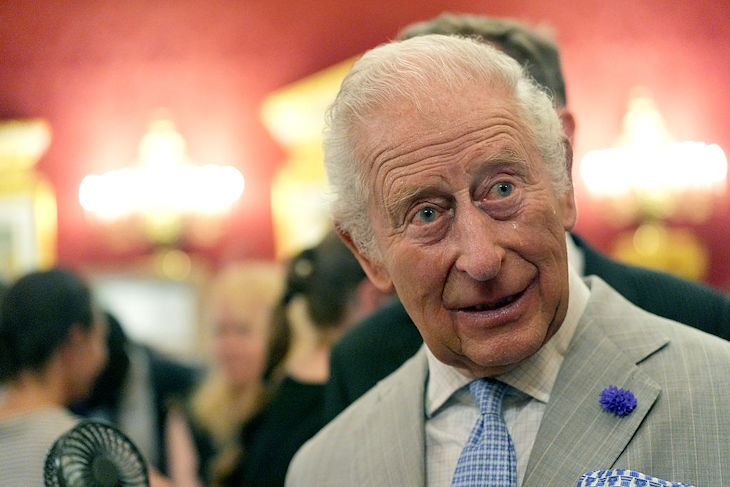
When it was announced that King Charles was going to become the first monarch in history to release details of how much income tax he paid, it seemed like a watershed moment for the royal family.
The Firm have, traditionally, been opaque when it comes to all things financial. Those who have tried to delve into precisely how much the various members are worth, whether in terms of private family money or inherited wealth, have usually come a cropper through sheer lack of evidence, something that even the official royal website sniggeringly acknowledges.
When looked at by anyone other than the most ardent admirer of the monarchy, there is something rum about these figures
Charles’s transparency appeared to be a shift away from the secrecy and obfuscation of the past towards a new, far more open future.
Well, this is not entirely what has happened. Buckingham Palace has revealed that the King paid a considerable £12.9 million in the last tax year, and that Prince William forked out £7.76 million.
Together, the pair have paid more than £50 million in tax since the Queen’s death in 2022. This is by far the most that has been contributed to the national exchequer by royals since the late Elizabeth II first started paying income tax in 1993, amidst public dissatisfaction about the huge sums being given by the taxpayer to rebuild Windsor Castle.
This makes Charles, in particular, one of the country’s biggest individual taxpayers. At a time when it seems that many wealthy people go out of their way to avoid paying tax, he should be commended for not shirking his responsibilities.
But while Buckingham Palace described the decision to publish these figures as intended to “encourage wider understanding of our accountability”, is that really the case? No detailed breakdown of the tax figures has been provided. We don’t know, for instance, how much of the tax the King and William paid is capital gains tax, nor how much is income tax. It makes the idea that this is a new era of Royal transparency a bit hard to stomach.
And while the Royals did pay plenty of tax, the accounts show the main source of annual public funding for the Royal Household, the Sovereign Grant, will be a whopping £100 million for the year 2027-28.
The royal household will be receiving nearly double the profits from Crown Estate businesses from now on – 20.5 per cent rather than 12 per cent. In effect, this means that the monarchy will be receiving a sizeable amount of money from the public purse.
For good measure, it was also muttered that the £369 million renovation of Buckingham Palace, paid for by the taxpayer, will see it retain its symbolic value as the headquarters of the monarchy, but that Charles and Camilla will continue to live at Clarence House, because that is where they prefer to have their home.
When looked at by anyone other than the most ardent admirer of the monarchy, there is something rum about these figures and this news.
It has been argued that for Britain to have a royal family that is the envy of the world, there must be a respectable amount of money spent on it. Cutting things like the sovereign grant would, we’re told, risk turning the institution into a bargain-basement endeavour that would reflect poorly on the nation. This may well be true; nobody wants the royal equivalent of the middle aisle at Lidl.
Yet given recent events – and indeed the ongoing saga of Prince Andrew – there is more suspicion of the Firm than there has been in generations, both on a financial level and, in many quarters, on an existential one.
Walter Bagehot famously wrote that “We must not let daylight in upon the magic” when it came to the royals. It is hard not to feel that this most secretive of organisations took those words and have run with them ever since.
The news that Charles and William are paying a hefty amount in tax is welcome. The King should be commended for his transparency in publishing at least some of his financial details, setting a precedent that hopefully will endure forever. But what would turn this from a PR opportunity into a genuine opportunity for openness is a less voracious approach to taking their subjects’ money and more basic humility. Somehow, I doubt that this is likely to happen any time soon.