As the country prepares for its seventh prime minister in a decade, some are asking: is Britain ungovernable? I’d like to pose a parallel but meaningfully different question: is there a government that wishes to govern Britain?
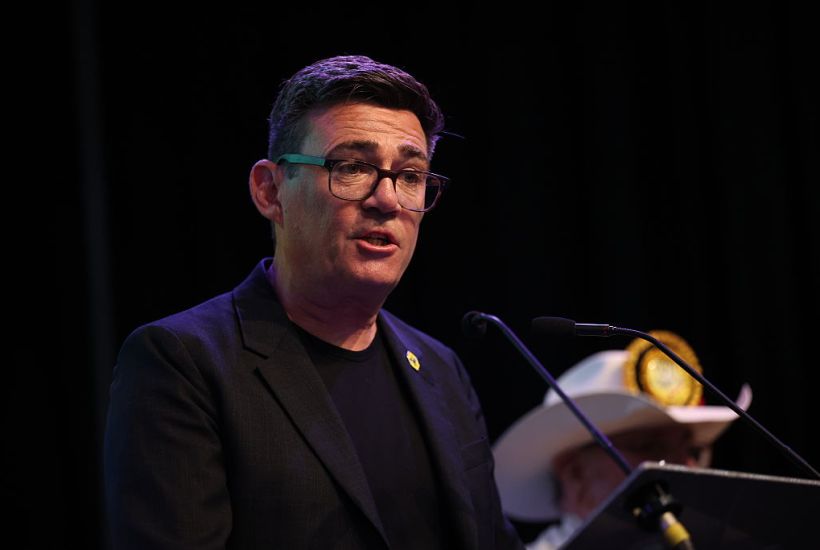
Every government since at least 1979 has practised one form or another of this politics of abdication. Andy Burnham, if he does indeed become prime minister, will not break with this approach
There can be no understanding of our governing crisis without a recognition that it has been in situ for more than half a century. In that time, successive governments have as a matter of policy outsourced decision-making, oftentimes in the name of better governance.
One of the appeals of the European project to Britain’s political elites was its centralisation of decision-making on matters they considered too sensitive to be decided nationally, which is to say matters where voters refused to conform to the policy preferences of the elites.
In the early days, Conservatives saw the European Economic Community as a backdoor hack through a political and economic order gripped by public ownership, price controls and industrial strife. If decision-making could be removed from Parliament and rerouted to Brussels, policy directives devised by Berlaymont bureaucrats could be presented to MPs as a fait accompli.
The appeal of the Common Market crossed ideological lines within the Tory party. Margaret Thatcher and Ted Heath agreed on almost nothing, but they agreed, at least initially, on Europe.
In time, the left came to see the advantages of a common market and its Eurosceptics either recanted or retreated to the fringes. A central bureaucracy that could uphold the necessary conditions for a market economy could also impose directives on workplace conditions and enforce employee rights.
For liberals, Europe became the great bulwark against the reaction and provincialism of the British people. During the Thatcher and Major years, the European Convention on Human Rights proved a reliable foil to the hang-em-and-flog-em right and became a growing source of equalities protections favoured by liberals. When Labour finally returned to government, incorporating the ECHR via the Human Rights Act was a key priority.
Not coincidentally, this was around the same time that the British government was going to considerable lengths to give away the powers of Parliament to newly minted pseudo-parliaments in Edinburgh and Cardiff. Whatever else might be said of devolution and those who pushed it, they are surely shielded from charges of dishonesty.
This modern form of home rule was predicated, quite openly, on the superstition that Westminster and Whitehall had been rendered illegitimate governors of Scotland and Wales by the rise of separatism and the electoral demise of the Conservative party after 18 years in power.
On a vast, and later to be vaster, array of policy areas, the power to legislate north of the Tweed and west of Shrewsbury was transferred to second-tier Labour apparatchiks adept at whipping up native grievance against a far-off English establishment. With a predictability that shocked only their architects, these diet-nationalist quasi-states were captured (promptly in Scotland, latterly in Wales) by full-fat nationalists bent on achieving actual statehood.
Neither the ideological drift of these institutions towards separatism, nor their dysfunction on governance and delivery, deterred Labour and the Conservatives from devolving further, whether to Holyrood and the Senedd or by the creation of regional mayoralties and elected policing commissioners. The measure of an institution of the modern British state is not whether it works but whether it takes a problem off Whitehall’s hands.
The Labour-Tory consensus on devolution extends to quangos, those great and mysterious bodies which free up policy-making bandwidth. The general rule with quangos is that Labour sets them up, the Tories pledge to scrap them, then win elections and set up even more. These too are valued as a dumping ground for all the decisions ministers don’t want to take.
Then there is the most contentious area in which the British government outsources its judgement, albeit not with any formal instrument but by choosing to mirror the course taken by other countries: that is to say, foreign policy. Since Thatcher, Conservative prime ministers have tended to ape the United States on the world stage, assuming American interests to be synonymous with British interests.
New Labour practised a bifurcated approach, joining the White House in military operations (Kosovo, Afghanistan, Iraq) while aligning with Europe on international development, immigration and asylum. Keir Starmer’s Labour split from the US on hard power issues, oriented Britain further towards Europe on Palestine and climate change, but broke from the Continent’s growing scepticism towards mass immigration and multiculturalism.
One of the enduring mysteries of Brexit is how Britain’s liberal establishment, instinctively pro-European but only tepidly so, became the most strident partisans for the EU in the wake of the 2016 referendum. Various explanations have been offered but none as compelling as this: to elites which had spent the better part of two generations insulating themselves from decision-making, Brexit threatened a return of power and responsibility.
Judgement could no longer be reserved or deferred or devolved. Ministers in Whitehall would have to deliberate and decide. Choices for Britain would have to be made in Britain by Britons and, after so many years passing the buck upwards, downwards, and overseas, ministers and civil servants seriously doubted their capacity. In this, if in nothing else, their analysis was sound.
Every government since at least 1979 has practised one form or another of this politics of abdication. Andy Burnham, if he does indeed become prime minister, will not break with this approach. He owes the past decade of his career to devolution, and will likely expand it. His party longs to return as many decisions as possible to the European Union, and while the growth of Reform makes it harder to do this too boldly or openly, a Burnham government will hope, as its Starmerite predecessor did, for a change in circumstances.
Britain is not ungovernable. What it lacks is a political elite that wishes to govern it, to take decisions and the risks that come with them, to choose and to make those choices work. The preference across the main parties is for lots of little parcels of power and responsibility dispersed throughout the constitutional terrain, no matter how ineffective this is or how often it places local and national interests at odds.
This political nervous breakdown is what happens when a nation and its institutions are fractured by an unrelenting, if undeclared, project of elite-driven, post-national federalism. Power to Brussels and to Washington, power to the nations and to the regions, power to the lanyardists and the quangocrats – power to anywhere but the country and its sovereign Parliament.
These arrangements might well be ungovernable but they are not Britain. Britain can only be governed by leaders who know that it is a country, and not a disparate bazaar of identities, cultures, communities and interests. Power must rest exclusively in Parliament. Government must govern, however hard that might be. Decisions must be taken in the national interest while accommodating local needs. Britain’s destiny must be charted by Britain and Britain must be captained by leaders who believe in it.
This does not describe Keir Starmer, and it does not describe Andy Burnham. Only when the country acquires a leader whom it does describe will Britain’s decline be halted – and perhaps reversed.