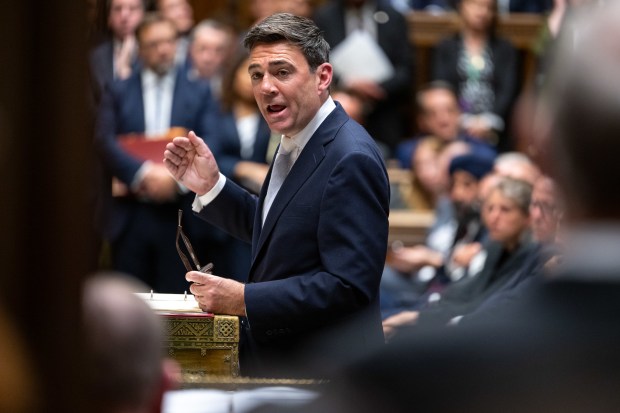
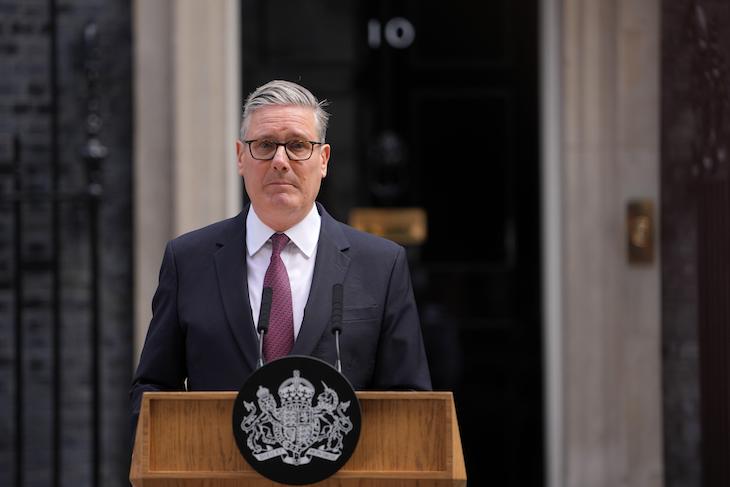
Keir Starmer looked visibly emotional as he walked up to the lectern in Downing Street this morning. The Prime Minister then held it together for the majority of his resignation speech – until the very end where he paid tribute to his ‘fantastic wife Vic’ and his ‘beautiful children who are my pride and joy’.
It’s difficult for Starmer to say that he led with good grace
It’s not unusual for anyone to grow emotional while talking about their family, but it was quite telling that this was the only point where Starmer visibly struggled: even those who have worked closely with him have struggled to work out what really animates him beyond family and football.
In contrast to Theresa May, who choked up as she talked about the opportunity ‘to serve the country I love’ when she was resigning, Starmer struggled when he talked about the thing he believes in the most. Nothing wrong with that, but it does underline that as Prime Minister he never really worked out what he was for.
Starmer was clear about what he’d stood against, telling the media and assembled crowd of staffers and fellow Labour MPs: ‘I inherited a Labour Party that was politically, financially and morally bankrupt’, and pointing to the change he had wrought in that party. But when he got onto how he had ‘restored’ Britain’s reputation in the world – a questionable claim, given he is now part of Britain’s famous revolving door of ineffectual prime ministers – he was as weak as his critics have always said.
Many of the ‘achievements’ he listed, including ‘the biggest uplift in defence spending’ and ‘protecting young people from social media’ were not concrete achievements at all. They are at best still just announcements, future intentions that may now never be realised (or may indeed never have been realised, even if Starmer had trundled on until the next election).
He had to suggest that the past two years had been worth it, and that there was a reason for his time in office, and he framed it as being the man ‘to change the Labour Party, to take us into power’. He added that he had answered that challenge, and that ‘the question my party is asking now is whether I am best placed to lead us into the general election’. He had, he claimed, ‘accepted that question with good grace’ – which in fairness he has, because he has gone before a protracted and embarrassing fight involving non-stop ministerial resignations and weird sackings in the way that Boris Johnson held out until the last possible minute to go.
But it’s difficult for Starmer to say that he led with good grace: for all his self-belief that he is a decent man with integrity, he never bothered to bring the party he had changed with him on big calls like welfare spending, and he never, even as he was trying to frame what he had achieved in Downing Street, really worked out what to do with the big opportunity the country gave him in 2024 to change things for the better. Surely that failure should make him emotional, too.