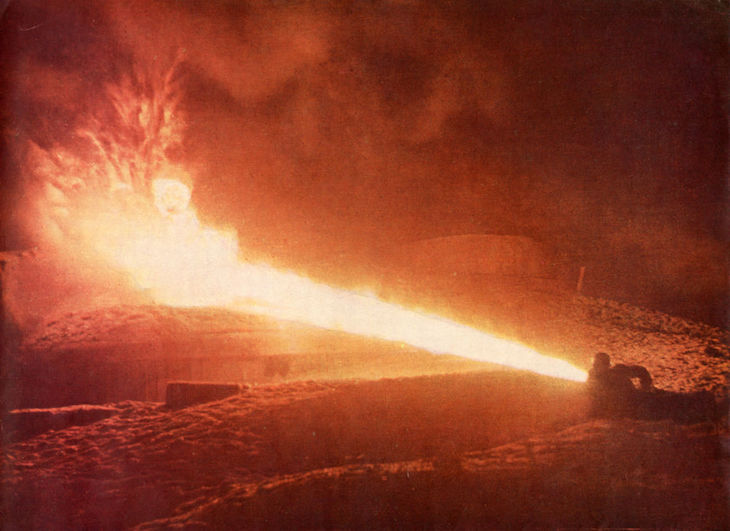
On this day, 85 years ago a seismic event in world history took place. At 4am on the 22 June 1941 a massive land force of 3.5 million men, supported by thousands of tanks and aircraft, invaded Soviet territory. Led by Nazi Germany and codenamed ‘Operation Barbarossa’, the significance of the incursion was not lost on contemporaries. ‘We have reached one of the climacterics of the war,’ Prime Minister Winston Churchill told the nation in a radio address delivered that night.
Not for the first time, Churchill would be proved right.
Aided by local collaborators, the Wehrmacht, police auxiliaries, and SS officers, the Einsatzgruppen were charged with executing real and imagined opponents of Nazi Germany
In the immediate weeks and months that followed, it quickly became evident that Operation Barbarossa was more just than a turning point in military terms. As the army brutally forged its path toward Moscow with terrifying speed, four “special action groups” – Einsatzgruppen – totalling around 3,000 men moved at pace into towns and villages behind the front line.
Their task was a simple and bloody one. Aided by local collaborators, the Wehrmacht, police auxiliaries, and SS officers, the Einsatzgruppen were charged with executing real and imagined opponents of Nazi Germany. Initially, they focused principally on communists, partisans, and Jewish men. Soon, however, this was extended to include Jewish women and children too.
It was murder at the closest of quarters. Jewish people would be gathered together. They would be taken to a designated killing site. They would have their possessions taken from them. And then they would be shot into ditches or pits. In this way, between 1.5 to 2 million Jewish men, women, and children had been massacred by the end of the war.
With the implementation of this policy, a Rubicon was crossed. Jews had, of course, been killed by the Nazi state and its agents in the years before Operation Barbarossa. But this was something new, something different. Anti-Jewish policy in the Soviet territories was now predicated on a belief that all Jews had to be annihilated. With this, systematic mass murder had begun – not in a gas chamber, or in a death camp. But in the forests and fields of Eastern Europe; with men, holding guns, watching their victims die.
This phase of what we call the Holocaust is not merely a matter of historical record. It is a matter for humanity. The nature, scale, and scope of what is known as ‘the Holocaust by bullets’ confronts us with the evolutionary nature of the genocide. It pushes against the erroneous idea that responsibility for the extermination of the Europe’s Jews rests simply with Hitler. It highlights the role of contingency, and the importance of placing the Holocaust within the contexts of the Second World War.
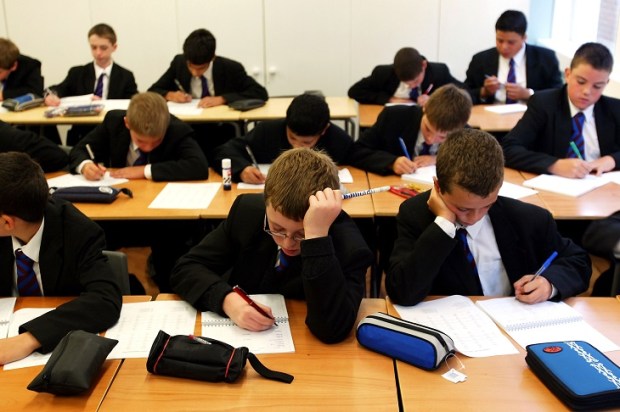
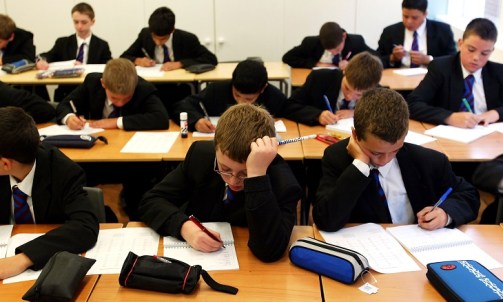
And yet, too few young people still do not know this. In 2016, landmark research by the UCL Centre for Holocaust Education into students’ knowledge and understanding of the Holocaust revealed that just 5.6 per cent knew that the Nazis began to kill millions of Jews following the invasion of the Soviet Union. Evidence from new research with over 2,500 secondary students has shown that number has increased to 30.2 per cent.
Such an improvement is clearly positive. However, it is sobering that seven in ten students still do not have secure understanding about how Operation Barbarossa proved to be a death-sentence for millions of Jewish men, women, and children. Especially when teaching the Holocaust has been a mandatory requirement of the National Curriculum for a generation.
To its credit, the Government has reaffirmed this commitment to Holocaust education in both the Curriculum and Assessment Review, and their wider focus on social cohesion. But the evidence shows that many problematic misunderstandings and misconceptions about the history of the Holocaust remain deeply embedded.
It is salutary for us to remember that our young people do not exist in a vacuum. In many respects, they are ciphers of the culture and society which they inhabit and which they will, in time, come to shape. From this perspective, these issues in students’ historical knowledge should not be seen in isolation. They are portholes onto our collective understandings – and misunderstandings – of the Holocaust.
At a time when mis- and disinformation is prevalent, and instrumentalisation of the Holocaust continues apace, it becomes all the more vital then that our young people enter society with rigorous and robust knowledge of this critical past.
Achieving that requires teachers and schools to be supported with the time and the means they need to access high-quality, research-informed training delivered by experts. It also demands that we as a society turn and face the truths of the Holocaust: truths that reside with those souls who were murdered across Eastern Europe in the aftermath of Operation Barbarossa.
Andy Pearce is director at the UCL Centre for Holocaust Education