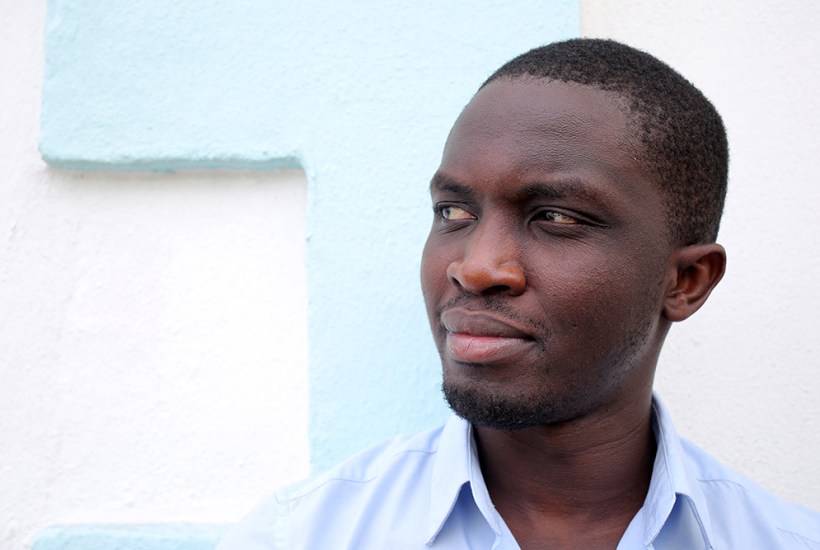
Like the Booker, the Prix Goncourt’s laureates now tend to veer between diamonds and duds. One of the strongest recent novels to take France’s premier book award was, in 2021, The Most Secret Memory of Men by Mohamed Mbougar Sarr, from Senegal. Almost a West African Possession, it sent its narrator on a quest for a cult writer named T.C. Elimane – inspired by the Malian novelist Yambo Ouologuem – who had vanished after claims of plagiarism shredded his reputation. A combination of mystery, satire and cultural inquiry, it spotlit the fate of African authors who are lionised and then forsaken by the Parisian literary elite.
The Goncourt coup has prompted English-language publishers to revisit Sarr’s backlist. Pure Men first appeared in French (De purs hommes) in 2018 as his third book, and shows Sarr the taboo-trasher at his most outspoken. It tackles violent, rampant homophobia in Senegal with little mercy – though plenty of insight – for its perpetrators and furious compassion for its victims. Gay men, or other sexual heretics, are ‘pure men, because at any moment human folly can kill them’ and gather them into the ‘fraternity of violence’ that defines our hate-driven species.
Or so our narrator argues. Ndéné is the son of an ultra-pious father, a ‘model believer’, due to take over as imam at the neighbourhood mosque. Secular and sceptical, Ndéné teaches Verlaine and other French poets to bored, fractious students in Dakar (‘May as well teach the dead to come back to life’). One night his free-spirited on-off lover Rama shows him a sickening video that is circulating on social media: a clip of a corpse exhumed and desecrated by a mob at a city cemetery. The slain body belongs to an alleged góor-jigéen (a man-woman or homosexual). This grotesque posthumous lynching launches Ndéné, ‘just a man in the crowd’ despite his fancy education, on a journey into his own prejudices and into the shadow world of gay life in Senegal. Here even the ‘dreadful suspicion’ of homosexuality can bring social, and even physical, death.
We meet strict Muslims for whom homosexuality means ‘the betrayal of God’. In a sermon, Ndéné’s father condemns the sin but invites prayers for the sinner. Thus he loses the post of imam to his rival, a fire-breathing bigot. Students complain that Ndéné teaches French pervert poets through a sympathetic lens; the university cancels Verlaine. Ndéné’s closeted boss laments that ‘homosexuality has become vulgar’, compared with those ‘discreet, polite and respectable’ gays of yore. Others suspect that foreign NGOs aim to turn Africa queer – part of ‘Europe’s big propaganda plan’. Ndéné seeks out a transvestite pop star whose camp flamboyance sidesteps censure. This ‘positive notoriety’ might kill the drag icon, ‘but it’s my freedom’. Above all, he befriends the ostracised mother of the exhumed murder victim and mourns alongside her.
For sure, there’s something schematic in these exemplary encounters. Ndéné’s lofty digressions on the ‘metaphysics of violence’ and the social dynamics of dishonour – although powerfully voiced in Lara Vergnaud’s translation – can lie heavy on the page. (‘You’re such an intellectual,’ the bisexual siren Rama mocks.) Still, Sarr – only 28 when the book appeared – tears into his theme with invigorating courage and candour, and no mealy-mouthed excuses for cruelty. Angela, a half-American activist, rails against relativism and the ‘ridiculous truism’ that ‘every country has its own reality’. In theory, Ndéné shares that faith in rights for all. In practice: ‘I can’t confront all my demons.’ But Sarr set out to slay his nation’s, and earns honour of another kind for that.
Got something to add? Join the discussion and comment below.
You might disagree with half of it, but you’ll enjoy reading all of it. Try your first month for free, then just $2 a week for the remainder of your first year.