Nearly ten years ago, the author, critic and classical Indian musician Amit Chaudhuri took up a visiting fellowship in Paris. It’s not quite clear from the pages of his autobiographical novel Château Rouge which branch of his professional life was to be nurtured by the experience, officially at least, but a glance at this slim hardback, liberally adorned with creative white space, will tell you that it is a book which leaves many things unsaid.
Chaudhuri is determined to escape the oppressive influence of the many other writers who have gone before him, to try to see this great city afresh. Chief among these is inevitably Ernest Hemingway, a man with whom, on the face of things, Chaudhuri would have little to talk about if they were to meet. (The ‘time machine’, which Chaudhuri occasionally deploys in Château Rouge as a way of considering the survival of parts of Paris that still look and feel like Paris, would make this a theoretical possibility, though it’s not one he entertains.)
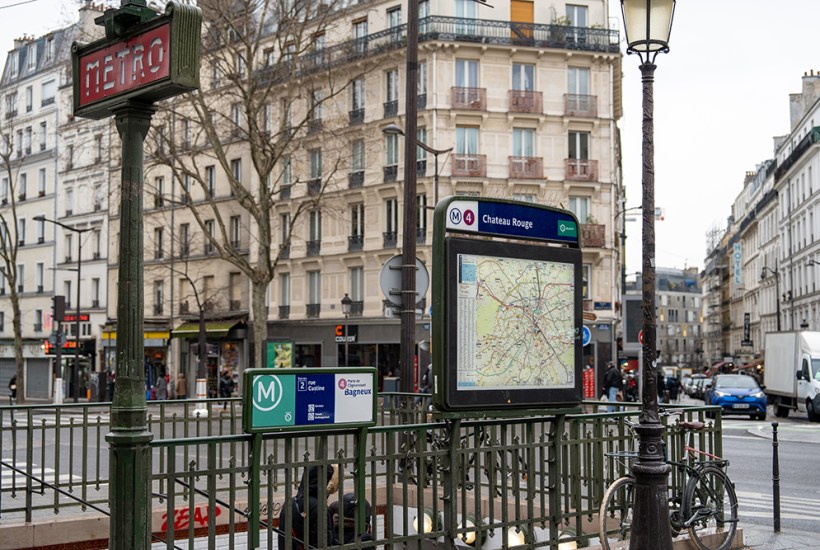
His choice of address for the duration of his visit is deliberate. Château Rouge, roughly the area between Montmartre and the Boulevard Périphérique, is an anomaly: a more or less Haussmann-style district with the sort of spicy, ethnic mix that has elsewhere been relegated to the banlieues. ‘This is where Hemingway would have lived if he’d been here now,’ says Chaudhuri’s wife.
What follows is a kind of dream diary, a mirepoix of vignettes, urbanistic ruminations, fragmentary accounts of family life and the cautious, contingent friendships one makes when one’s not going to be living in a place for ever. The song Chaudhuri wants to perform at his father-in-law’s funeral is vetoed by the organisers on grounds of its joyfulness, until the wife of the deceased intervenes. Eventually, he picks up the copy of A Moveable Feast his wife gave him 32 years earlier.
There’s a pleasingly baffled, donnish fastidiousness about the way both Chaudhuri and his wife relate to the small disappointments of the physical world (‘The shower’s life’s limited’). But there’s a rococo quality to the writing, and the thinking behind it: an imprecision, a conflation of essence and ornament, a belief that if something’s worth saying it’s worth saying twice.
It’s a charming enough book about Chaudhuri, if he interests you; but it really has very little to say about Paris, not least because the author doesn’t seem to eat either French food or the thrilling alternatives, whose smells greet the traveller ascending from the metro. He prefers a gruesome-sounding nearby Italian, or – at least until his daughter, radicalised against the microwave, intervenes – ready meals from Marks & Spencer.
Got something to add? Join the discussion and comment below.
You might disagree with half of it, but you’ll enjoy reading all of it. Try your first month for free, then just $2 a week for the remainder of your first year.