Sheila Armstrong’s strange and beautiful novel has 12 chapters, each named for a month of the year – though not always the same year or even the same decade. The author plunges us into archaeology, history, geology and complex human relationships. Time is fluid here: we might encounter an obscure neolithic weapon or stumble on a beer can left by a thoughtless 21st-century rambler. Occasionally Irish words dance across the page.
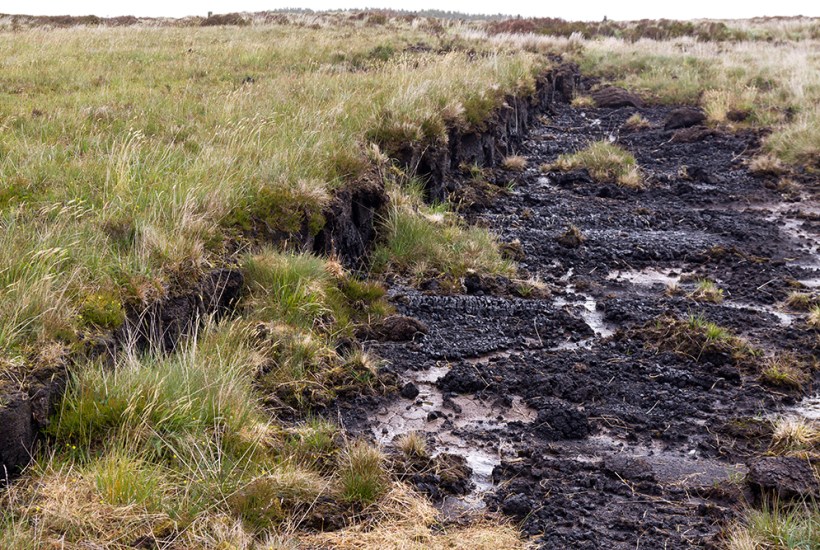
The Red Mouth – an beal rua – introduces us to a group of strangers whose lives are linked by an Irish peat bog that yields long-buried evidence of past lives: an antler from an extinct species of deer, or an Iron Age woman, throat slashed, a rope around her neck, body curled into the shape of a question mark. The dark power of the bog itself is at the heart of the story.
Alongside the land we explore the people whose lives intersect and overlap like tangled roots: the oddly named Patch, out for a walk, who on a whim takes possession of the hidden antler, an action that changes his life; Tomas, the peat-cutter, whose blade uncovers the body of the mysterious woman; Fleming, the archaeologist, who uses the discovery as a career-changing opportunity; and his two small daughters, dragged along in the wake of their ambitious father. Vulnerable, they will be damaged in different ways. The pains of parenthood and sibling conflict are explored with tenderness and wry humour; the sadness of a marriage disintegrating while love stubbornly endures. Over the years, we get to know these people and the heartbreak of their lives. The bog is ever-present: drained, rewetted, exploited, flooded, threaded with iron-fed streams that carry a scarlet stain.
The seasons change: in July – Iuil – ‘the sky is iced cornflower, refracted through the glassy air into purple heath milkwort, dozing yellow tormentil and beaded red sundews’. By August – Lunasa – everything has changed. The bog threatens, ‘furious and greedy… black as gangrene’. Wildfires break out and blaze. In December – Nollaig – the only colour left is in the dense mat of sphagnum moss that ‘grows faster than it decomposes: death below; life above’. The author has an almost physical intimacy with nature and landscape: sensuous, rhapsodic, calling to mind Seamus Heaney’s ‘bog poems’.
The Red Mouth blends ancient savagery with modern life, deftly referencing the Troubles, domestic conflict, industrial greed and pollution. Armstrong’s previous books – a novel and short stories – have been finalists for numerous prizes. Glowing accolades from critics and fellow writers have put her at the forefront of today’s young Irish writers.
Got something to add? Join the discussion and comment below.
You might disagree with half of it, but you’ll enjoy reading all of it. Try your first month for free, then just $2 a week for the remainder of your first year.