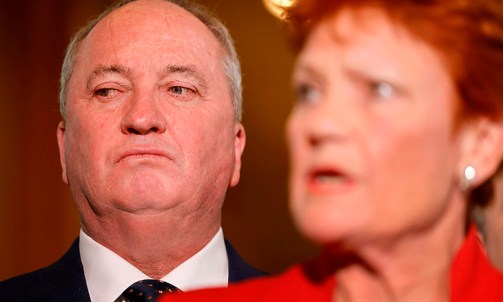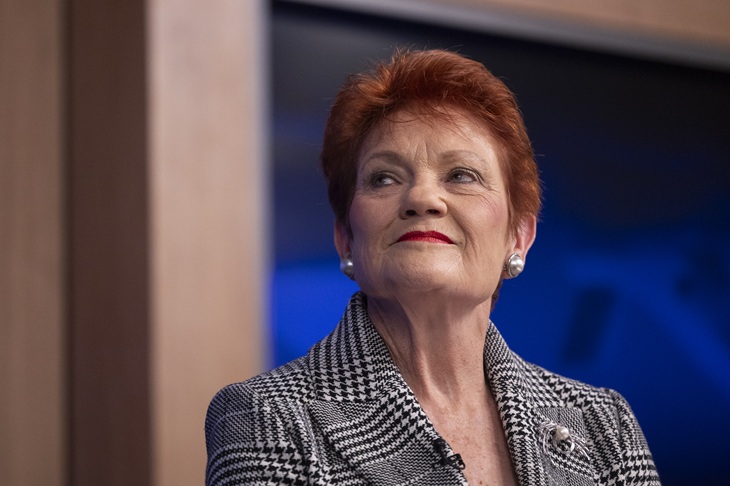
One Nation’s critics have a lazy explanation for its rise. They say Pauline Hanson’s party is merely riding a Populist wave. They say it is capitalising on anger, grievance, cost-of-living pain, immigration anxiety, and distrust of the major parties.
There is some truth in that, as political movements tend to grow when people are unhappy. But that explanation is too shallow. It misses the deeper reason One Nation is resonating with Australians.
One Nation is gaining ground because many of its instincts are not merely political. They are archetypal. By that I mean they correspond to patterns of human life so old, so deeply inherited, and so fundamental to social order that ordinary people recognise them before they can explain them. People may call them ‘common sense’, but they are more than that. They are the buried grammar of civilisation.
A people wants a home. A family wants authority over its children. A worker wants dignity in productive labour. A farmer wants to keep his land. A nation wants borders. A citizen wants one law applied equally. A community wants decisions made close to the people who must live with the consequences. These are not fringe obsessions. They are permanent features of human social life.
This is where One Nation’s critics misunderstand the party’s appeal. They look at its policies on immigration, energy, family, housing, farming, regional Australia, foreign ownership, national industry and sovereignty, and see only a list of grievances. Many voters however, see an attempt, although imperfect, to restore the basic conditions of self-government.
The American founders understood this better than most modern politicians. They did not create a pure democracy. They created a republic. They believed government rested on the consent of the governed, but they did not believe every fashionable majority impulse was wise. They believed in liberty, but liberty under law. They believed in equality, but equality before the law, not equality of condition. They believed in rights, but rights grounded in a moral order higher than government.
That is why the American Constitution is not merely a mechanism for counting votes. It is an architecture of restraint. It assumes that power is dangerous, whether held by kings, parliaments, bureaucrats, or crowds. It divides power, limits power, checks power, and binds power to enduring principles.
One Nation’s best instincts belong to that same moral universe.
Its defence of sovereignty is not merely nationalism in the crude sense. It is the belief that Australians have the right to govern Australia. That should not be controversial. A country that cannot control its borders, industries, energy system, laws, and cultural future is not meaningfully self-governing. It may still have elections, but elections become rituals if the great decisions have already been outsourced to global agreements, bureaucratic fashion, corporate pressure or activist institutions.
Its suspicion of distant power also has deep roots. The principle is simple: power should sit as close as possible to the people who bear its consequences. This is why local communities resent being lectured by people who will never live with the results of their own policies. It is why regional Australians feel insulted when inner-city moralists treat their farms, mines, roads, dams, jobs and power bills as abstractions. Subsidiarity is a complicated word for an obvious truth: those closest to reality usually know more about it than those governing from a distance.
One Nation’s opposition to Net Zero politics can also be understood in this light. Energy is the blood supply of a modern nation. Without affordable and reliable energy, families are punished, industry weakens, farms suffer, manufacturing leaves, and citizens become dependent on subsidies, exemptions and government rescue. Australia must not sacrifice its productive base to satisfy an ideological timetable imposed by people insulated from the consequences. One Nation understands that.
The same is true of immigration. A nation is a people, with memory, law, inheritance, obligation and social trust. Immigration can enrich a nation when it is ordered toward the common good not an airport lounge, or an economy with a flag attached. But when numbers run ahead of housing, infrastructure, assimilation and consent, citizens rightly feel that their country is being changed without their permission.
Regardless of how many times the Teals and others dismiss that reaction as xenophobia, it remains the political instinct of a people that still believes it has a right to continuity.
One Nation’s emphasis on family also touches something deeper than tax policy. The family precedes the state. It is the first school of love, duty, sacrifice, discipline, loyalty, and responsibility. A government that strengthens the family strengthens society at its source and a government that weakens the family creates citizens more dependent on the state.
Then there is equality before the law. This may be One Nation’s most important philosophical alignment with the older constitutional tradition. The left in Australia has tried its best to shove down our throats that equality should mean equality of outcome. However, the great promise of free government is not that every person will end up the same. They will not. Human beings differ in talent, temperament, discipline, ambition, courage, intelligence, and vocation. A society that tries to abolish those differences will end by punishing excellence and rewarding resentment.
The proper political ideal is not equality of condition. It is equal citizenship. One law. One standard. One nation. No racial spoils system. No bureaucratic hierarchy of victimhood. No permanent division of Australians into approved and disapproved categories.
This is why One Nation’s appeal is deeper than protest. Protest burns hot and fades. Archetypes endure. Home, border, family, work, law, property, responsibility, sovereignty, nation – these things are the foundations upon which free societies are built and they sure are older than any party platform.
The major parties have spent years pretending these concerns are embarrassing, backward, or dangerous. That was their mistake. The Australian people are not wrong to want a country that belongs to them, a government answerable to them, an economy that rewards productive work, and laws that treat them as citizens rather than demographic categories.
One Nation is rising because it is speaking to those instincts. Its critics call that Populism. But perhaps Populism is what the political class calls democracy when the people start remembering what a nation is for.
The deeper issue is recognition, not anger. Voters are recognising, often without needing philosophical language, that One Nation’s policies point toward permanent truths: a people needs borders, families need protection, work needs dignity, power needs limits, and government must serve the nation rather than manage its decline.
That is why One Nation is striking a chord. It is not simply riding the mood of the moment. It is appealing to things in the Australian soul that are far older than the moment.