Australia has always been a nation that backs the underdog, questions authority, and tells the government where to go. So how did we become the world’s most enthusiastic exporters of internet censorship?
The flat white, WiFi technology, and the Hemsworth Brothers used to be what we could point to as some of the great Australian additions to the world, but I’m worried about what comes next.
My biggest concern right now is that Australia is about to start exporting some of the worst of our culture overseas, beginning with a crackdown on internet regulation that restricts free speech and political communication, as well as removing access to content that it deems ‘harmful’.
This is a tide that has been rising for years and has gone from a push to be nice to each other via political correctness, to a full-blown censorship war with internet regulation at the heart of the problem. What happened to the concept of combatting harmful speech or ideas with more speech and discourse? As former Associate Justice of the Supreme Court of the United States Louis Brandeis famously stated, the path to safety in a democratic society is ‘more speech, not enforced silence’.
We’ve traded that principle for a culture that’s so wired for offence that silence has become a substitute for safety. We’re now more concerned about not saying the wrong thing, rather than not doing the wrong thing.
The weapon of choice for the government right now seems to be child safety. Its signature ‘social media ban’, implemented six months ago, is the most powerful justification for restricting what citizens can see, say, and do online. While it has started at a small scale, Australian society has quickly got used to the idea that the government should oversee personal choices, and even parental choices.
The poignant question is, do we want to put such powers and trust in our government when the hallmarks of their greatest policy responses over the last six years were to ban, remove or shut down anything without a true understanding of the underlying causes of the problems? As individual liberty hero British Peer Lord Acton once stated, ‘Power tends to corrupt, and absolute power corrupts absolutely.’
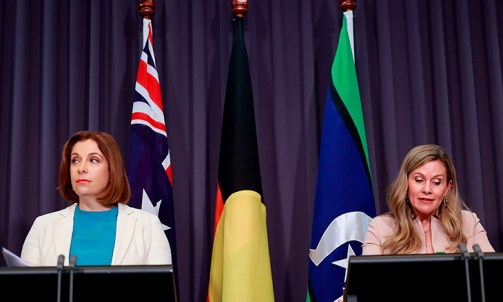
That’s what I’ve seen from the government on the social media ban. The government’s own internal documents showed that Instagram and TikTok were still dominating app store rankings one month after the ban commenced. Despite no meaningful shift away from restricted platforms, Communications Minister Anika Wells did not reconsider the policy. She blamed the platforms. ‘Australia’s world-leading social media laws are not failing,’ she told reporters. ‘But big tech is failing to obey the laws.’
It is a remarkable position: when your policy produces no result, declare the result someone else’s fault.
We know that the writing was on the wall for this policy even before the social media ban was implemented. Many industry experts repeatedly commented on the lack of efficacy behind the technology, and the troubles of how to enforce the ban and its many loopholes in the real world.
The way this legislation was rushed through Parliament was also very concerning, and worryingly, it fits with the increasing efforts of governments to rule without consultation.
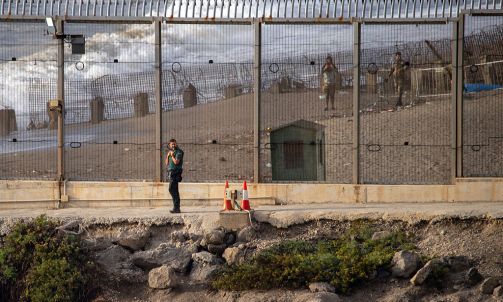
The eSafety Commissioner, Julie Inman Grant, recently confirmed publicly that she was not keen on the ban when it was first discussed, describing it as a ‘very blunt force approach’. Her assessment of the task she was handed was stark: ‘What you are effectively asking us to do is fence the ocean.’ Inman Grant said the legislation was developed very quickly and that it had ‘very thin scaffolding’.
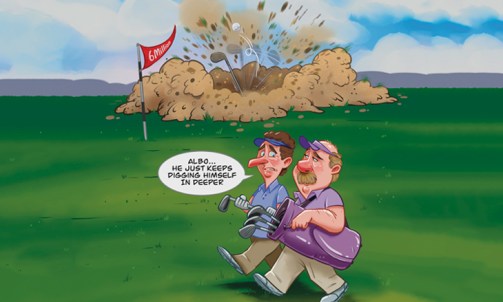
So, it’s been no surprise to me then that the ban is failing. We can keep fencing the ocean, or we can build something that actually works.
There is harmful content online that is not appropriate for children. But trying to stop teenagers at the gate overlooks the fundamental problem, which is the content itself.
There is a real problem here that deserves a real solution. As an academic myself, here’s what I would point to instead: a Digital Duty of Care.
In legal terms, a duty of care already underpins how we hold businesses accountable for harm in the physical world. The digital world should be no different.
Some key components that are currently being considered for this would be to require all online service providers to provide a safe online environment, for them to prevent, monitor and address content that is harmful to young people, and ensure the safety of service features that they provide – for example, with AI or social media algorithms.
A DDoC holds platforms accountable for content. For platforms willing to do the right thing, it also offers clarity. A clear standard and a framework they can actually build to rather than a shifting political target, based on the whims of the relevant minister.
Current discussion surrounding the Digital Duty of Care outlines that an online service provider would be negligent, and breach their duty of care, if they failed to ‘take reasonable steps to maintain effective systems and processes’ to prevent Australians from being exposed to harmful online content or activity.
Rather than slapping blanket bans on the Australian public, this is a stronger system design. The current approach treats citizens as problems to be managed, while the alternative offers accountability.
The Australian government has a genuine opportunity here – it has committed to introducing a Digital Duty of Care this year. That commitment is an opportunity to get tech regulation right and to export something to the world that actually works, and protects children online.
WiFi connected the world. A Digital Duty of Care could make that world safer to be in. That’s an export worth making.
Alexander Hatzikalimnios is a lawyer, legal academic and commentator. He has submitted to the Parliamentary Statutory Review of Australia’s Online Safety Act and writes on digital regulation, free speech, and human rights law.