In a classic episode of Yes, Minister, Jim Hacker stumbles onto a heresy. His local football club is sliding into receivership while a council art gallery down the road averages eleven visitors a day. Hacker proposes to sell the gallery and use the proceeds to save the football club.
Sir Humphrey is horrified. To take money from the arts and give it to anything as vulgar as football is unthinkable. Hacker asks the forbidden question why should the many be taxed to fund the pleasures of an educated few? Says Hacker: ‘Subsidising art in this country is nothing more than a middle-class rip-off.’ His remedy is simple, let the public decide what their taxes support.
Meanwhile, Australian governments have replicated the media and culture subsidy architecture highlighted in a television show.
Labor and Coalition governments alike accept that publicly funded cultural institutions are part of the natural order. When they misbehave, the instinct is to repair them, rebalance them, appoint better boards. The question never asked is the Hacker question: why should taxpayers underwrite them at all?
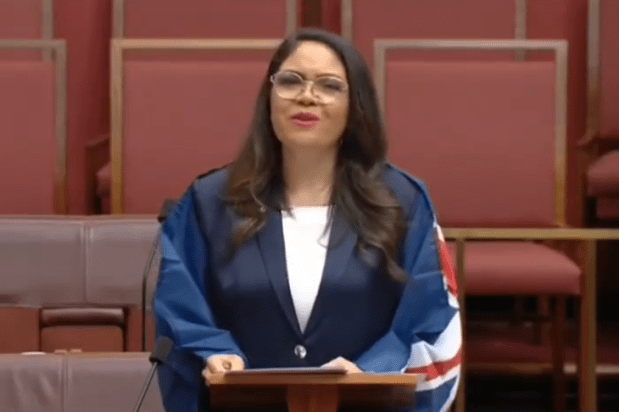
This month the issue returned, wearing the smug expression of an institution that knows nobody will make it face the market. The ABC handed former Australian of the Year and ‘Globalise the Intifada’ chanter Grace Tame a four-part podcast gig. There were protests outside its Melbourne office, criticism from one of its own presenters, and the usual defensive reflex, with the ABC declaring that it did not endorse Tame’s views while paying her to broadcast. This notwithstanding the ABC having terminated, at great cost to taxpayers, another presenter for expressing her views.
This assault on the goodwill of the taxpayer is not an aberration but the model operating as designed.
The same pattern appears in taxpayer-funded book festivals, whose panels somehow always lean the same way every year, and the casual use of public arts bodies to project the politics of the people who run them, confusing cultural stewardship with political self-expression. These are symptoms of a protected class spending other people’s money to project their politics and perceived moral superiority.
The ABC, SBS and the cultural bureaucracies are not answerable to viewers or patrons. They are accountable to themselves, their peer groups, and the assumptions of the class that staffs them. Shielded from audience preference by guaranteed funding, and from accountability by the language of ‘independence’, they drift naturally towards the tastes and prejudices of their milieu.
The result need not be crude propaganda. The bias is more subtle because it is embedded in instinct: the stories chosen, the voices platformed, the people excluded, the causes treated as sacred, the sceptics treated as suspect, and the questions never asked.
The mechanism is not conspiracy. It is cultural diffusion. Hire from the same institutions, speaking the same dialect, and eventually the worldview disappears from view. It is simply the weather inside the building.
The bias almost always runs in one direction, with asymmetric political outcomes. And no matter the scandal or the outrage, whoever is in government, tinkers at the edges. A board appointment here, a complaint there, a ministerial scolding, an inquiry, a new statement of expectations. What is never done is to ask the public whether they actually wish to pay for it.
The uncomfortable truth is that Australia has drifted toward policy convergence in cultural matters. The major parties quarrel over budgets, personalities, and tactics, but on institutional power and cultural stance they often coalesce.
Faced with this, timid reformers reach for balance requirements, advisory panels, editorial guidelines, and another round of governance theatre. It is a fool’s errand. Balance is endlessly interpretable. Guidelines are written by the class that needs guiding. Chaperones do not remove bias; they install another bias and christen it neutrality.
The deeper error is the assumption that a monoculture can be refereed into impartiality at all. You cannot regulate a worldview out of a newsroom that has stopped noticing it has one. You cannot committee a monoculture into pluralism. And you cannot make a taxpayer-funded institution respect taxpayers it has learned to regard as backward, vulgar, or morally suspect.
The honest remedy is plainer and harder to say aloud: stop funding it and initiate voluntary contributions and subscriptions such that the taxpayer no longer provides funding.
The usual objections arrive. To defund the national broadcaster, we are told, attacks press freedom. To cut arts subsidies is philistine vandalism. To question cultural grants is to declare war on literature, theatre, music and thought itself. This is self-serving nonsense.
Withdrawing a subsidy is not censorship nor suppression. Nobody is silenced, fined or forbidden to publish, perform, exhibit, lecture, podcast or preen. The ABC may continue. SBS may continue. The galleries and festivals may continue. They would merely have to do what plumbers, publishers, restaurants, churches, sporting clubs, and private theatres do every day: persuade people to support them voluntarily.
The real coercion runs the other way. Governments take money by force from taxpayers and hand it over to institutions that flatter one part of society while lecturing the rest. The scandal is not that artists, broadcasters, and festival curators have political opinions. The scandal is that government chooses which opinions to project through subsidy and which to suppress by omission.
The state should step back. It should not appoint a rival tribe of commissars or construct some fake equilibrium of left and right, progressive and conservative, activist and sceptic. It should leave the money with the citizens from whom it was taken and let them decide.
If Australians want an ABC podcast, let them purchase a subscription. If they want a literary festival, let them buy a ticket. If they want an art gallery, let them donate, subscribe, sponsor or attend. If these institutions command the affection they claim, they will survive. If not, their problem is not underfunding. It is public indifference.
This is Hacker’s heresy restored. Media and culture should be tested not by grant committees or boards of the like-minded, but by the willingness of free citizens to part with their own money.
In Yes, Minister, Sir Humphrey wins, as Sir Humphrey usually does. But he wins by stealth, not persuasion. That is the giveaway. A cultural institution that can command public affection does not need compulsory funding. One that cannot survive without public resources mistakes subsidy for legitimacy. The public should stop paying the ransom.
Got something to add? Join the discussion and comment below.
Dimitri Burshtein is at Eminence Advisory. Peter Swan AO is at the UNSW-Sydney Business School.
You might disagree with half of it, but you’ll enjoy reading all of it. Try your first month for free, then just $2 a week for the remainder of your first year.