What does it mean to be a conservative in modern society?
The Centre Right in Australia has been engaged in an ongoing struggle with this question, especially within the Liberal Party. To me, there are three broad strands competing for the future direction of modern conservatism: the inner-city ‘moderates’, the ‘populists’, and ‘the establishment’.
One strand of modern Liberal conservatism has increasingly prioritised socially progressive language and climate-oriented politics in an attempt to appeal to cosmopolitan urban electorates. Yet this raises an important question. Can a type of conservatism too detached from regional industries and local traditions still maintain its historical social base? While these positions may resonate in parts of inner-city Sydney and look good on a campaign pamphlet, they often appear disconnected from rural and regional communities whose livelihoods continue to depend on traditional agriculture and resource industries.
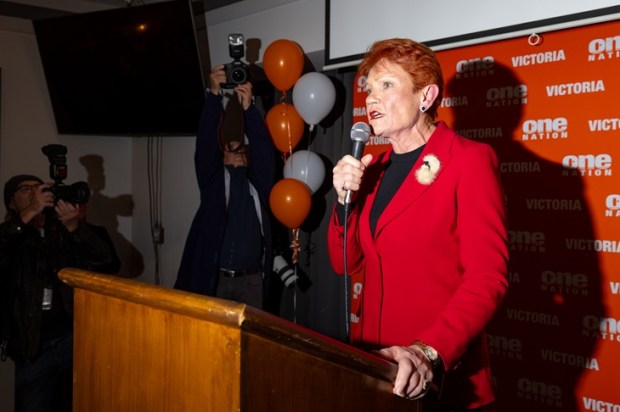
Populists, on the other hand, are effective in articulating public frustration but have often struggled to present a coherent long-term vision.
And the establishment? Too often, it appears unable to decide what it actually wishes to conserve, shifting easily between competing political identities rather than articulating a clear philosophical direction. They cannot decide whether they are deep blue, light blue, or form a committee to discuss the metaphysics of blue in relation to the metaphysics of orange.
The party that prides itself on avoiding factionalism has increasingly appeared fragmented and reactive, often more focused on internal disputes than articulating a coherent vision of national continuity, civic responsibility and social cohesion.
As a young, small ‘c’ conservative, it is deeply frustrating to witness.
Too often, the centre-right resembles children fighting over a chocolate bar, whilst the opposition takes advantage of the chaos. Worse still is the sense that many within the party no longer seem to recognise how unserious this behaviour appears to younger Australians.
Nonetheless, there is a solution that may enable conservatives to regain both confidence and purpose. It is institutions. In accordance with the principles of Edmund Burke, society is made up of ‘little platoons’ – groups of people organised around common principles, whether it’s faith, family, trade unionism, or, in my case, the local rugby club. These institutions provide individuals with a sense of belonging, continuity and community. They support us during times of uncertainty and connect us to something larger than ourselves – take one’s local church as an example.
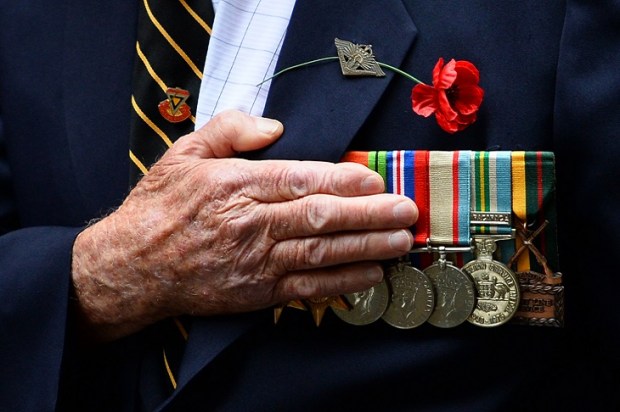
However, globalisation, technological change, and market liberalisation have weakened many of the intermediary institutions that once grounded social life. Both the Left and Right prioritised economic individualism and market efficiency over inherited civic traditions and communal obligations in favour of a more cosmopolitan Whiggish outlook. This didn’t only deindustrialise our country, it also demystified our institutions. Many Australians have become detached from institutions that once formed the moral and cultural foundations of national life, such as the Common Law, parliamentary democracy, constitutional monarchy, and the vital custom of free speech.
If society is, as Burke argued, a partnership between the dead, the living, and the unborn, then conservatives must seriously ask themselves if they are adequately fulfilling their responsibility to preserve and renew that inheritance. At the moment, it would seem the Liberal Party is doing its best to rip up that partnership.
My generation of conservatives is finding it increasingly difficult to defend the philosophical premises of conservatism when political leaders themselves often struggle to clearly define it. That is not to say there should be complete ideological conformity. Conservatism has also contained different traditions and instincts. I personally find myself drawn towards Red Tory or Blue Labour traditions – socially conservative, communitarian, and sceptical of excessive market individualism. Therefore, ideological dogma does not appeal to me. I am not Cromwellian. However, there must be a creed of foundational values. Respect for national institutions must endure as they represent much of what is valuable in this country.
Institutions matter because they unite us. Whether one is on the Left or Right, institutions uphold the rights and freedoms of citizens, including the freedom to criticise those very institutions. This does not mean institutions are perfect. They are not. Parliament itself is an institution, and many Australians have legitimate frustrations with our current parliament. Yet dissatisfaction with an institution should not necessarily lead to a desire to burn it down. A healthy democracy instead seeks reform through democratic participation, civic engagement, and respect for constitutional continuity. I, for one, will seek to democratically reform it through my vote.
Conservatives must recognise that rebuilding public trust requires more than slogans and factional victories. It requires the patient restoration of institutions, communities, and civic confidence from the ground up. It requires conservatives to reconnect with the local community, hear their concerns and respond to them with practical solutions rooted in stewardship rather than spectacle. We must have a bottom-up, organic restoration of conservatism.
The beauty of being a conservative is in the desire to conserve what is valuable whilst reforming what must be improved so society, its institutions, and its traditions may endure for future generations. That is only a political responsibility, but part of a broader civic calling as Australians.