Calling the Paris Agreement ‘just a piece of paper’ is a mistake that will haunt the Coalition, possibly all the way to defeat.
Whoever war-gamed this phrase to side-step the hypocrisy of dropping Net Zero from the conversation without actually unpicking it from policy, has made a strategic mistake. For the life of me, I cannot understand why it was done except, perhaps, as a negotiation between irreconcilable factions.
The Paris Agreement is the central mechanism responsible for Net Zero economics.
Dismissing its role in domestic policy or leaning on the idea we had Net Zero targets prior to Paris (without elaborating that those targets were created in preparation for the Paris Agreement and as part of a global peer-pressure exercise), will only push voters deeper into the arms of One Nation.
Now, more than ever, the Coalition must put their faith in the truth.
If Paris was a mistake – say it.
If the Coalition has no idea how to logistically withdraw Paris from domestic policy – admit it.
If the government is being held hostage by taxpayer-funded beneficiaries of Net Zero – tell us which ones.
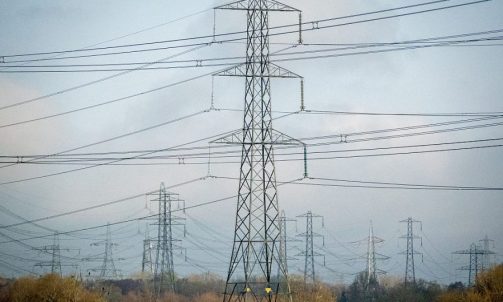
If the energy grid has been structurally weakened by renewable energy – offer us a path back to security.
And if the Coalition really does wish to stay committed to this UN agenda – be honest. Put that forward as the policy position. Do not hide it.
Voters are not going to forgive the Coalition for decades of manhandling and missed opportunities until this conversation gives up on dead climate slogans. Who knows, it might even be time for the Liberals to consider sacrificing a Teal-seat or two to win the nation back. They’re moderates anyway. The forgotten people won’t mind.
Let’s say what nobody else wants to … Angus Taylor’s problem is legacy.
Pulling out of Paris means re-framing chunks of the Morrison, Turnbull, and even Abbott governments as a mistake instead of an environmental triumph.
These years were not the beginning of a technological revolution or planet-saving investment. They were a backwater that’s started to rot. All the little fish are dying. The skeletons are bobbing. What I’m trying to say is the stink is permeating the electorate.
Everyone knows the Coalition spent decades driving a green agenda. They remember the campaign slogans. The nauseating press conferences. They saw Coalition names on bits of UN paper. Politician after politician after politician made a career out of chasing the climate war while denouncing the culture war.
Could it be that sitting members who formed part of that era remain a bit sensitive to public backlash? Too bad. One Nation will replace them. At least, that’s what the polls say. Tweaking tax policy while trying to find points of difference with Labor 20 years too late isn’t going to help. It fundamentally misunderstands the grievance.
Ministers should not have to take themselves on scavenger hunts to work out where they differ from Labor. I’ve never seen Pauline nurse an existential crisis.
Our Energy and Environment Minister at the time, Josh Frydenberg, was proud of Paris. He praised the Emissions Reductions Fund, the Renewable Energy Target, and the National Energy Productivity Plan.
‘Almost a year from the Paris conference, it is clear the agreement was a watershed, a turning point and the adoption of a comprehensive strategy has galvanised the international community and spurred on global action.’
And then we had then-Prime Minister, Malcolm Turnbull, saying that ‘if a country sought to withdraw from the agreement, it takes four years’ and that ‘this is a global agreement … when Australia commits to a global agreement, we follow through’.
Follow through with madness? Why should we do that? I reject the sentiment completely.
There is no benefit continuing on a path of failure simply because you said you would. It is the weakest of arguments.
Even Tony Abbott’s government at the time insisted ‘Australia is making a strong and credible contribution to the international effort to tackle climate change’ and described these commitments, in my opinion, as though they were in competition with other nations.
Who is the greenest of them all? It boggles the mind that we allowed nations to compare environmental credentials on carbon emissions instead of water quality and physical garbage piling up in the wilderness.
Tony Abbott changed his position on the Paris Agreement a long time ago saying:
‘If we had known then what we know now about America’s withdrawal, about the economic damage that renewable energy in particular would do to our power system and to our industries, we would never have signed up. And now that we do know, we should get out, simple as that.’
He will be elected, unopposed, as the Liberal Party’s federal president.
Will he change his position again to mirror Taylor and Canavan? My guess is he will carefully avoid speaking on the subject so as not to create waves in a fragile factional fray.
Abbott also spoke repeatedly about his disappointment regarding the advice his government was given.
Whose advice? That’s what I would like to know.
In 2018, the Guardian reported:
According to people present, Abetz, the Tasmanian Liberal, attempted to argue during Tuesday’s meeting that Abbott hadn’t given hard commitments when he took the decision to sign the government up to the Paris Agreement … that Australia’s undertakings were always aspirational … Abbott then told colleagues he’d been misled by bureaucrats during the Paris commitment process about the impact of the commitment.
That we don’t know exactly how one of the most consequential decisions in the history of Australia was made tells you a lot about the lack of transparency in this political structure.
Politicians remain quietly frustrated that changing government doesn’t change the bureaucrats and yet who has proposed a legislative solution?
A surprise on Friday saw Liberal Senator Alex Antic, my favourite pick as a future Prime Minister, voice his opinion on Paris.
Speaking on Sky News Australia with our Editor-in-Chief, Rowan Dean, Alex Antic said: ‘We shouldn’t be in it. We should walk out [of Paris]. It’s as simple as that. We should do what the US have done. Because … it does have real effects … they do have real-world force in the domestic market.’
Then he added:
‘It’s a complete misnomer that the Paris Agreement is just a piece of paper.’
He also said that the sting is coming out of the climate agenda.
‘My theory about this is the big private equity punters around the world have long used this as a vehicle for their own financial ambitions, are now looking at this through the eyes of data centres and AI, which is a very concerning topic on its own … so the sting is coming out of this. Even the IPCC, a week or so ago, the International Panel on Climate Change, the UN’s attack dog on climate change, has said that oh, some of this modelling might be a little off, so probably the extreme stuff is not going to happen. This is like the ultimate back-peddle happening in real-time. My message is to the Australians that are still pushing this myth, catch up! This is older than the Grateful Dead.’
Antic’s words indicate he understands credibility is worth its weight in gold in this political environment. Populism itself is founded on restoring truth.
As for the entire conversation, I am beginning to form the opinion that governments and political leaders view Climate Change politics in the same way the middle-class see charity for starving children in Africa.
A harmless, low-cost means to attain popularity and purchase virtue in a market where social currency can be traded for power.
Does the occasional child get fed? Probably. I’m sure a few trees were planted too. But that does not mean the net sum of the enterprise was worth it.
The path Australia took toward the Paris Agreement is a journey of some 50 years of global bureaucratic environmentalism and the behaviour of our government appears to fall somewhere between misguided naivety and political expediency. At no point is the process intelligent, considered, or costed.
Is it a coincidence that the Coalition went on a quest for relevancy at a time when the conservative forgotten people were at their most comfortable and wealthy?
Did the Coalition fail their people when they were no longer in need of saving?
A well-worn criticism of the Coalition is that they never really did anything with their decades of leadership. Labor goes on a revolutionary war path with even the thinnest of margins, but what great conservative conquering did the Coalition do? Did they restore the education system? Disempower the unions? Restructure tax for prosperity? Rat out the bureaucrats? We were all there, we know what happened. The Coalition basically sat on Labor’s eggs and now all the chickens have hatched.
The Coalition’s political identity crisis might explain why so much bad green policy was adopted by their leadership and why conservatives bought into overreaches of centralised global governance.
They must have thought the next evolution of Menzies was becoming a diverse, socially left-leaning, cosmopolitan global partner. Remember in the early 2000s all those MPs cringing at our culture during the Olympic ceremonies?
These mistakes are grand indeed.
Personally, if I were tasked with saving the Coalition, I would hunt out every skeleton and present them all to the public. Use the collapse of climate change to take down Labor, the Teals, and Greens. Only then can Australian politics be reset.
Flat White is written by Alexandra Marshall. If you would like to support her work, shout her a coffee over at donor-box.