Antisemitism is an abomination, unacceptable in any advanced democracy and an affront to a civilised society. Yet, as we look at the current state of our streets and the safety of our citizens, we must confront a jarring reality: the antisemitism currently surging through Australia is not an accidental by-product of global tensions. It is a political import, facilitated by the mismanagement of our borders and tolerated by a political class more concerned with electoral mathematics than the ‘peace, order, and good government of the Commonwealth’.
As I have noted in this column, I became personally aware early in this century of the fact that Jews in Australia were living under the threat of violent antisemitism and that the authorities were not acting seriously against this.
The contrast in state priorities was never more visible than at Bondi Beach. During the Covid-19 pandemic, Bondi was flooded with police to enforce the closure of the sand. Later, with exercising restricted to a five kilometre radius from home, identification was demanded of sunbathers and swimmers. Both occasions were massive, if pointless, displays of force.
But when it came to the celebration of Hanukkah on 14 December, 2025, despite the Jewish Community Security Group recognising a ‘high’ threat level, the police high command refused to allocate even one armed officer. All they could offer were passing drop-in, or passer-by police officers. This was despite having just allocated half a platoon of detectives for the spectacular theatrical arrest of Alan Jones not so long before.
Meanwhile at Bondi, the private security guards at Hanukkah could not be legally armed. This was after increasing violence and threats of violence across the city.
This is not merely a failure of policing; it is a symptom of an ‘indecent toleration’ of antisemitism that has become unofficial government policy.
Historically, antisemitism was once more advanced in Christian nations than in Muslim ones. When Jews were expelled from Spain in 1492, they found refuge under the Sultan of Morocco. By the 19th and 20th centuries – before the catastrophic rise of Nazism – antisemitism was receding in Europe. The British Empire, then led by the world’s most powerful country, saw Queen Victoria elevate the great Benjamin Disraeli to the high office of prime minister.
In Australia, the remnants of antisemitism – largely limited to social club barriers – were disappearing by the 1970s. In my youth in Sydney and at my school which had a significant number of Jewish students, I never once saw any evidence of antisemitism. It was a society that seemed to have outgrown ancient hatreds.
The return of this ‘oldest hatred’ began with the mismanagement of the immigration power. In 1976, the Fraser government was forced to close the ‘Lebanon Concession’ after cabinet considered a blunt report: officials had lost control of the programme, and there was a grave risk that the ‘conflicts, tensions, and divisions within Lebanon will be transferred to Australia’. This was the first warning that we were failing to screen for imported prejudices.
The surge we see today is the result of what has been termed the ‘Red-Black Alliance’ – a marriage of convenience between Labor’s hard left and radical Islamists. This shift was foretold in 2004 by Labor eminence Barry Cohen, who declared that antisemitism was ‘rampant’ within his own party. He warned that Labor was abandoning its traditional support for Israel to court the growing Muslim vote in western Sydney, a strategy which enjoyed cross-factional support from Labor’s right.
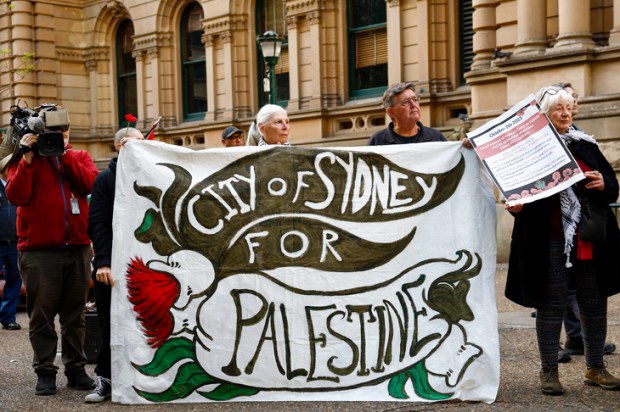
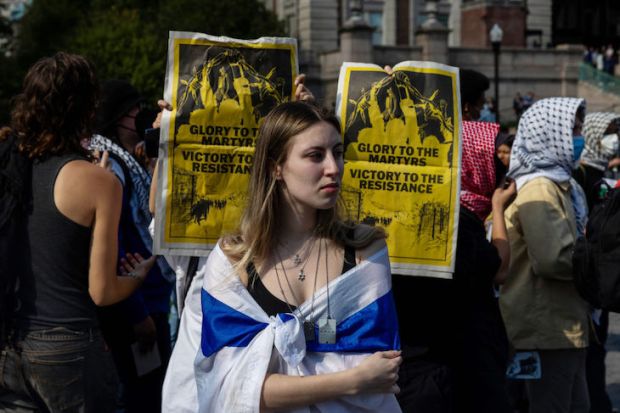
A fear of losing the Muslim vote remains too often the primary driver of Labor policy. In 2012, during an internal debate regarding Palestinian UN observer status, a Labor minister undermined prime minister Julia Gillard by asking Caucus: ‘How could I possibly defend that policy from the steps of the Lakemba mosque?’ This calculation explains why, following the 7 October, 2023 Hamas incursion, the authorities ‘chaperoned’ protesters from the Town Hall to the Opera House forecourt, where a riot ensued yet where the only man taken into custody was a Jewish man carrying an Israeli flag.
Then the police command spent months on a widely criticised investigation into whether the crowd shouted, as everyone I know heard, ‘Gas the Jews’. The eventual claim that they were actually shouting the impossibly unidiomatic ‘Where’s the Jews?’ seemed like a desperate attempt to explain away the audible ‘Z’ sound on recordings. It was a distraction from a broader policy of inaction.
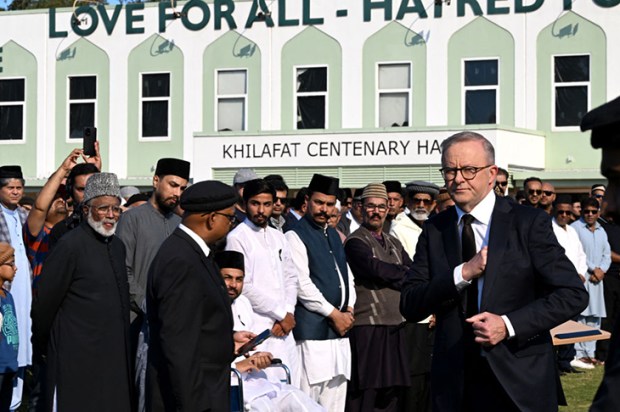
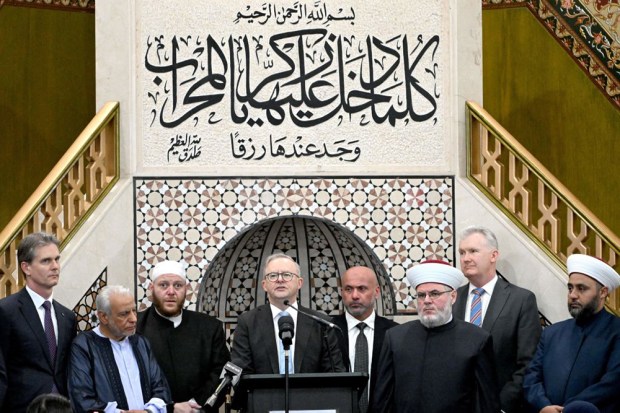
The tenuous nature of this political alliance was recently laid bare when Prime Minister Albanese visited the Lakemba Mosque for Eid al-Fitr prayers. Despite his government’s soft stance on antisemitic demonstrations, he was subject to an angry confrontation. The message was clear: for those holding radicalised views, no amount of political concession is enough.
Governments today argue that they cannot regulate the takeover of our streets by chanting mobs because of the ‘implied freedom of political communication’ found by the High Court. This is a gross misinterpretation of our constitutional traditions. In my youth, free speech was exercised in places like the Domain. Speakers – including communists – interacted with crowds without paralysing the city’s commerce or threatening its citizens.
Serious consideration should be given for a referendum to replace this murky ‘implied freedom’ with a far more relevant US-style constitutional guarantee of freedom of speech and of the press with an express ‘public figure’ defence in defamation proceedings. This would trade the current protection enjoyed by street-occupying mobs for a system that allows more robust speech regarding the activities of politicians and other public figures.
If we are to arrest this decline, the royal commission should look beyond individuals and examine the political parties themselves, and especially the Labor party, as well as the antisemitic Greens, whose preferences put Labor into power. We need a fundamental shift in how they manage the powers granted by our Constitution.
As to immigrants, why not have recorded interviews to ensure they genuinely wish to join and maintain one of the world’s oldest continuing democracies? Why not have a longer probation and only grant citizenship after a thorough Swiss-style process to demonstrate the immigrant sincerely wishes to be a citizen in our democracy? There should also be remedies when crimes involving antisemitism are not prosecuted for political reasons.
Unless we take strong measures, active antisemitism will stain the reputation of Australia. The charge to our politicians to exercise executive and legislative powers for the ‘peace, order, and good government’ of Australia will remain a hollow phrase. Antisemitism is a political problem, and it requires a political solution that places Australian values above the calculated mathematics of winning the next election.
Got something to add? Join the discussion and comment below.
These are some of the matters to be raised in David Flint’s submission to the Royal Commission on Antisemitism and Social Cohesion.
You might disagree with half of it, but you’ll enjoy reading all of it. Try your first month for free, then just $2 a week for the remainder of your first year.