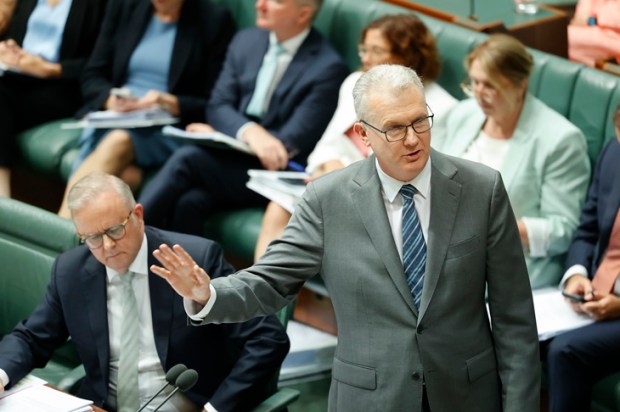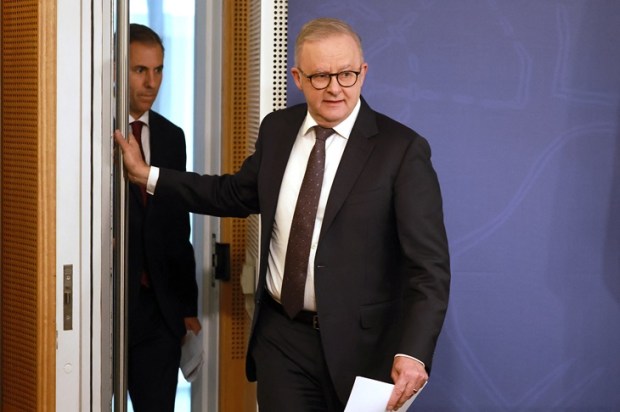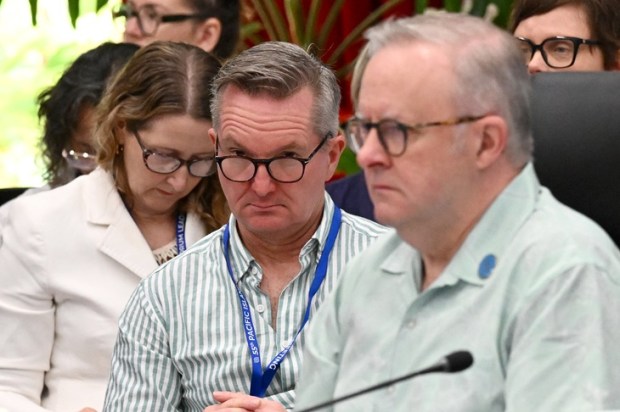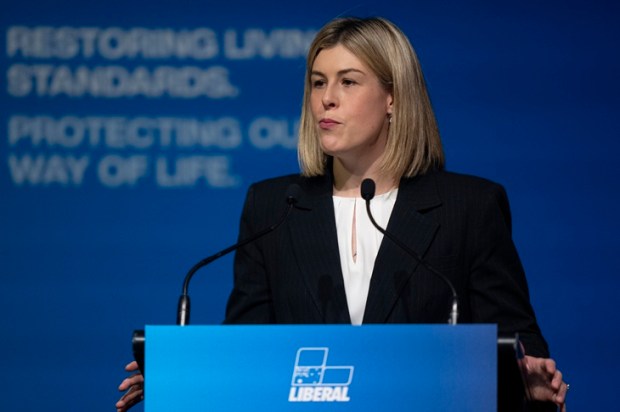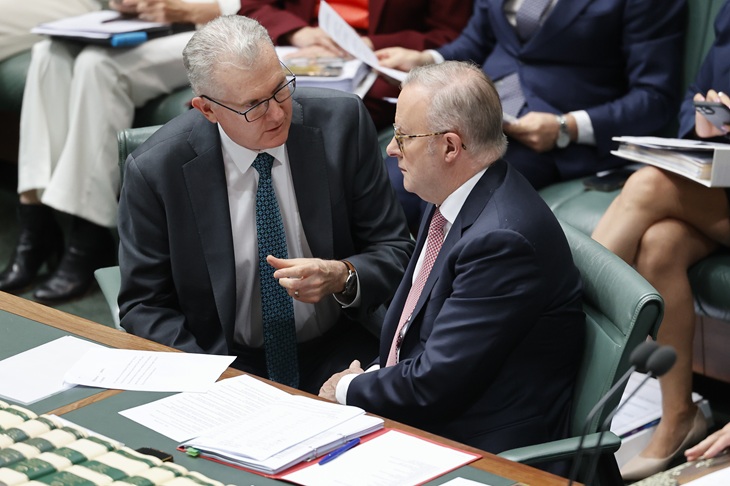
Immigration Minister Tony Burke’s interview with Pawan Luthra on The Pawan Luthra Podcast has been doing the rounds on social media over the weekend and … let’s be generous and say it didn’t do him any favours.
We shall make one thing clear, at no point did Australia vote for mass migration, multiculturalism, or a demographic replacement in capital cities. These are things that have been pursued over decades by various governments, mostly (but not solely) driven by the economic lure of growth by numbers.
The sweet spot of economic return was overrun long ago and what politicians like to frame as a housing crisis or an infrastructure problem runs far deeper.
To put it simply, if you take a small Pacific Island with a population of 10,000 and you bring in 25,000 Chinese workers and give them citizenship, is it still a Pacific Island culture? While an exaggeration for clarity, this is, in essence, the question being asked by Australians regardless of whether or not politicians want to address the concern.
At a time when many Australians feel as if their traditional culture is at risk, having been overwhelmed by non-European migration, multiculturalism, and an aggressive anti-colonial agenda, it is my opinion that Burke’s comments came off as out of touch.
He also seemed to admit to some of the criticisms directed at Labor during the last election campaign, such as plans to make significant numbers of visa holders citizens rather than sending them back as per public expectation. If the government said up front that visa holders would likely become citizens, there would be significant public outrage and yet when it is done quietly, Australians are not given the opportunity to decide how their democracy and its values will be changed from underneath them.
This is, in my view, a subversion of the social contract politicians have with the public.
Further, in the interview transcribed below, you may be alarmed by the admission that our health sector is no longer independent of foreign nationals.
Is this a good thing? I don’t believe so. It is my opinion that this is a tragedy when we are training Australian doctors and nurses only to force them to compete with immigrants brought into the industry deliberately. Is it what the patients want? That is not clear either. Language and cultural barriers are a genuine concern, especially for the elderly.
This is not to say that Australians are against migration, only that when you have too much migration a country ceases to be the country it was in every way that matters.
Indeed, Australians did not decide to make immigration a major election issue until government overindulged and began importing millions of people. If you live in a city such as Sydney or Melbourne, Aussies of colonial descent are now a minority in various parts of the CBD. Is it right that people feel like tourists in the centre of their civilisation? Should you be surrounded by people who do not speak your native language at home or observe your customs? Is it not your city?
When Tony Burke was born, Sydney’s foreign-born population was 22 per cent. Today, it is 43.2 per cent. In some areas of the CBD, it is up to 78 per cent. I walk it every day. It no longer feels like my home.
We hear the Left talk of the horror of colonisation. How is this not a form of colonisation? Or at least, this is what it looks like when guided by a spreadsheet instead of a flag.
As many have said, Australia is not an economic zone in the Asia Pacific, it is a nation with a proud Western heritage which is being attacked, quite literally, by leftwing activists.
Whether it’s beheading or damaging statues of our historical figures, desecrating war memorials with political slogans, or even imported foreign wars and religious terror – Australians are rightly concerned that their country is no longer being ‘enriched’ by the current ideology.
The last thing a sensible government would do in this situation is conduct a mass migration project to further inflame unrest.
There are also some extremely concerning things being written by publicly funded groups dedicated to progressing the cause of multiculturalism which suggest a disregard for the supremacy, value, and exceptional quality of the primary Australian culture.
The culture that people started migrating here for in the first place.
The idea that permanently disadvantaging or even dismantling ‘Australia’ as a Western entity is not only offensive, it is an affront to the sacrifices of our ancestors who built and defended the nation.
It is not for those recently arrived to erase what our forefathers built, and we are entitled to be critical of their attempts to do so quietly from the shadows of bureaucracy.
The Left often speak about ‘cultural destruction’ and yet some of these groups have made the destruction of Australia their primary goal. Of course, they do not see decolonisation as destruction. Australia re-imagined as an arrivals lounge or extension of another geographical region, is considered a victory or even punishment for the former successes of the British Empire.
Forgive us if we, the descendants of the most extraordinary, free, and technologically advanced civilisation in human history, stand up to defend its continued existence.
It is valid for people to complain about their culture changing, their cities being overcrowded, the rise in violence and sexual assault, and even the little things, such as the loss of polite norms that create the everyday foundation of a culture (orderly queuing, saying hello on the street, footpath etiquette, and other high-trust behaviours). They are the fingerprints of polite society which took centuries to form and survived two world wars.
If you look at Japan, they will tell you how important these cultural nuances are.
Returning to Tony Burke.
What did he say during this interview that led to him trend on social media?
I believe he should be judged by his own words. The following are his words, not mine.
‘The first thing that’s happened, as an economy, we have needed to find the best skilled migrants more than ever before. Half of our doctors now are born overseas. Half of our registered nurses are born overseas. About a quarter of the tradespeople we need to build homes are born overseas.
‘So, effectively, we can’t run our health system or build the houses that we need without immigration now.
‘And we have really geared up the targeting and there’s still more that I want us to keep doing to make sure that we can get the best and the brightest to make sure that we can fill those skills gaps because a whole lot of the economic strength of Australia relies on us having a really well-targeted immigration program. And can I say, in the time that that story has happened, that we’ve needed the best and the brightest and more and more skilled immigrants has been the exact time that we’ve seen the growth in the Indian community in Australia.’
When asked about cultural unease and the public calls for a sharper focus on the number of migrants, he replied:
‘Two things are true. The first is that economically we need immigration. We need the skills, we need the people. And culturally we’re stronger because of it.
‘But secondly, we also need to make sure that the infrastructure and services are keeping pace as well. And this is where the targeting has to be done really carefully. It is true that you need to make sure you are building enough houses for the people too. To deal with the housing shortage that we have.
‘Getting the right immigrants is actually part of the solution not just … not necessarily part of the problem.
‘In that as I said I before about a quarter of the tradespeople that we need are born overseas. So to be able to build the houses and deal with the infrastructure we need the targeting – but it is also true. It’s not like you can have unlimited immigration without creating a problem with housing and infrastructure so we need to make sure that it is managed and is paced.
‘One of the things that really worries me about the current debate though, if you get into a world of just saying effectively immigration is bad, you get into a world of people casting suspicion on immigrants, you get into a world of singling out some of the countries. And obviously the Indian community has seen that be done in a really horrible way. Then effectively, it’s bad for the economy. It’s bad for the cohesion of Australians. It’s not who we are. And it leads people to feeling, why is the country that I love questioning me?’
He is then asked about the migration policy of Angus Taylor and the Coalition. What, specifically, crossed the line…
‘There are two different sorts of things in it. Some of it deals with claims… He will say, ‘We need to do this… We need to do that…’ and it’s things we already do. So, he’ll say, you know, we need a taskforce to bring together ASIO, the Federal Police, and Home Affairs. That is in fact what the Home Affairs portfolio is. It’s already there. Already been done. He’ll talk about security checks. We have already have extraordinary security checks that take place. And so there’s things that he’ll claim we need to do that in fact we already do…’
Is it shared by populism rather than evidence?
‘Look, I view immigration in terms of us getting the skills that we need. I think Angus Taylor is viewing it as trying to get the votes from One Nation that he needs. And that’s a lens that he’s applying to it.
‘Effectively, a whole lot of what he says is about getting Australians to blame each other. And I think that’s an ugly horrible thing to do and I don’t think it’s in the interests of Australia.
‘Angus Taylor on coming to the leadership, did two things very quickly. First, he brought Jacinta Nampijinpa Price back to the front bench. The person who had specifically singled out migrants from India. And the second thing he did was start this weaponising of immigration and in particular when he talks about immigration to say that, you know, one of the critical issues with respect to Bondi was immigration.
‘Now, of course, one of the two people was born here. The other, yes he did migrate from India but he migrated 30 years ago. Like the radicalisation of those two is something that had happened, you know, and obviously we’ll, you know, we… This will be argued back and forth in court. Um, but anything about their radicalisation will be an argument about what happened in Australia. Uh, and to somehow blame that as being relevant to the immigration from India 30 years ago, I… I just think was an ugly thing to do. And it was about effectively detonating an argument within Australia where communities like the Indian Australian community were going to suffer abuse and judgment from fellow Australians that they just don’t deserve.’
He was then pressed on the competition between One Nation and the Coalition. Polling shows record support for One Nation and widespread concern regarding migration numbers. Is it perception or a signal that current policy settings are not correct?
‘The migration numbers always need to be tailored to where the country’s at and where the economy’s at different points in time. At the moment we do have a significant housing shortage. So that is why I’ve bringing the numbers down. So, I’ve been doing that in a measured way, in a targeted way. Effectively it’s now 45 per cent lower than its peak.
‘What I will never do is start this blame of immigrants. So, it’s on the government of the day to make sure that we’re tailoring the numbers to deal … to get the people we need to build the houses and build the infrastructure but also to make sure that the numbers don’t get too far beyond.
‘And this is where so, we’ve said to the universities effectively, you need to provide enough student housing. If you provide the student housing, then you can you have the students. If you are not providing the student housing, then we’re not going to increase your numbers. And put a very real incentive and a link between providing the housing and getting the students. And those sorts of links, that’s the way we need to do it.
‘But the way Angus Taylor has just blamed immigrants and used a narrative that very much singles out the Indian community in Australia, I think is ugly, I think in policy terms, it is wrong. And I also think, as, you know, when you enter politics you take on leadership positions. Your reference point simply can’t be what’s happening to votes for someone who’s running really awful policies. Your reference point has to be Australia. Your reference point has to be, how do we build the best community here… And I don’t think for a minute that’s what he’s done.’
He is then once again asked how government rebuilds public trust and the social licence for migration.
‘Part of that is why I’m here now … to make sure that people know how strict the security checks are, how targeted the process is that we’re doing, but also how important immigration is to the economy.
‘Yeah, there is not a single hospital that you could run in Australia without people who are on visas. Not one. Aged care. Our elderly effectively don’t have the care they need without our immigration system. Once people and, yes we do have a housing shortage, but unless we get the skills we need to build the houses we will continue to have a housing shortage. So, a big part of this is explaining and me doing interview after interview, which is why I’m here now. Explaining to people that when they talk about problems with infrastructure not keeping, they are right. We don’t deny that there is a housing shortage, infrastructure is behind. But then to explain immigration is part of the answer to that. If we were to stop immigration, if we to single out – and to single out the Indian community of all communities which has so many highly trained people coming to Australia – would be to simply hurt Australia, not protect it.’
And on a more macro level, he was then asked about 2023 when a review of the migration system was handed down. It said it wasn’t failing because of numbers, but because it was poorly designed. This was about an overreliance on temporary visas. He was asked specifically about concrete measures taken to reduce the number of people stuck temporary status.
‘So there’s a few changes. Some things we’ve already done and more things that we are continuing to look at. If I start with the values that I’m trying to bring to this debate.
‘First of all there are lots of countries that have effectively part of their economy is guest workers who will never become citizens.
‘I don’t believe that should be the model for Australia.
‘I believe that people who are still here, people who are going to continue to be here and are working here, should have an opportunity to become fully part of Australia’s democracy.
‘So, if you look at the … there as a publicity at the start of last year when I was holding very large citizenship ceremonies, and people were angry, that the Liberal Party was very angry for doing it and for me…’
‘And they [the new citizens] were happy with you?’
‘[Laughter] That’s probably part of the deal. That’s true. But for me those citizenship ceremonies are the most patriotic events you can have. Like they are events where we have people who have chosen us […] well can I tell you a special memory from all of the citizenship ceremonies. There’s something that happens almost every time now. So, what I do is I read out the list and I’ve always got a record of who the youngest person is becoming a citizen and sometimes they are as young as a few months old. And who the oldest person is and I’ve had 90-year-olds and things like that, and usually the people who’ve waited the longest, so I’ve had people who’ve waited more than 60 years in Australia before they’ve become citizens, almost always they’re from the UK. Almost always. But I then go through country by country as to who we’ve got here and people will put their hands up or call out. I get to India and the cheer is always the loudest, always the loudest and there is just this complete sense of celebration from everybody that their whole migration journey, the final step is now about 15 minutes away. And the final thing I say to them after I’ve made them citizens is welcome home. And I want that to be real.’
To conclude, I will say only this. Tony Burke speaks warmly of the Indian community, as he should. It has a coherent and strong identity. But what identity does the Australian community have? In 50 years, will we still have a unique culture recognisable by other nations?