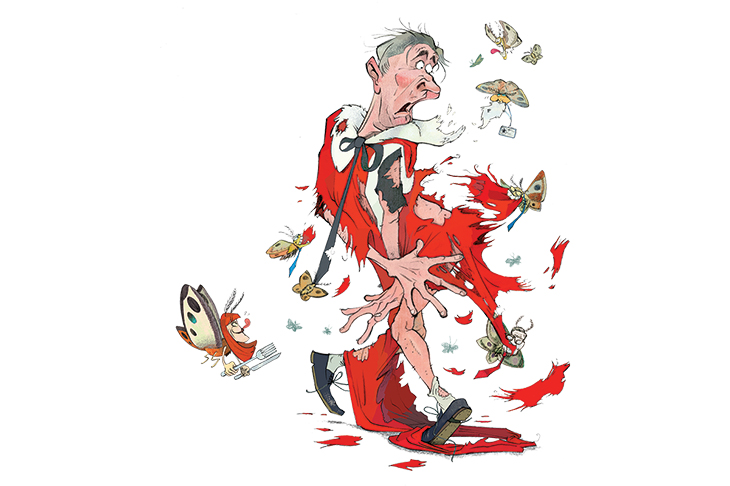
The House of Lords is often described as ‘the best private members’ club in London’. Certainly, it has an appearance more impressive than White’s, a menu more subsidised than Boodle’s and a membership more aristocratic – in the modern sense – than Pratt’s.
The most recent vandalism of ejecting the actual hereditary peers has been the final act in making the House of Lords the bastion of our new aristocracy: the same people who run our Oxbridge colleges and sit on councils of this or that and who occupy the same comfortable thought-world as many of our bishops and academics and judges.
The assisted suicide bill has shown the House of Lords at its best and at its worst
Since the Blair revolution, this class has been able to entrench within the highest echelons of the British state themselves, their supporters, their friends and very often their families too. They are in every sense the new aristocracy – though Greek scholars might fairly contend that aristoi (‘the best’) has now so strayed from its original sense as to be meaningless. The place that they most coveted was that members’ club: the Lords. This was supposed to be their Valhalla; the majestic and gilded hall wherein they receive their just rewards. The House of Lords is therefore, in a sense, more powerful than it has been since Victorian times, in that it is once again filled with people who actually run the country, as opposed to those who used to do so.
At the height of Tony Blair’s reign of terror, there was a consensus among his revolutionaries that the Lords ought to be elected. But it has become increasingly clear in recent years that the public will not vote as their leaders tell them to. And so the post-Blair establishment reconciled itself to the lack of democratic accountability in the Lords by making the case for its existence as ‘a chamber of experts’.
The Starmer government was to be the chamber’s apotheosis in this regard. That is why, despite the parlous state of defence and the economy, the ejection of the hereditary peers became a matter of legislative urgency as soon as Sir Keir was in No. 10. Once the Lords had rid themselves of the descendants of people who had done things like been Lord Protector for Edward VI or won the battle of Waterloo or El Alamein, and replaced them with people who ran the DVLA or were related to Labour MPs, they could ascend to their perfected form: Britain’s council of elders. Comfortably smug and comfortably numb. The chamber could be the last resting place for the institutionalist progressives after a lifetime of wearing down the sinews of Britain.
The assisted suicide bill shattered that illusion. It did so in part as a result of the nation being saddled with a House of Commons abounding with people whom we might call intellectual and professional pygmies, were that not grievously unfair towards pygmies, who still at least have backbones and consciences. It was also due to a generationally dishonest prime minister, who wanted to achieve a major piece of legislation that would change society for ever but was too cowardly to put his name to it. After the Lords was sent a dog’s dinner by the Commons, the atmosphere of the upper house changed. Instead of being a place of agreement on what was sensible for the nation, it became a place of vigorous debate. The belief that progressive legislation is a good per se came up against the reality of people who actually knew what they were talking about. The result was real debate, real scrutiny. And that was not what Quango Valhalla was meant to be for.
The bill also exposed the hypocrisy at the heart of the ‘sensibilist’ vision. In the past, the chamber’s institutionalist progressives had assured themselves that blocking legislation – especially on the issue of Brexit – was integral to their role as the nation’s conscience. Now they found that, on a moral issue, there were cuckoos in the nest. You could almost see the horror on their faces as they realised that alongside them in the Lords were peers with irreproachable professional expertise who, after examining their conscience, felt they had no choice but to vote against assisted suicide.
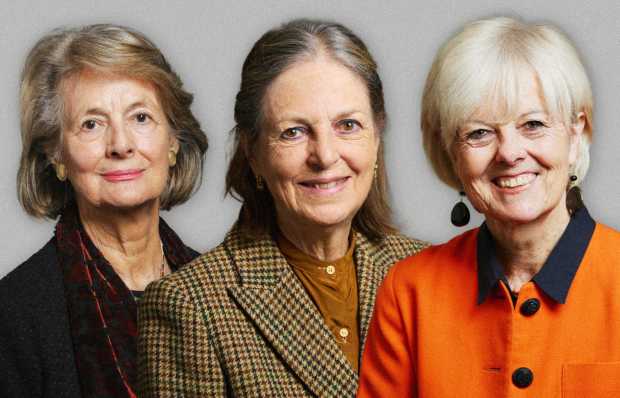
This has been corrosive to the fundamental principle that undergirds the post-Blair Lords – that ‘sensible people’ all think the same way. Cross-benchers such as Baronesses Grey-Thompson, Finlay and O’Loan were invited into the club because it was believed that such impressive people would increase the legitimacy of the place. But it was also assumed that, once they were in, they would conform to the rules of ‘sensibilism’. The reason the bill’s supporters – Lord Falconer, Baroness Jay et al – have thrown such monumental tantrums over its failure is that their assumptions have been so wrong. It is now clear that not everyone can – or wants to – see what they see; not everyone favours ‘rights’ over obligations.
In short, assisted suicide has shown the House of Lords at its best and at its worst. A group of people who have spent their lives getting their own way were finally foiled, and foiled by the very people they had allowed into their ranks to try to justify their existence. Now, knowing that their hallowed halls have been sullied by those who would defy their desires, they seek their own abolition once more and cry: ‘I care for nothing, all shall go.’
Looking ahead to a possible Reform government, the institutional progressives will find their Valhalla filled with people they find even more distasteful. And so they would sooner demolish the hall entirely than see it occupied by those they despise. It is twilight for these self-appointed gods – a Rotterdämmerung.
Got something to add? Join the discussion and comment below.
You might disagree with half of it, but you’ll enjoy reading all of it. Try your first month for free, then just $2 a week for the remainder of your first year.