At this year’s World Economic Forum, Canadian Prime Minister Mark Carney warned about ‘a rupture in the world order, the end of a pleasant fiction and the beginning of a harsh reality, where the large, main power, geopolitics, is submitted to no limits, no constraints’.
He referred to ‘a strong tendency for countries to go along to get along….’ That nations regularly participate in rituals which, privately, they know to be false, a phenomenon that Czech dissident, later president, Václav Havel, called ‘living with a lie’.
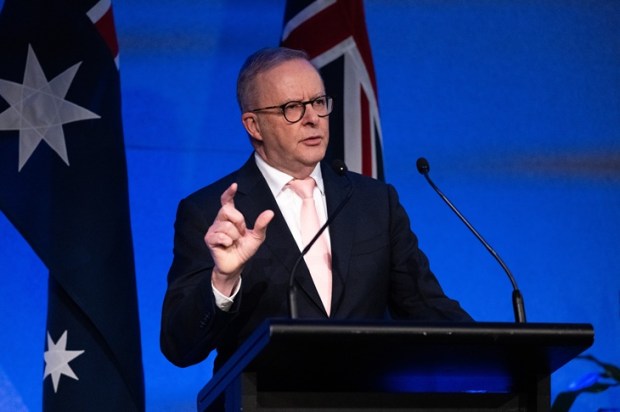
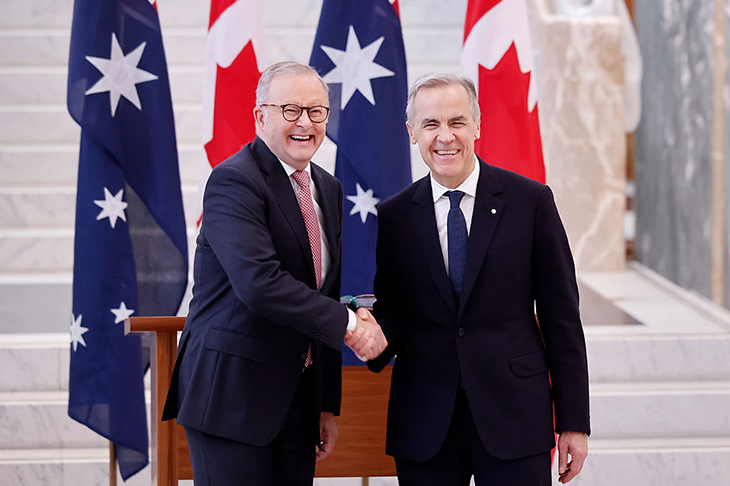
No doubt he shared these sentiments with PM Anthony Albanese on his recent visit to Australia. Yet, both Canada and Australia are guilty of perpetuating this lie.
How else to read Montreal and Canberra agreeing to nominate Iran to join UN bodies that oversee human rights, only weeks after Tehran had slaughtered some 40,000 of its own people and, then, sent the families of the dead a bill for the bullets. The United States alone refused endorsement. The rest happily went along to get along.
Mr Carney proposes ‘ad hoc coalitions’ on key issues with partners that share common ground; arguing that middle powers, which include Europe, Australia, Canada, Japan, and South Korea, together represent a GDP larger than the United States, three times the trade flows of China and the largest research and development spend in the world. But if it means going along with the current dysfunction of the United Nations and the communist and theocratic dictatorships who ignore international law and collectively consider Western democracies the enemy, what’s the point?
To Carney’s credit, he intends to lift Canada’s economic credentials by creating new trade corridors, cutting taxes, downsizing the public service, limiting immigration and fast-tracking investments into energy, AI and critical minerals. Canada’s oil and gas exploration and production are being increased, with projected output this year set to reach an all-time high.
On the environment, he has reversed a number of Trudeau-era policies, scrapping the consumer carbon tax, repealing the EV sales mandate, supporting a new oil pipeline, and encouraging liquefied natural gas development. He also refuses to confirm Canada’s 2030 and 2035 emissions reduction targets.
Canberra should take note.
Most significantly, Carney is doubling Canada’s defence spending, currently running at two per cent of GDP and, entering into a comprehensive strategic partnership with the EU, including joining Safe, for defence procurement.
Like Australia, Canada is a member of the US Five Power Defence Arrangements and the Five Eyes intelligence-sharing alliance. But while diversifying trade and defence ties, Ottawa remains heavily dependent on Washington for both.
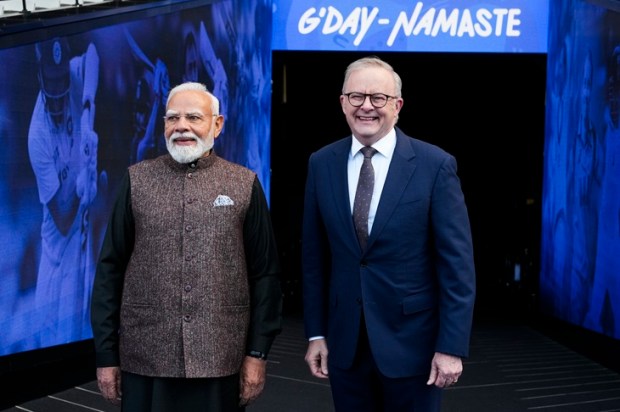
So could Canada really lead a united coalition of nations with different cultural, economic and philosophical backgrounds, strong enough to challenge the US, China and, Russia? And where does rapidly growing India, already the world’s third-largest economy, fit into these plans?
Becoming more economically independent and pulling its weight on defence are worthy objectives, but Carney must be aware that despite long-standing, broad political alignments with America, Nato countries behave as a coalition of the unwilling.
No doubt reflecting the influence of their rapidly growing Islamic constituencies, they now argue they don’t have a dog in Washington’s fight with Iran, to the point of denying America access to some military bases during the recent war.
Australia seems similarly influenced.
Notwithstanding Canberra’s long-standing defence alliances with Washington and friendship with Israel, when called upon for support, it demonstrated infidelity by failing to send ships to the Middle East and by supporting Hamas’s stand for a separate Palestinian state. During the Iran war, Canberra demanded three Australian submariners aboard a US submarine, which sank an Iranian naval vessel, take no part in hostilities.
This disrespect relies on the arrogant presumption that Washington will unconditionally defend them and allows Nato’s and Australia’s defence budgets to be diverted into delusional green environmental experiments, social welfare policies and, culturally incompatible, mass immigration
Australia’s preoccupation with election cycles has seen self-sufficiency abandoned, with exploitation of almost inexhaustible reserves of coal, gas and uranium, held hostage to federal government policies, state-level moratoriums and spurious Aboriginal claims. In just 25 years, Australia has gone from being self-sufficient in oil and petrol, with eight refineries supplying 98 per cent of consumption, to having two refineries (one damaged by fire) and a reliance on imports for roughly 90 per cent of its fuel needs.
Sensing a shift in geopolitics, Labor plans to increase its defence spending to a derisory 2.8 per cent of GDP by the mid-2030s. But this number has been dishonestly inflated by including, previously excluded, pension and veterans expenditures. Living this lie is fraught with danger.
Meanwhile, torn between a civilisational threat and the opening of the Strait of Hormuz, Australia and other US allies, chose appeasement. The US chose democratic freedom.
Time will tell, but the crippling of Iran’s military capability, the decimation and growing disunity of its leadership and the blockading of the Strait of Hormuz, point to America, along with Israel, having finally beaten Tehran into postponing completion of eleven nuclear warheads, the main reasons for the war, and easing the way for regime change.
But will Australia, along with other Western democracies, express appreciation to President Trump and Prime Minister Netanyahu for averting an emerging existential threat and for removing Iran as the world’s leading state sponsor of terrorism, or, with the crisis averted and in the hope the strait will reopen, continue to promote the lie that traditional Islam is a religion of peace, not one mandated to violence against unbelievers.
Understandably, President Trump feels betrayed and is considering withdrawing from Nato. He has also singled out Australia for lack of engagement. Whether Canberra was asked for support matters little. Shared values, obligations to a long-time, loyal friend, not to mention Australia’s parlous defence position, should at least, have led to an offer of assistance.
Which probably means, after Donald Trump leaves the building, the White House will remember those who pretended friendship, but were living a lie.
Got something to add? Join the discussion and comment below.
You might disagree with half of it, but you’ll enjoy reading all of it. Try your first month for free, then just $2 a week for the remainder of your first year.