On the face of it, the Office for National Statistics (ONS) have just released great news on unemployment. The rate – against all expectations – has fallen from 5.2 per cent to 4.9 per cent. Radio 4’s Today programme welcomed the ‘surprising’ news. But this is no good news story.
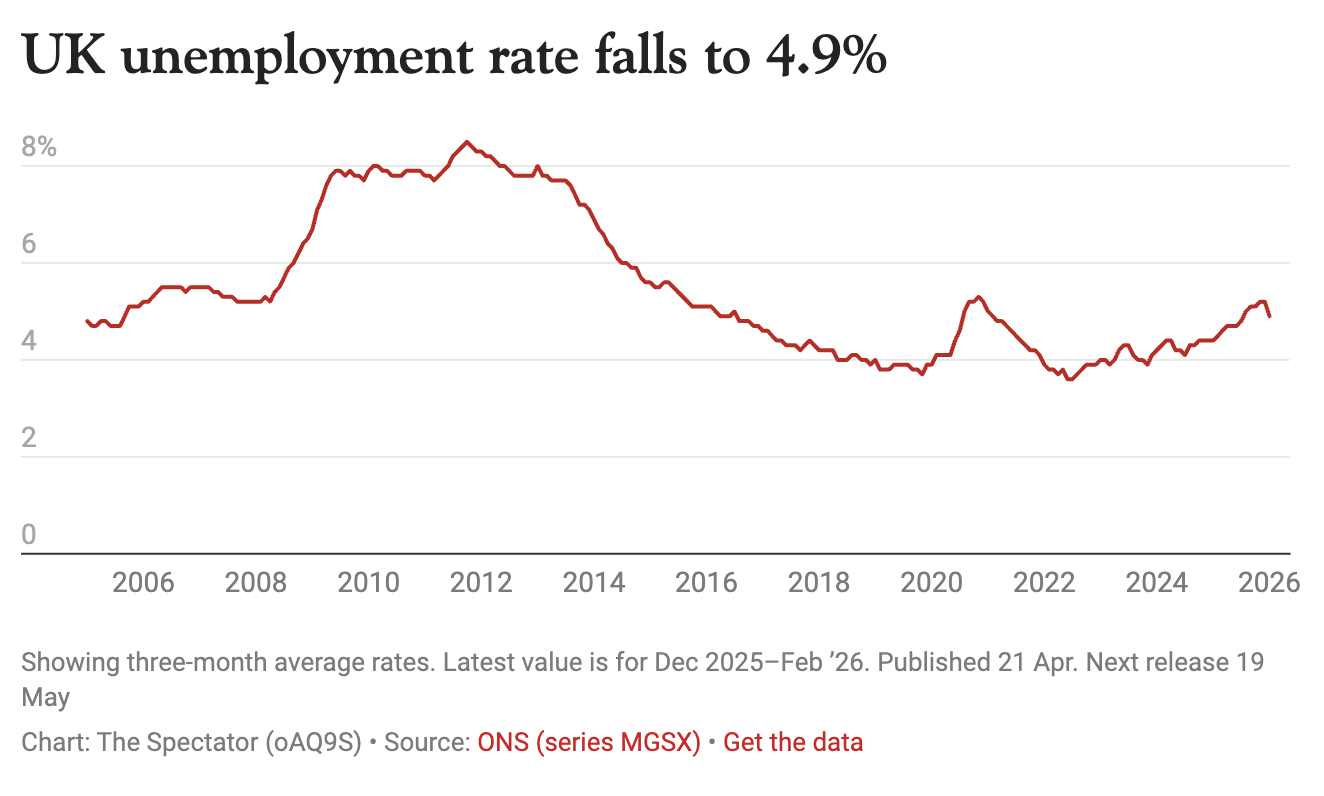
To be classed by statisticians as unemployed you have to be actively seeking work. If you’re not then you’re put in the ‘economically inactive’ category. And that’s the bad news: whilst the unemployment rate has decreased, so too has the employment rate. What’s gone up is the inactivity rate – accounting for almost all of the change in unemployment.
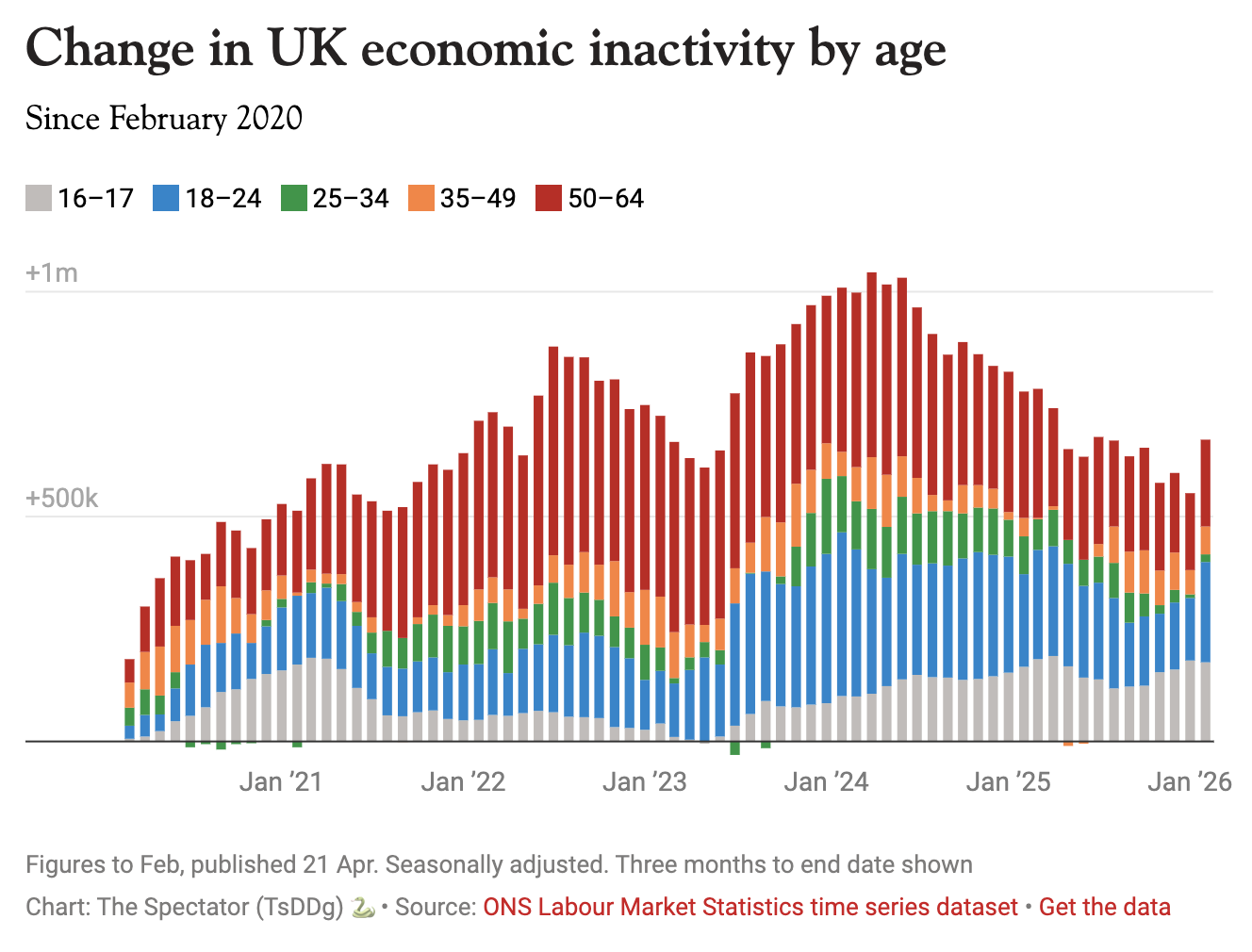
So what’s going on? The ONS reports that the increase was driven by young people and specifically students no longer looking for work. That’s hardly surprising when you think about how expensive it has become to employ people in jobs students typically take. Hospitality and retail particularly have been hammered by Rachel Reeves’s increases to minimum wage and her £25 billion National Insurance hike.
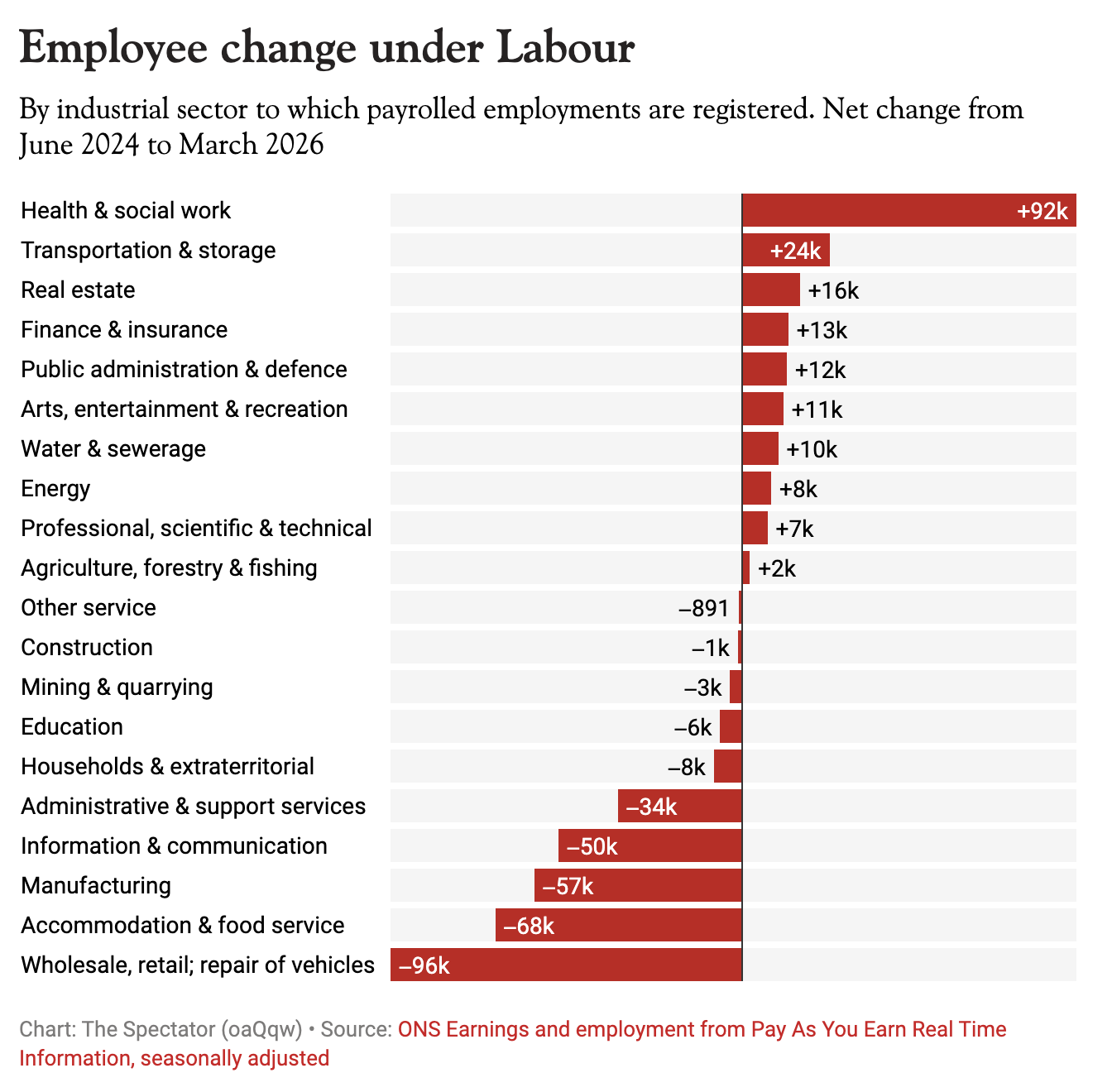
The below Reality Check graph makes the point: since Labour came to power wholesale and retail, as well as accommodation and food services, have seen the largest falls in employment.
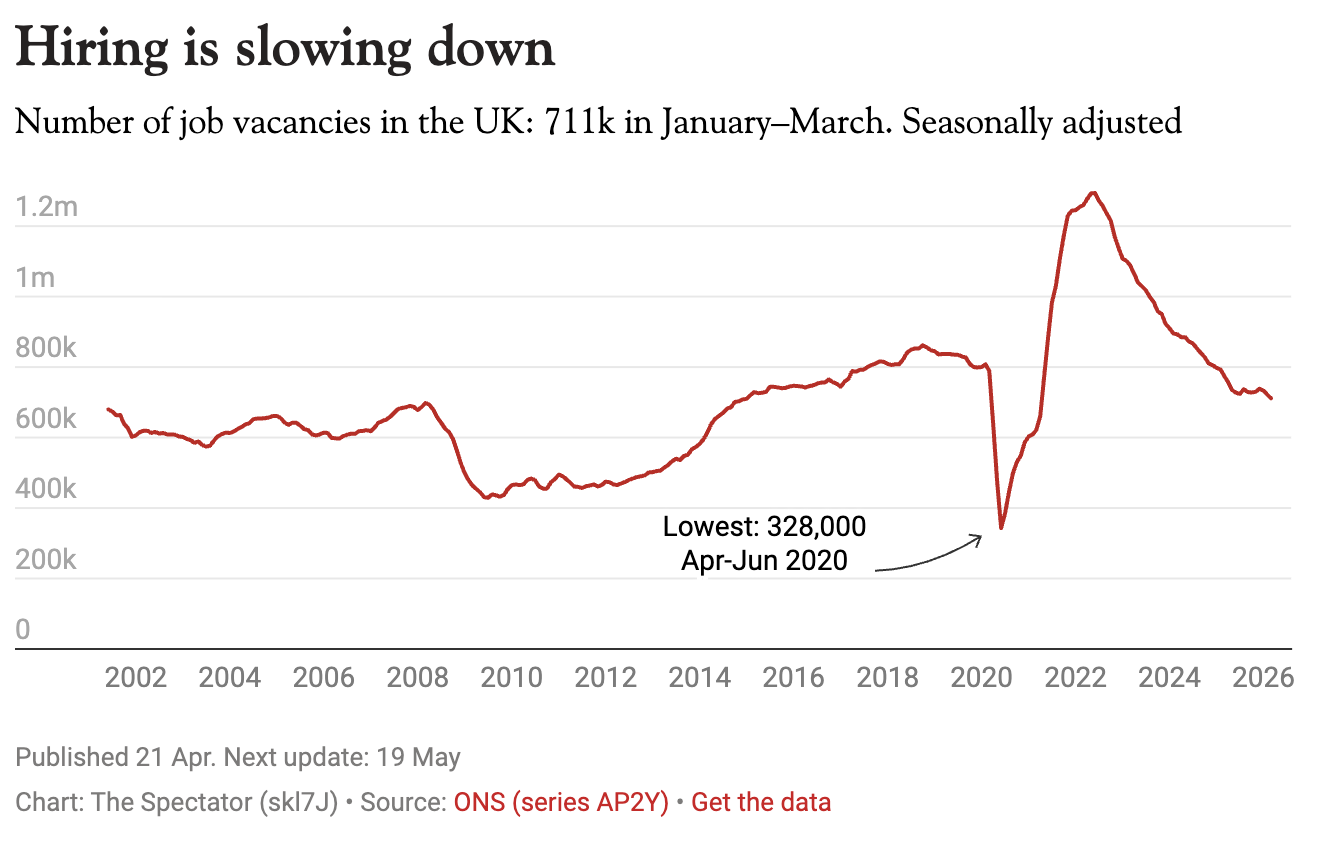
The unemployment rate also relies on the now notoriously dodgy Labour Force Survey but the hard and fast numbers are still going in the wrong direction, too. Payrolled employees – which relies on HMRC tax data – fell 74,000 in the year to February while vacancies have hit a five-year low.
So a mega dose of caution is required here. We’re not seeing a sudden return to job creation. Instead, it is confirmation that many have left the job market permanently and, more worryingly, that an increasing large number of the jobless young have decided not to look for work at all. If that becomes a trend it could be very difficult to reverse.