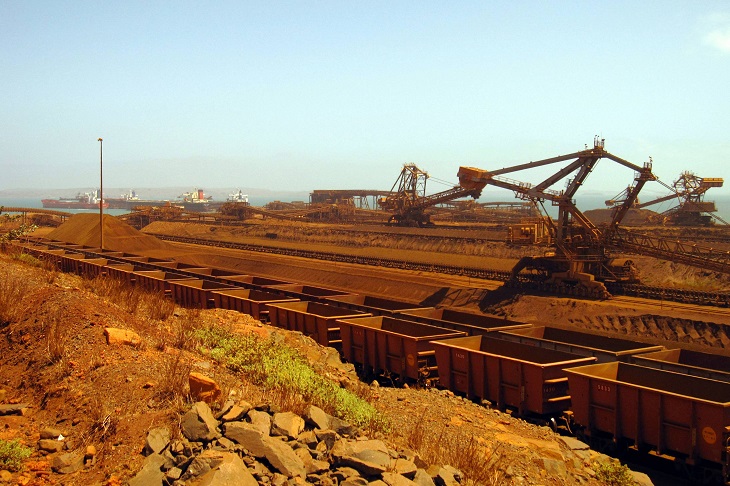
This week Australia marked Minerals Week 2026 – an opportunity to recognise a sector that does not merely talk about national prosperity, but actually delivers it.
The Minerals Council’s theme for the last week, ‘Re-energising the future’, is a timely reminder of what should be front of mind for every Australian:
Is Australia genuinely backing the industry that powers our economy, funds public services, sustains regional communities, and underpins our strategic future?
Because mining is unlike any other industry to Australia.
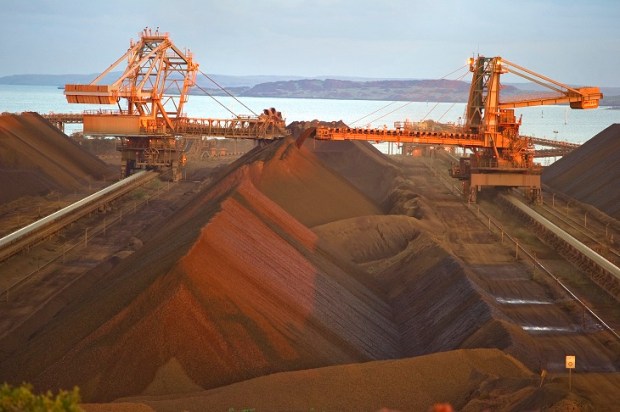
It is undeniably the engine room of our national economy.
A strong resources sector helps fund essential infrastructure and public services without placing additional pressure on Australian households.
When mining revenue remains strong, it takes the pressure off the government’s bottom line – reducing the need for higher taxes or increased borrowing.
Australia-wide, mining contributed $212.9 billion to GDP in 2024-25.
That was 8.1 per cent of the economy.
The sector employed more than 300,000 Australians and supported around 1.25 million jobs across the broader economy.
That is nation-building by any measure.
The celebration this week marks an appropriate time to recognise that contribution for its true worth but also to ask whether current policy settings are strengthening or weakening the viability of the sector.
Australia cannot afford complacency.
Yet, under the Albanese government, there remains a clear gap between ambition and delivery.
We remain too reliant on the ‘dig and ship’ model and continue to struggle to establish competitive downstream processing due to high costs and an increasingly complex regulatory environment.
Last month, that reality was laid bare.
Albemarle announced the closure of its $1.5 billion Kemerton lithium hydroxide refinery in Western Australia – less than four years after opening – because it could not compete with jurisdictions such as China.
Around 250 jobs will be lost.
Labor’s industrial relations changes, including the ‘Closing Loopholes’ legislation, have been widely criticised by industry for adding complexity and risk to major projects.
There are also growing concerns from operators in the Pilbara about increasing union activity and right of entry requests, which Minerals Council of Australia chair Andrew Michelmore warned are adding disruption – and undermining the highly productive workplace model that has underpinned the region’s success for decades.
At the same time, the ‘nature positive’ laws risk introducing further duplication, delay and uncertainty across environmental approvals.
In mining, delay is not merely an inconvenience.
It can often be the difference between a project proceeding or not.
Capital is mobile and investment is global.
Where Australia becomes slower, more costly and less predictable, investment will shift – to Indonesia, Canada, Latin America, and Africa.
In some cases, it is already happening.
And that makes the question for the Albanese government a pressing one.
Are your policies positioning Australia to lead in this sector, or gradually eroding our competitive advantage?
Australia has extraordinary natural advantages.
But without the right policy settings, we fail to deliver on their full potential.
The focus must be on reducing delays, supporting productivity, providing certainty for investment and recognising the scale of global competition.
The men and women of our resources sector understand this.
They work in some of the most challenging environments on earth, delivering the exports that underpin national prosperity.
They deserve policy settings that match their contribution.
So, during Minerals Week 2026, let’s acknowledge the workers, businesses and communities that sustain this vital sector and celebrate their vision, determination, and plain hard work.
But let’s also have some clear-eyed reflection.
If Australia allows cost, delay, and uncertainty to characterise our mining sector, we will lose ground in the global race for critical minerals and strategic resources.
That is not inevitable.
But it is a real, tangible risk – and one that should be top of mind for all those whose goal it is to keep Australia prosperous.