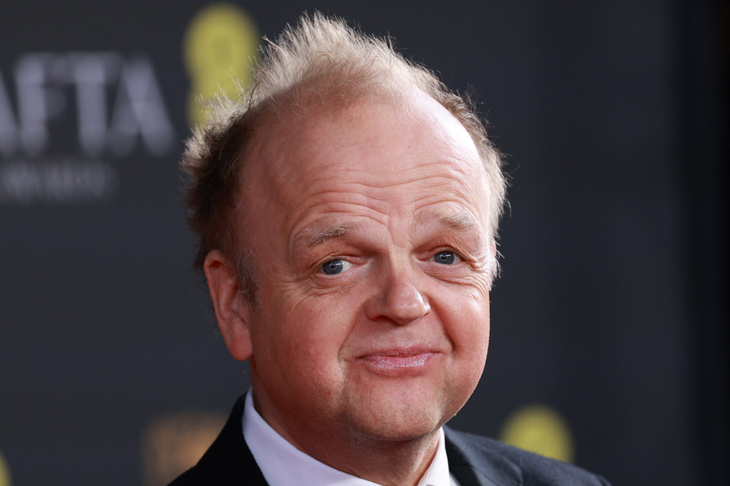
It’s fascinating to see that Sharmill are presenting a new Othello from London’s Haymarket from 28 March with David Harewood as the Moor of Venice. We begin with Iago, crisply played by Toby Jones in military dress declaring, ‘I hate the Moor’ and going on to rhapsodise, ‘Divinity of Hell’. But Othello reacts to his warning with a masterful verbal beauty that is characteristic of him, ‘Keep up your bright swords for the dew will rust them.’ It must be the better part of thirty years since Harewood played Othello to the Iago of Simon Russell Beale in Adelaide. That would be around the same period when he essayed other warrior roles such as Hotspur to the Falstaff of Michael Gambon and Antony to the Cleopatra of Vanessa Redgrave. Other notable Othellos of the last couple of decades include Chiwetel Ejiofor at the Donmar Warehouse with Ewan McGregor embodying what Coleridge called the ‘motiveless malignity’ of his nemesis. When Paul Scofield played Othello he must have been the last white actor of the first rank to do the role in blackface though Olivier preceded him in 1965 in a performance James Earl Jones defended. He is probably the actor most people would like to have seen in the role though there is the 1995 film with Laurence Fishburne.
The Haymarket production directed by Tom Morris has a gorgeous scene in the Doge’s palace full of resplendent scarlet which accompanies and highlights Othello’s great speech, ‘She loved me for the dangers I had pass’d,/ And I loved her that she did pity them. /This only is the witchcraft I have used.’
Desdemona is American (Caitlin FitzGerald) and so is her father Brabantio (Peter Guinness). We rapidly shift to the shrouded half-light of confusions at land and sea which are indicated by stormy electrical effects which indicate the wildness of the weather. Toby Jones doesn’t get to sing the sailor’s shanty which will set Cassio – with no head for the grog – shouting and brawling.
David Harewood is a powerful Othello with an instinctive command of the mightiness and frailty of the language. He is utterly convincing in ‘Farewell the tranquil mind! farewell content! / Farewell the plumed troop, and the big wars, / That make ambition virtue! O, farewell! / Farewell the neighing steed, and the shrill trump, / The spirit-stirring drum, the ear-piercing fife, / The royal banner, and all quality, / Pride, pomp and circumstance of glorious war! / And, O you mortal engines, whose rude throats / The immortal Jove’s dead clamours counterfeit, / Farewell! Othello’s occupation’s gone!’ But it would have been good to have less casual dress and perhaps a greater sense of humour. But it’s not hard to imagine this might be as vivid and vigorous an Othello as we could hope for. It’s hard not to treasure the old Paul Robeson recording from the 1940s tour of the play. When he was told someone had said the play had nothing to do with race he said, ‘Let him do it in Memphis.’ In the Deep South they had watched politely until the great African-American singer/actor kissed Uta Hagen’s Desdemona: then they rioted.
She went on to be the original stage Martha in Who’s Afraid of Virginia Woolf. Robeson’s Iago was José Ferrer who won an Oscar for his Cyrano. The production must have notched up more performances than any other. Robeson who had played Othello to Peggy Ashcroft’s Desdemona did it again in the legendary 1959 season directed by Sam Wanamaker that included Olivier’s Coriolanus and Charles Laughton’s Bottom and Lear.
The Haymarket production could do without a gun in Othello’s stunning finale ‘Soft you; a word or two before you go’ and there’s also a less reciprocal and less atmospheric duet in the Willow scene when Emilia, Iago’s wife, says of Lodovico (the Venetian emissary), ‘I know a lady in Venice would have walked barefoot to Palestine for a touch of his nether lip.’ Nor do we get the right emphasis in ‘Why, who would not make her husband a / cuckold to make him a monarch? I should venture purgatory for ’t.’ Emilia’s realisation that Othello has killed her mistress is done stridently but not on the note. It is good to have Toby Jones say of Cassio, ‘He hath a daily beauty in his life that makes me ugly.’
And it’s probably true that the Haymarket Othello with David Harewood has more grandeur and more glamour than we’re likely to see elsewhere. Then, of course, there’s the other end of Bourke Street – or perhaps we should say Venice. We’ve discovered Lincoln Lawyer and it’s a glorious thing to see Mickey Haller, the extraordinary defence lawyer (played by Manuel García-Rulfo Lapuente with a supporting cast that includes his two ex-wives, Neve Campbell and Becki Newton, as well as Jazzmine Raycole as his gay girl assistant and driver, plus, in the first season, Christopher Gorham as a very starry game designer).
It’s not The Secret Agent with Wagner Moura (nominated for Best Actor), it doesn’t have that kind of compositional masterliness but it’s a swift table-turning show which has a dazzling array of changes.
Then on 20 April in Hamer Hall there is that legendary violinist Pinchas Zukerman playing a selection of Beethoven, Brahms, Elgar and Ben-Haim. Zukerman has made the biggest swag of music with two Grammy Awards and more than hundreds of recordings. Pinchas Zukerman performs on his ‘Dushkin’ Guarnerius del Gesù violin of 1742 and he will be joined by Olga Sitkovetsky at the piano.
It’s interesting to see that Michael Williams will be interviewing David Szalay, the author of Flesh which won the Booker prize this year for that very unusually distinguished novel. Auden said poetry makes nothing happen and Szalay is one of those writers who allows structures to form and momentous things to take shape without intervening interference. The author is a Hungarian Englishman and the interview – which is on at the Athenaeum Theatre on Sunday 10 May – costs $40.
It was easy to miss the Adelaide reading of all eight hours of F. Scott Fitzgerald’s The Great Gatsby by the American actor Scott Shepherd. He does every word of the intensely lyrical and dramatic novel. It was the 100th anniversary of the book’s publication a year ago.
When Robert Redford did Gatsby – for Jack Clayton – he was criticised for looking awkward. He said he had taken a lot of trouble to get that effect.
Got something to add? Join the discussion and comment below.
You might disagree with half of it, but you’ll enjoy reading all of it. Try your first month for free, then just $2 a week for the remainder of your first year.