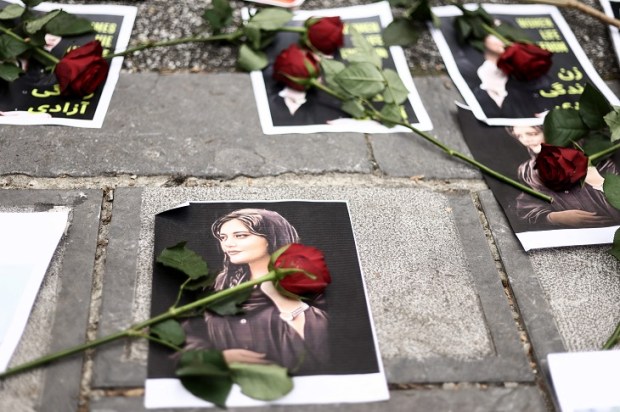
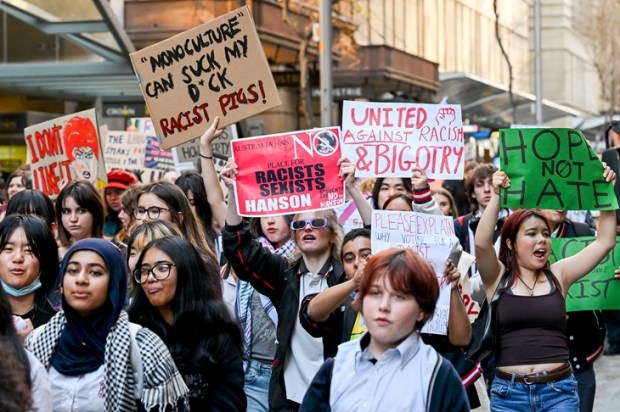
Like other leftist organisations, the Australian Greens have predictably opposed US-Israeli action against the Iranian Islamic dictatorship.
Despite opposing Islamist oppression in Iran, they have painted the recent actions of Israel and the US as ‘illegal’, ‘unilateral’, or part of the ‘US-Israeli forever wars’.
While the Greens may want serious change in Iran, this type of political ideology indirectly sustains the regime by opposing armed intervention and framing the US-Israeli attacks as unjustified aggression. My view is they seem to believe that the escalating conflict will only benefit imperialism over Iranian freedom.
Similarly, in the Gaza conflict, the Greens were quick to condemn Israel for its alleged ‘genocide’ and ‘occupation’. Their calls for justice for victims of October 7 were later muted by their demands to end the Gaza blockade, to remove settlers from Palestinian territories, and to enforce ICJ compliance.
In general, their opposition to atrocities ended up being overshadowed by their emphasis on Palestinian victimhood and narratives of resistance.
For this, they have been ridiculed for being like ‘chickens for KFC’.
Indeed, much has been said about the Greens supporting individuals or groups who believe in what we in the West view to be extreme ideologies that are utterly opposed to the Greens policy platform. The question here is why do the Greens oppose action against regimes who want them, and Australians in general, dead…?
The answer is complex, but one factor seems to be an entrenched shared outlook of ressentiment, which Nietzsche argued was a deep-seated and reactive anger that emerges from perceived weakness or impotence.
The Greens share with some cultures and activist groups a ressentiment, which is not direct anger expressed by the strong. Instead, it is an internally festering feeling that changes one’s horizon of values. It reimagines one’s powerlessness as a moral superiority and condemns the powerful as evil.
Ressentiment is a special sort of grievance that fosters a horizon in which blame is deflected away from those who should be responsible, and projects it onto an ‘oppressor’ scapegoat, such as the ‘Great Satan’. This sustains a destructive ideology, while avoiding responsibility, self-criticism, or self-reform.
The Greens are like a person who looks in the mirror but sees only a reflection of the faults of others.
An eminent example of this behaviour is Edward Said’s Orientalism (1978), which was formed by the experience of the post-1948 Palestinian exile. He argued that Westerners portrayed ‘the Orient’ as backward in order to justify their domination. However, a critic like Ibn Warraq accused Said of using selective evidence, relying on factual errors and ignoring contrary arguments. He claimed that Said relied on a trauma-fuelled bias that elevated victimhood, despite his own American privileges.
Ressentiment and grievance also run strong through Iraqi and Syrian Ba’athism. It used post-colonial humiliations to forge a secular pan-Arab nationalist movement characterised by a spirit of anti-imperial revenge.
The Assad regime in Syria further used Alawite resentment against Sunni persecution and external enemies. This resentment was harnessed to conceive perpetual struggle as a righteous response to enemies within and without, and to legitimise dictatorship and oppression. Saddam Hussein took a similar path in Iraq, directing ressentiment against Iran, Zionism, and the United States. He characterised conflicts as wars of Arab redemption, all while committing crimes against his own people.
We see explicitly Islamist versions of this in Hamas and Hezbollah. Hamas emerged from the 1987 Intifada amid conflict with Israel and the failures of Oslo. It conceives of Israel as an illegitimate occupier of sacred land. It frames Palestinians as eternal victims and idealises their violent struggle as righteous revenge for injustice. Similarly, Hezbollah, founded in 1982 during Israel’s operations in Lebanon, is founded on Shia marginalisation. It uses Khomeini’s oppressor-oppressed binary to frame the fight against Israel, the US and Sunni dominance, as a heroic battle. Its ideology is based on perpetual grievance, which justifies its extremist actions.
In Iran, the Persian-Shia regime is based on the founding myth of foreign interference and domination. It combines traumatic memories of the 1953 overthrow of Mossadegh with historical persecution of the Shia. Against centuries of victimhood and grievance, ressentiment fosters a sense of messianic destiny seen, for example, through the concept of the hidden Twelfth Imam, who will simultaneously defeat tyrants and restore Persians to their greatness.
The Iranian regime thus ironically combines a sense of strategic inferiority with triumphant victimhood. It has channelled ressentiment into support for terrorist groups, chief among them Hamas and Hezbollah, while casting moral responsibility on Israel and the US, together the Little Satan and the ‘Great Satan’.
Across different movements and organisations, ressentiment has generated extremist ideologies and authoritarian dictatorships, while projecting failures onto external agents and blocking efforts for peace and reform from within.
How does this relate to the Greens and their apparent unwillingness to condemn repressive regimes for their obvious progressive failings and human rights abuses?
We cannot know for sure, but perhaps there is a shared horizon of Nietzschean ressentiment, which increasingly characterises the Greens as they transform from an environmental protection party into a reactionary organisation focused on opposing powerful elites.
The Greens are increasingly framed as the party of opposition to systemic injustices and the ongoing defenders of the oppressed against powerful oppressors. On their foundation of grievance, they use their reputation as outsiders to project moral superiority and to portray their opponents as evil.
This helps to explain the ‘watermelon’ label, that they are green on the outside but red on the inside. Formerly prominent for environmental activism, the Greens are better known today for taking on grievances of social inequality, Indigenous disadvantage, global conflicts, and other causes, merging them into a narrative of eternal victimhood for marginalised people.
Thus, the Greens increasingly emphasise ‘resistance’ to structural power.
Like others with this philosophy, they do not engage in self-criticism, but they externalise failures onto the powerful, such as the wealthy, the legacy media, or Zionists. The net result of this ressentiment-driven grievance political horizon is a movement in which real solutions are not valued as much as victimhood, which is the ultimate political currency.
We thus see an irony.
The Iranian regime, and their Hamas and Hezbollah proxies, would oppress and even execute the Greens and their voters for their support of secularism, feminism, LGBTQ+ rights, and gender ideology. But ressentiment, victimhood, and the politics of grievance appear to override principles, core values, and even self-preservation.
While we can laugh at the ‘chickens for KFC’ jokes about the Greens, history has shown us what can result from ressentiment, reactive moral indignation, and radical grievance. As the Australian political landscape changes rapidly and becomes more polarised, the Greens’ sympathy for fellow grievance mongers should give us cause for concern for Australia’s future.