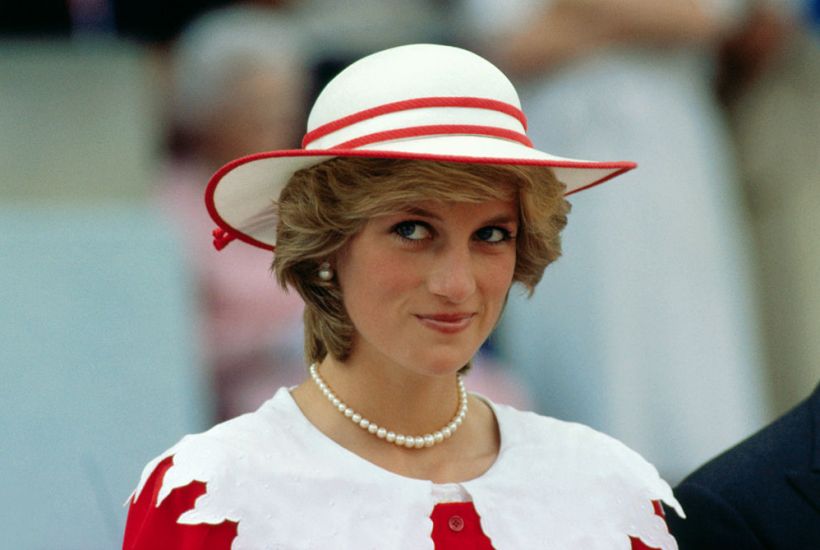
As King Charles returns to Britain this weekend, secure in the knowledge that his state visit to the United States has been a great diplomatic success, he is also heading back into renewed controversy when it comes to his family. For once, this has nothing to do with his errant younger brother, or even his wayward younger son – who, of course, he did not see while he was in America. Instead, a three-part documentary series, Diana: The Unheard Truth, will be broadcasting previously unheard tapes, courtesy of her friend Dr James Colthurst, when it is aired on 31 August 2027: 30 years after her premature death.
Charles is no stranger to the embarrassment caused by amateur recordings
Charles is, of course, no stranger to the embarrassment caused by amateur recordings. The ‘Tampongate’ saga of 1989, in which the then-heir to the throne talked with unbecoming candour to his then-mistress Camilla Parker Bowles about his wish to be reincarnated as a Tampax, was leaked thanks to an amateur radio enthusiast accidentally listening in to the call. It was disastrous for his public image, blew open the relationship with Camilla beyond doubt and was described by his then-wife Diana as ‘just sick’.
The former Princess of Wales was herself caught up in a similarly embarrassing sting a few years later, with the ‘Squidgygate’ tapes, in which she spoke candidly about her dissatisfaction with the ‘fucking family’ to her lover James Gilbey, being splashed all over the tabloids. You might have thought that this humiliation would have led to ‘once bitten, twice shy’, but when Diana agreed to allow Colhurst to record five hours of conversations (admittedly in 1991, the year before Squidgygate became common knowledge), it was with the intention of giving them to the author Andrew Morton, who duly used them as the basis for his revelatory bestseller Diana: The True Story.
The existence of the tapes has long been known – both Morton and Colthurst have openly acknowledged and discussed their existence, and they even became a plot point in an episode of The Crown – but they have only been heard in public in very limited form before now. The makers of Diana: The Unheard Truth are placing a positive spin on their unearthing, claiming that they demonstrate a ‘resilient, perceptive, and relatable young woman, finding herself in the brightest of global spotlights and navigating the challenges with grace, self-awareness, and determination.’
Viewers will, apparently, hear ‘her ‘infectious humour and twinkling laughter’ and learn how ‘accurate she was in predicting the future… [and] hear her dreams for a future that could have been; a new chapter in which Charles goes off into the sunset with Camilla, leaving Diana free to carve her own path.’ The producers go on to claim that, with public fascination with the late Princess of Hearts showing no signs of abating after three decades, ‘the raw words of Diana present a fuller portrait: a woman navigating pressure, redefining her role, and moving forward with conviction. It invites the public to encounter Diana not only through what happened to her, but through how she chose to respond.’
The documentary, which features contributions from Diana’s friend Wayne Sleep alongside Morton and Colthurst, will undoubtedly be high-profile, and therefore, perhaps, an embarrassing reminder to the King of how dismally his reputation suffered in the Nineties. Yet there is also something tawdry about the way that every single last nugget of material relating to Diana must continue to be brought out into the public domain, all these years later.
It is unlikely that there will be any genuine revelations – Morton’s book was fairly thorough in its research – and I cannot imagine that anyone under the age of 35 or so, who will not remember the national obsession with Diana that culminated with the hysteria that greeted her death, will be especially interested in them, while older viewers will be well aware of their contents already.
Next year is undoubtedly going to produce countless books, articles and documentaries about Diana, who would have celebrated her 66th birthday then. It is not impossible that the King will be prevailed to pay some sort of public tribute to her to mark the anniversary of her death. Judging by his well-chosen and apt words in America, whatever he comes up with will be considerably more tasteful and affecting than this, which feels like an attempt to capitalise on Diana’s legacy.