Many have been foreshadowing a war involving the United States, Israel, and Iran, for quite some time, but now that pre-emptive strikes led by Israel have officially catalysed formal conflict in the region – and many are left wondering how this scenario ends…
During war, with propaganda, heightened emotions, and activated social media accounts, it can be hard to find logical solutions and even harder to locate accurate sources of information.
What better way to find out about the situation in Iran, than from actual Iranians?
Three prominent Iranians making a difference in this country come to my mind and I have luckily been able to speak with them all and gather their thoughts about the regime in Iran.
I was able to speak with Daniel Taghaddos over the phone, who I also first encountered at a Never Again is Now rally in ACT.
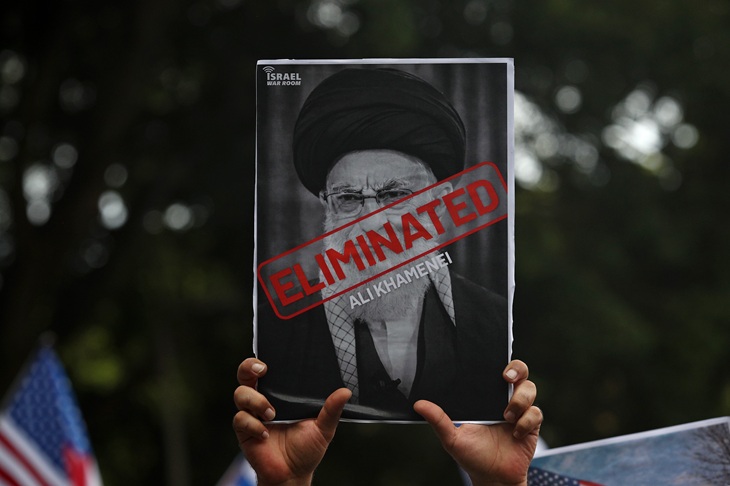
I recently met Mona Afshar at a pro-Iranian civilian rally countering the evil Islamic regime led by Ali Khamenei (now deceased in a military operation lead by Israel and the United States).
In a statement, she said the following:
‘We strongly assert that there is no such thing as legitimate ‘elected’ leader within the Islamic Republic. Global leaders must cease all diplomatic engagements with Islamic Republic as their hands are stained with the blood of thousands of Iranians murdered over five decades.’
I have also personally sat down with Dr Daniel Shayesteh (former member of the Iranian Revolutionary Guard), to rack his brains on Islamic regimes. In an interview, we discussed his conversion to Christianity, and I found his insights into tackling radical Islam and terrorism very interesting and useful.
Their information, combined with their experiences, are personal and enlightening; they offer a realistic insight into what it is like to be Iranian, and against a regime of terror.
Taghaddos calls the government in Iran a theocratic autocracy – where a religious leader exercises supreme control over the government of a nation. It is also concerning that Iran has been keen on developing its nuclear capacities – and we are not talking about merely fuelling the economy. Red flags have called for drastic action – and it is action US and Israel have unleashed although there will likely be several unintended consequences.
There always is in war.
Alongside my own research into radical Islam and counter-terrorism, and my work serving on the board and as a Director of Advocacy for a Christian NGO that counters persecution worldwide, particularly under Islamic regimes, I believe the solution to the ‘Iran’ situation is de-escalation where possible.
If not, the community there is likely to be further enraged and radicalised.
If more military action follows, this will likely stir tensions and create more support for Hamas and regimes like the Khamenei dynasty. Ali Khamenei was taken out by American and Israeli forces on February 28, after nearly four decades of leadership. Before 1979, Iran was thriving. There were tens of thousands of Jewish people that lived in Iran – however during the Iranian Revolution they fled – and Mohammad Reza Pahlavi was overthrown. Many Iranians I have spoken to want the Pahlavi line back in power.
One of Khamenei’s sons was apparently injured in a recent military operation, however, Mojtaba Khamenei has since succeeded his father as the Supreme Leader. Taking out an Islamic regime that has had such a tentacular grip on the country, established over several years, is not a straightforward task.
In the case of a theocratic regime such as in Iran, Islam represents an entire political framework rather than a personal religion. The regime has pervaded every aspect and department of Iran – from the military, to the education system – and dismantling it will be no simple feat.
Many Iranians, particularly within the nation’s conservative arm, support the regime. It is important for Australians to consider the reality that many Muslim Iranians have a different way of thinking and living to their Western counterparts. Laws and culture that appear harsh and draconian for us, are the accepted and commended within the Islamic system in Iran currently.
Within Islamic regimes, religious leaders hold similar positions of influence and power as political leaders. Mosques in Iran, for example, bow to Khamenei’s instruction unless they actively defect.
Iranians are 99 per cent Islamic, according to an official census logged with US intelligence. This figure is contested based upon threats from the regime against citizens.
Whatever the final figure, citizens of an Islamic nation are unlikely to see Israel’s assassination of the supreme religious and political leader as an ‘act of mercy’ in the same way Iranian monarchists do.
They may even interpret it as an act of war.
Any civilian who celebrates the assassination of their supreme military leader will be deemed a ‘rebel’ and likely targeted by whatever is left of the regime in charge.
Although it is difficult to report the exact number of civilian executions that have occurred due to civil disobedience in Iran, some reports indicate approximately 3,000 deaths occurred during the 2025-26 protests alone. (Some Iranians claim it is in the tens of thousands.)
Many of these people put to death would likely be Christians, ‘moderate Muslims’, or Zoroastrians negatively impacted by the regime.
Out of 93 million, killing thousands of unarmed protesters is unlikely to damage the regime significantly unless the ‘freedom movement’ grows and war catastrophically damaged the organised structure keeping the Islamic Republic in power.
It becomes astronomically more difficult for insurgency groups to form when cities are being bombed and infrastructure, power lines, and other means of organising is destroyed…
During war, foreign aid is also targeted. Attempting to bring in arms to ready protesters to topple the regime may be challenging, as there is a real possibility the weapons could end up in the hands of the regime itself. Iran’s geography is also difficult for foreigners to navigate, particularly during desert temperatures and separatist tribes. Because of these issues, any hope of tackling the government is best done through local freedom movements.
Any such movement would likely take place within Iran’s religiously and ethnically diverse regions instead of purely conservative Islamic ones.
Iran’s capital, Tehran, is an obvious choice for the freedom movement as it has played host to organic uprisings on previous occasions. For this reason, bombing the area should be avoided or limited.
Regions of Iran with high populations of breakaway religions in opposition to the Islamic theocracy could help stoke the flames of the freedom movement.
One such area of particular diversity is known as the Khuzestan Province. It serves as the heart of Iran’s oil industry with major pipelines tracking through the terrain. Israel has struck several targets in this area already. By late April, the region expects to receive up to a million pilgrims who come to commemorate the lives lost during the Iran-Iraq war. Either the US has already struck targets here, or is considering doing so. Information at the present is difficult to verify.
There is a concern that Iranian Muslims, who are not engaged in terror, may be encouraged into radicalisation by the destruction of infrastructure or Holy sites during war operations, regardless of liberation goals.
I therefore personally believe that the only real, long-term, and strategic way to stop the regime in charge is to continue to allow the dissident movement to grow, empower trustworthy civilians in the region, and stay out of war as foreigners, to avoid radicalising Muslims through prolonged suffering and military escalation.
The newer generations within Iran – the Gen Z types – are not as conservative as their parents. Fewer are identifying as Muslim. There is a chance that as they age into positions of power, and conflict with Israel cools off, the country could take a natural turn away from authoritarian theocracy.
There is no real need for other nations to get involved in ‘catalysing’ a revolution through violence. Doing so could backfire, fail to solve the underlying issues in Iran, and escalate a regional conflict into a third world war that drags many other nations into the dispute. This would be catastrophic for the globe, given Iran powers much of the world’s economy, through its rich oil reserves that flows to China through the Strait of Hormuz.
An increasing number of Americans have come to the view that an escalated conflict in the region is undesirable and might lead to unintended civilian death. Polls suggest they are against new foreign wars.
Donald Trump ran on an anti-war platform and MAGA patriots voted for him based on this pledge.
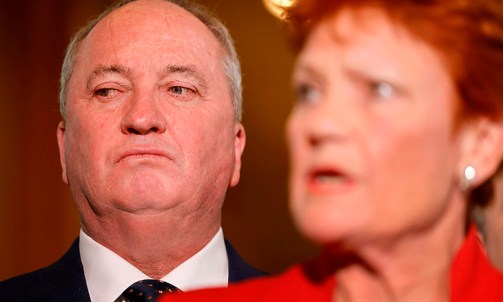
For Iran to be free, a grassroots effort conducted by local denizens should therefore develop through locals, not foreigners. In an online post, Pauline Hanson also indicated the local civilians have an opportunity to regain control of their own country. Senator Malcolm Roberts has also reiterated the One Nation stance of avoiding foreign wars, which can be observed through his website statement where he says, ‘One Nation believes we should prioritise the defence of Australia, rather than involving ourselves in wars in Ukraine or the Middle East – again.’
Many citizens agree with this premise – in fact that is why One Nation is polling incredibly well lately.
A top down approach to ‘liberating Iran’ likely cannot succeed unless there is adequate manpower to manage an alternative system however this is exactly why top down approaches rarely work…
Manpower needed to reform Iran can only occur from within the country itself – it cannot be ‘forced’ or ‘invented’ by outsiders – infrastructure cannot be managed by outsiders unless Israel and the United States sends millions to populate Iran and take it over by force but practically sending this sort of manpower to Iran at this time, is impractical.
War is unfortunately what happens when diplomacy, debate, and calm communication break down. Dr Shayesteh told me, in my interview with him, that Muslims can often be reached with logic and communication. He was, after all, a former member of the very forces that are now cracking down on dissidents and Israeli troops – if anyone knows about the psychology of Muslims and the possibility of seeing them defect to the side of logic, it would be him.
The age-old adage of ‘war might not be the answer’ seems to apply here.
Other commentators, such as the late Charlie Kirk, Sam Bamford from Two Worlds Collide, Senator Ralph Babet, Turning Point Australia’s Joel Jammal, and Evelyn Rae who has been a regular on Sky News Australia, alongside other prominent Aussie commentators, have indicated that further foreign warfare may not be the solution we all want it to be – and especially not in times where our own nations are in astronomical debt. I wholeheartedly agree with these ‘anti foreign war’ commentators. More bombing will only exhaust Israel’s resources, rope America into further military action, and aggravate the economy on a global scale. One in three Australians are already finding it hard to put food on the table, and heighted oil and gas prices will only worsen our situation here at home, drive up crime, and cause more domestic terrorism. The last thing citizens need and want, is more war, and more economic decay especially when these scenarios can be avoided by taking more long-term strategic and anti-violence approaches.
There is absolutely no doubt that the regime in Iran needs to come to an end. It is indisputable. It appears that the main point of tension is whether warfare is the solution to the problem Iran is actually facing. I would argue that the solution may be more complex than simply ‘let’s bomb Iran into submission’. No ordinary civilian, from Australia to Iran, wants to see more warfare and conflict, so it is time for countries to fully put their own nations first, de-escalate tensions, use common sense, and stop the possibility of nuclear acceleration from developing before a fully preventable Armageddon is unleashed upon the world.
Such a situation is not really reversible, so the fact that it is fully preventable, tells us plenty about how to best manage this situation before it all goes up in flames, for good.