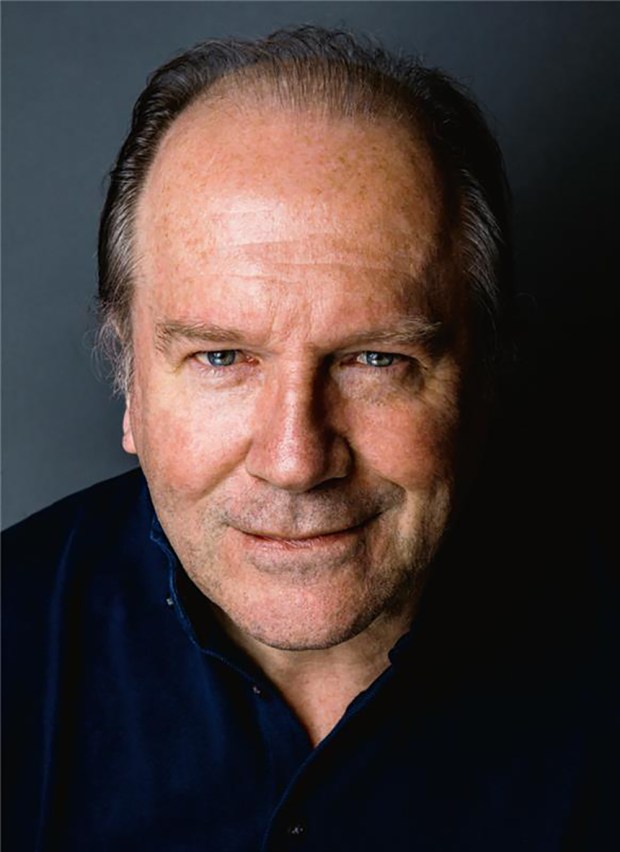
In ‘Ward 9’, the central story of Will Self’s lauded debut collection, The Quantity Theory of Insanity (1991), it is posited that a society can only contain a finite supply of sanity, and that when it comes to marbles we’re all playing a zero-sum game. His latest novel suggests a limited amount of morality must exist in a world where the avaricious prosper and the meek inherit the debts of those who live unscrupulous lives. In the milieu of the book, these debts are mainly school fees, coke bills and the cost of renting an Italian villa for two weeks every summer.
The book follows the fortunes of a cast of ‘ghastly’ middle-class, middle-aged characters facing the usual challenges of illness, divorce and co-parenting, with the same key scenarios seen from different points of view. The first chapter hits the reader with an avalanche of proper names – lost fifty somethings, whose lives are subject to a form of entropic inevitability that arrives without warning. Some couples are splitting up and others experiment with their sexuality, while a sense of monied complacency prevails, with ‘Sunday lunches that go on and on, and then merge seamlessly with tea’.
The pace shifts up a gear when ‘cheap’ friend Bettina rents a villa on the coast near La Spezia and invites everyone to long, lazy breakfasts under the loggia, followed by ‘performative dips’ in the pool, despite their ‘prolapsing’ bodies. Self’s wickedly withering voice is never better here, damning the ‘themed suppers, moonlit swimming… frequent visits to those fucking frescoes’. Despite the variegated narrators, all seem to be animated by Self’s vituperative ennui, with the exception of the novelist Willa (the author of Swipe Right for Love), whose prose is peppered with exclamation marks and who is revealed to be 6ft 4in and to have recently transitioned. There is also a writer named Will who has ‘never had a bestseller, or won one of the major prizes’.
Along the way there are some other dependable Selfian flourishes, such as a whole chapter where each male character’s name is followed by parentheses detailing their height and penis size (both ‘erect and flaccid’). Later, there’s an appearance from Zack Busner, the psychiatrist from ‘Ward 9’, now aged 94 and still full of theories.
Aside from the customary metafictional japes, the novel is heavily shadowed by death. The final chapter (‘The Principal Mourner’) leaves behind the twisted auto-fictional mode and instead becomes an earnest threnody for north London and its Jewish community, and a meditation on all we must inevitably leave behind.
While dripping with acidic satire, The Quantity Theory of Morality is also full of pathos and penetrating insights into the best and worst in human nature. A consummate performance, it’s a book that might finally silence Self’s critics. As its last sentence suggests, he might have the last word after all.
Got something to add? Join the discussion and comment below.
You might disagree with half of it, but you’ll enjoy reading all of it. Try your first month for free, then just $2 a week for the remainder of your first year.