In 1885, General Charles Gordon stood in Khartoum facing an army led by a man who claimed divine authority. The Mahdi did not present himself as a political reformer. He proclaimed a religious mandate. His followers believed they were waging holy war. When Khartoum fell, thousands were slaughtered. London debated while fanaticism did its work. The pattern is not ancient history.
Across parts of sub-Saharan Africa today, jihadist movements are conducting campaigns of violence that they themselves describe in religious terms. They declare jihad. They invoke Islamic fundamentalism. They openly frame Christian communities as religious adversaries. And they kill accordingly. This is not random criminality. It is ideological warfare.
In northeastern Nigeria, Boko Haram emerged as an Islamist extremist movement dedicated to imposing its interpretation of Islamic law through violence. Its splinter faction, ISWAP, aligned with ISIS, has continued mass attacks across rural regions. These groups have repeatedly declared that Western education is forbidden, that Christian influence must be eradicated, and that their campaign is religiously justified.
In 2014, Boko Haram kidnapped 276 schoolgirls from Chibok, many of them Christian. The abduction was not opportunistic. It was ideological theatre. The group justified the kidnapping in explicitly religious language. Some girls were later released through negotiations. Others escaped. Some remain missing. The insurgency did not end.
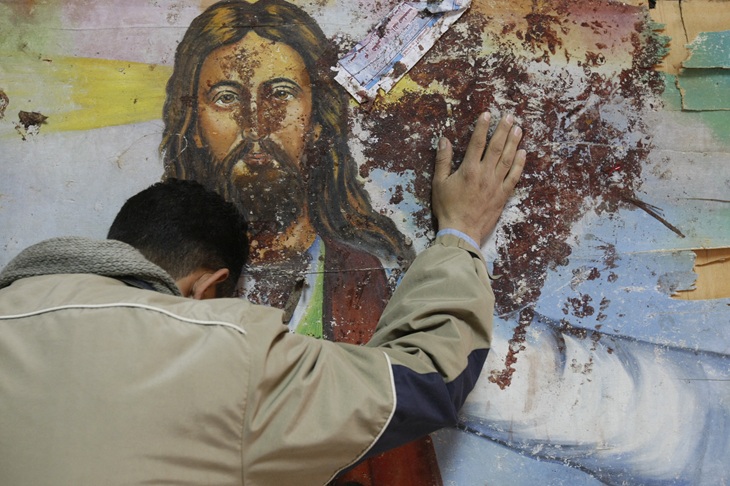
In Nigeria’s Middle Belt, villages with Christian populations have been attacked in repeated nighttime raids. Churches have been burned deliberately. Clergy have been abducted symbolically. While governance failures and land disputes complicate the broader conflict environment, jihadist factions openly frame their campaign as part of a religious struggle.
In Mozambique’s Cabo Delgado province, ISIS-linked insurgents have targeted civilians and Christian communities in a campaign aligned with transnational jihadist ideology. Research institutions and international reporting have documented attacks in which militants invoked religious justification while executing their violence. The ideological element is not incidental. It is central.
These groups are not hiding their motivations. They describe their actions as jihad. They speak in the language of religious obligation. They portray Christians as infidels obstructing their project. The killings are not accidental byproducts of instability; in many cases they are intentional acts framed as religious duty. And yet the global response is muted.
A single controversial strike in another region of the world can generate immediate diplomatic outrage. A tragic civilian death can dominate headlines for days. Meanwhile, sustained jihadist violence in parts of Africa rarely commands comparable attention. Why?
Part of the answer lies in geopolitical hierarchy. Africa’s rural massacres do not disrupt global energy markets. They do not sit at the crossroads of superpower rivalry. They occur in fragile states already categorised as unstable, but another part of the answer is moral fatigue.
When violence persists for years, it becomes normalised. Reports of villages attacked and farmers executed blur into a tragic but distant pattern. The repetition dulls urgency. This is the silent war.
The silence does not mean the violence is minor. Over more than a decade, thousands have been killed in jihadist insurgencies across Nigeria and neighbouring regions. Advocacy organisations document staggering casualty figures among Christian communities. International statements acknowledge religious violence. Yet sustained strategic attention remains limited.
The Khartoum parallel is not exact. History never is, but the rhyme is clear: ideological fanaticism advances while distant powers hesitate. Gordon believed reinforcements would arrive. He assumed that open fanatic slaughter would not be tolerated indefinitely. He misjudged both timing and resolve.
Today, jihadist movements operate with clarity of purpose. They declare their objectives openly. They invoke religious authority. They target those they define as enemies of their faith.
The families burying their dead in Nigeria do not experience this as a policy abstraction. The displaced in Mozambique do not experience it as a low-intensity security concern. For them, it is war.
To state plainly that jihadist movements motivated by Islamist fundamentalism are targeting Christian communities in parts of Africa is not inflammatory. It is descriptive.
What remains uncertain is whether the world will treat it with the seriousness that ideological militancy demands – or continue to absorb it as background noise.
History suggests that indifference carries a cost.
Aaron J. Shuster is an essayist and cinematist writing on geopolitics, civilisation, and cultural renewal. His work has appeared in FrontPage Magazine and The Australian Spectator.