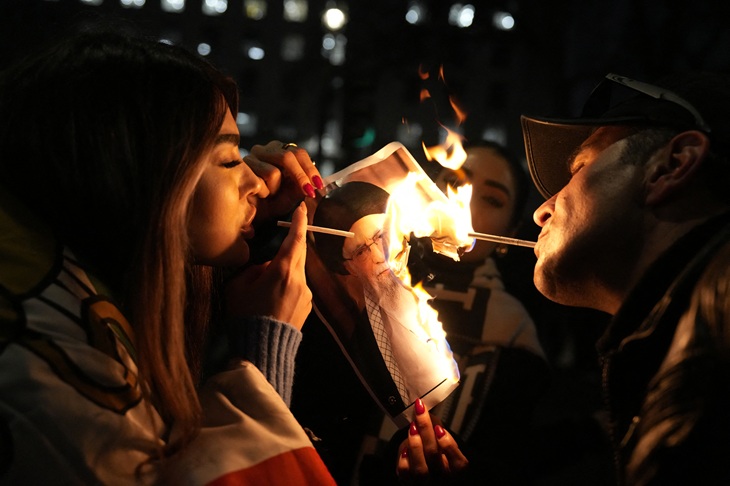
More than a month after massive demonstrations against the regime in Iran and tens of thousands of deaths, the negotiations between the United States and the regime are still underway. However, there’s a question shadowing the talks:
Is this regime even legitimate to negotiate on behalf of Iranians?
The short answer is no.
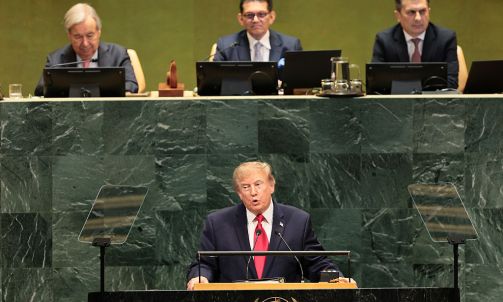
Developed in the 17th Century, the political concept of statehood, among many other phenomena of that era, still deeply affects our world today, as it is clearly reflected in the United Nations Charter. By that definition, the state has sovereignty over its territory. On the other hand, a state regulates the society and the population over a defined territory.
Now comes the dilemma for the international community:
To what extent does a state have legitimacy to regulate and control the population of its territory?
Endorsed by the United Nations General Assembly in 2005, the Responsibility to Protect is defined to prevent genocide, war crimes, ethnic cleansing, and crimes against humanity. In that sense, after the killing of an estimated more than 32,000 protesters (actual numbers are not known) in the recent wave of anti-regime protests, which included execution shots to hospital patients, the killing of babies as young as a few months old, the slashing of the throats of arrested protesters, and the use of mounted machine guns on armoured vans, the Islamic Republic regime has effectively failed its responsibility to protect by committing these crimes.
After the demonstrations were brutally cracked down upon, the United States started new rounds of negotiations with the regime. The goal of these negotiations is not clear because the communication is that these rounds of negotiations are on the nuclear program, contrary to what the US has claimed after the 12-day war, which is the complete destruction of the regime’s nuclear facilities. On top of that, the goal of negotiation is usually a change of behaviour. But can the regime change its behaviour after 47 years? Many people say no because it is in their DNA to threaten others. The goal of the Islamic Republic regime of Iran is to establish a global Shia caliphate, like that of the 7th Century. One cannot talk them out of that.
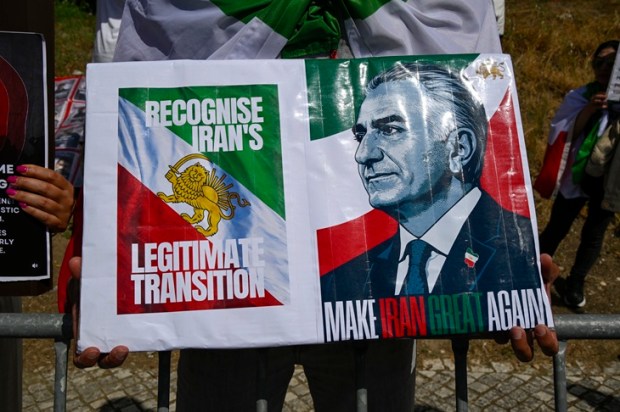
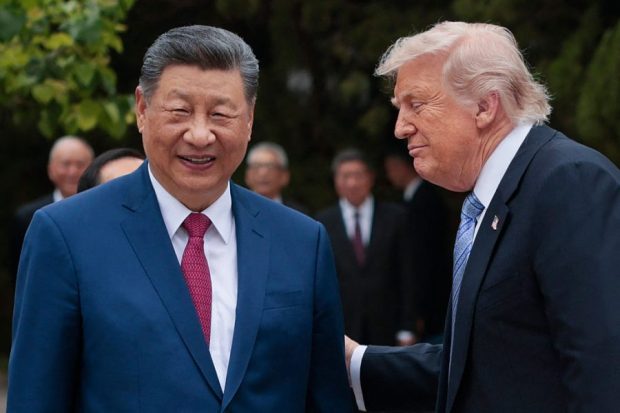
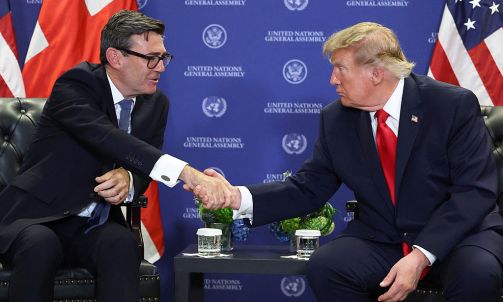
Beyond that, over the past few decades, every time the people of Iran tried to push back on repression and regain their freedoms, the world used the legitimacy crisis caused by bloodshed as a pressure point on the regime, to bring them to the negotiation table rather than holding the regime responsible by taking decisive action against them. And in this very recent round of protests, President Donald Trump of the United States clearly stated ‘help is on the way’ to the people of Iran, but unfortunately, when the regime opened fire on millions of protesters on the streets, he did not deliver his promise. Once again, negotiations began at the cost of tens of thousands of lives of innocent Iranians, including children.
When we talk about millions of people coming to the streets to say that we don’t want this regime, we’re essentially pointing out that this regime does not have the legitimacy on behalf of its people to negotiate on the country’s matters, including but not limited to nuclear, energy, military, and/or any other topics. Essentially, the regime has collapsed politically, but it’s only in place due to military power. Today, any form of dissidence to the regime is responded to with bullets, prison, torture, and other inhumane consequences. The economic collapse of the regime started before December 2025, the political collapse happened in January 2026, and as a result, this regime can no longer work in the capacity of a normal state. Instead, it has entered a slow spiral toward a failed state, like that of Maduro in Venezuela or Assad in Syria.
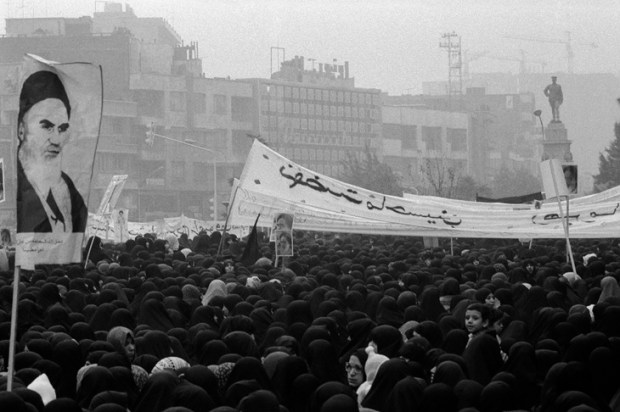
Now, even though negotiations with an illegitimate ruling power take place occasionally, the main question is, ‘What’s the goal?’ In Iran’s case, even if an agreement is reached and the regime’s missile and nuclear program is contained (or even abolished), the US will lose something far more valuable, and that is the trust of the Iranian nation, which is determined to reclaim Iran by whatever means possible. The overthrow of the regime becomes extremely expensive and much bloodier for the people, but when that happens without help (as promised by the US President), diplomatic relations will no longer be expected to return to the pre-1979 era.