When Henry Kissinger asked Chinese Premier Zhou Enlai in 1972 what he thought of the French Revolution, Zhou reportedly paused and replied, ‘Too early to tell.’ The remark became famous as a display of strategic patience. It later emerged, somewhat less impressively, that Zhou was almost certainly referring to the French student uprising of 1968 rather than the Revolution of 1789. He was not contemplating 183 years of history. He was discussing something four years old.
Less profound. More practical. Because four years really is too early to tell.
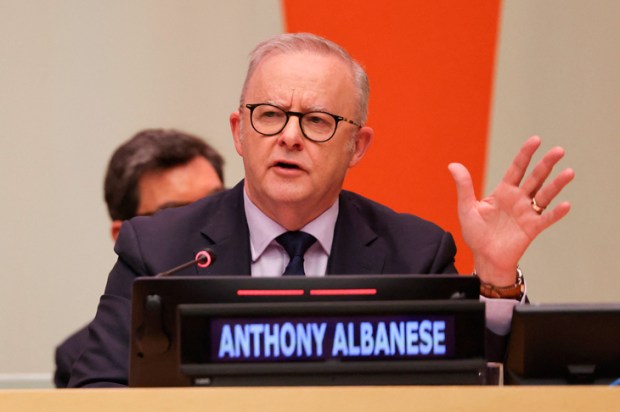
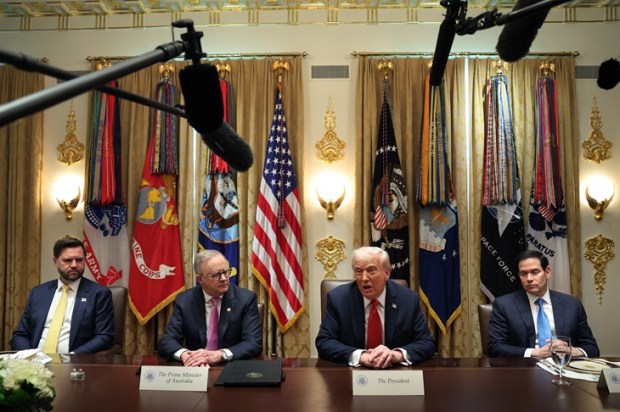
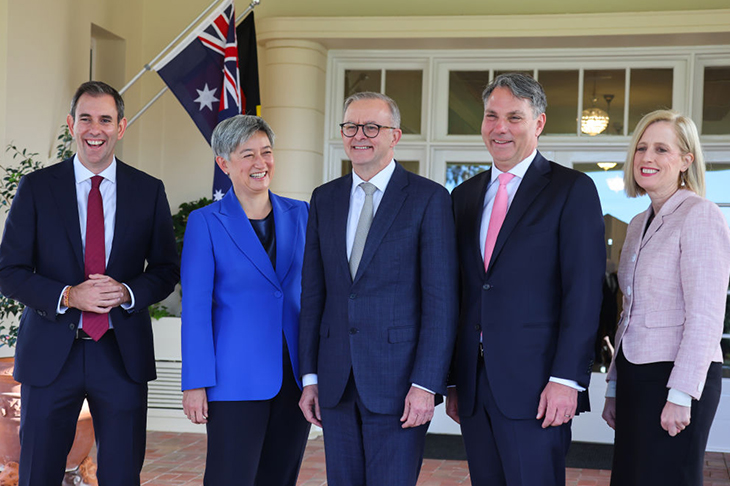
The verdict on the Albanese government is not yet settled. Four years is insufficient to determine whether any government deserves the title of worst in Australian history. Yet the fact that the question is now asked seriously, while the government remains in office, is telling. Most governments must first leave power before historians tally the damage. This one has inspired the debate in real time.
The field for last place is not small. The final year of the Whitlam government, entangled in dubious overseas loan schemes and ministerial deception, remains a benchmark in self-inflicted calamity. Billy McMahon, memorably described as ‘Tiberius with a telephone’, presided over drift so complete it defined his tenure. Jim Scullin took office days before the 1929 crash and was overwhelmed by events beyond his control. Malcolm Fraser restored order after Whitlam but mistook stability for strategy, maintaining calm while missing chances to modernise. Australia endured. It did not advance.
Kevin Rudd embodied the opposite failing. Where Fraser governed in slow motion, Rudd governed in hyperventilation. Announcements cascaded. Reviews multiplied. Programs proliferated. The stimulus during the financial crisis helped avert immediate recession but came wrapped in waste, haste and managerial excess. Hyperactivity is not effectiveness. Motion is not achievement.
The Morrison government presents yet another caution. Its initial pandemic response drew broad support, but what followed was vast fiscal expansion and sweeping civil constraint. Hundreds of billions were committed. JobKeeper overshot its target both by design and by error. Lockdowns shifted from emergency measure to social orthodoxy. Basic liberties were suspended for months, with dissent treated as deviance. The expansion of state power during Covid did not fully recede once the virus did.
Each administration illustrates a distinct failure: chaos, drift, hyperactivity, profligacy, misfortune.
What sets the Albanese government apart, and invites sharper scrutiny, is not simply incompetence or bad luck. It is intent.
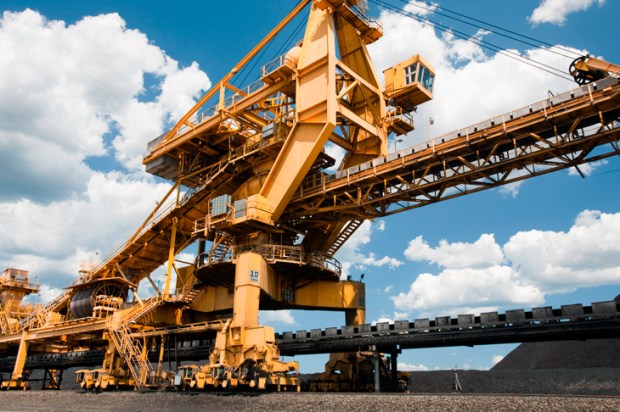
Energy policy alone would secure a prominent place in any account of national self-harm. Australians now face some of the highest electricity prices in the developed world despite abundant coal, gas and uranium. This outcome is not geographical fate. It is the product of policy choices pursued with striking indifference to their effects on households and industry. Sacrifice, we are told implicitly, is the entry fee for virtue.
As manufacturers quietly consider relocation to countries with cheaper power, Canberra responds with subsidies, reconstruction funds and carbon border adjustment mechanisms. Australians are encouraged to trust official projections over their own power bills. When reality intrudes, rebates are offered to offset costs created by earlier decisions, with the bill deferred to the next generation. The arithmetic is straightforward. The willingness to confront it is not.
The broader economic record deepens concern. Rather than repair programs already troubled by waste, fraud and abuse, the government designs new ones that will likely suffer the same fate. Public spending as a share of the economy has risen to levels rarely seen outside war or pandemic, driven by the conviction that scale itself is virtue. Taxes rise under the banner of reform. Expenditure expands under the language of restraint. The result is a prolonged per capita recession, falling real disposable incomes, ongoing deficits and revived inflationary pressure.
Beneath this lies a larger project: the gradual reregulation of the economy toward a model reminiscent of the pre-1980s settlement, where government, large corporations and organised labour negotiate the division of shrinking returns, and the rest of the country is invited to applaud. That arrangement was dismantled by the Hawke government for compelling reasons. Its reassembly, packaged as fairness and transition, will predictably deliver familiar economic outcomes with much lower per capita income, Big Brother making all the decisions and the absence of both economic and political choice.
None of this is accidental.
And then there is social cohesion.
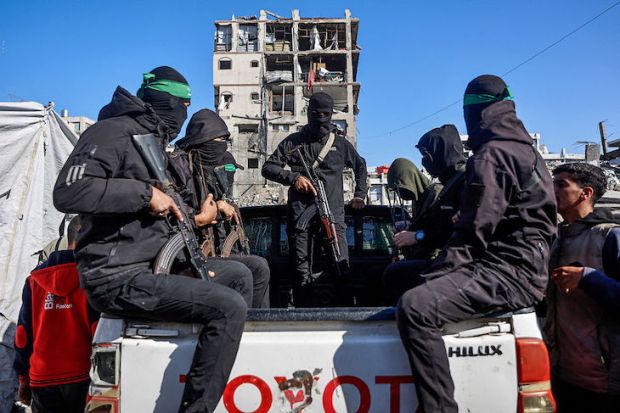
The aftermath of the 7 October 2023 attacks produced scenes on Australian streets that would have been unimaginable a decade earlier. Jewish Australians faced harassment and violence. Synagogues were firebombed and destroyed. A school attended by Jewish children was firebombed. 15 people were murdered at Australia’s most famous beach. By any fair standard, it was the most serious outbreak of antisemitic violence in modern Australian history and the worst in the world after the Hamas attack.
The government treated the episode largely as a problem of political management, weighing constituencies against one another in what resembled electoral optimisation. Statements were carefully calibrated. Language was softened. Moral clarity yielded to stakeholder arithmetic.
That the firebombing of a synagogue and mass murder could be absorbed into such calculus is more revealing than any single media conference. The government stoked the fires by attacks on Israel that earned praise from Hamas.
This is not leadership. It is caution recast as calculation.
The case for placing the Albanese government in serious contention for worst in Australian history does not rest on spectacle alone. Others have been chaotic. Others have drifted. Others have spent freely or governed frenetically. What distinguishes this government is the combination: ideological certainty, structural economic deterioration and a consistent readiness to subordinate foundational civic obligations to electoral strategy.
Is it the worst government in Australian history? Too early to tell. The long-term consequences for the economy, industry, the budget and the social fabric will take years to emerge and longer to judge with honesty.
But the early signals are not promising. A government that has left Australians poorer while insisting it is making them greener, that has presided over serious domestic unrest while managing optics, and that continues to frame sacrifice as progress has earned its place on the shortlist.
Worst ever? Check again in 2035. History will decide. It usually does.
Got something to add? Join the discussion and comment below.
Dimitri Burshtein is a Senior Director at Eminence Advisory. Peter Swan AO is professor of finance at the UNSW-Sydney Business School.
You might disagree with half of it, but you’ll enjoy reading all of it. Try your first month for free, then just $2 a week for the remainder of your first year.