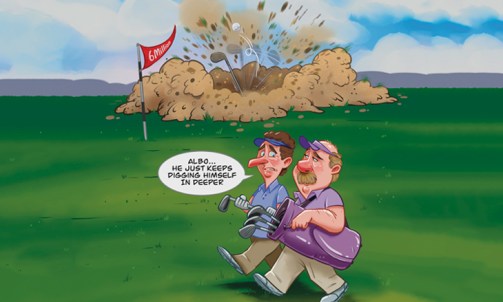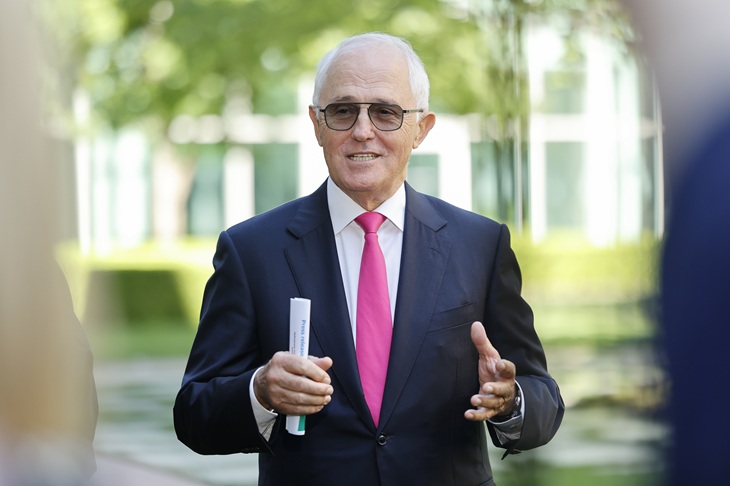
Two figures, probably more than any other politicians in the last 50 years, lend themselves to controversy and ridicule.
Gough Whitlam and Malcolm Turnbull stand out as institutional modernisers in their own way, defiant and both out of place in their own parties. Each tried to drag his side forward; each caused turbulence in doing so. Together, they reveal something that still haunts Australian politics – not just division over ideas, but a deeper misalignment between personalities and parties, between principle and the vessels that carry it.
Imagine for a moment, a sliding doors moment, that Australia had taken a different turn. That Whitlam, who married the daughter of a Justice of the NSW Supreme Court, hardly a Union secretary, had made a successful bid for a seat in the Liberal Party. He had had the privileged upbringing, he was very bright and he had nothing in common at the time, with the average Laborite, so it’s possible.
Now imagine that after the long Howard years, Labor had chosen not Kevin Rudd, not Julia Gillard – but Malcolm Turnbull and say Kim Beasley. Imagine the Liberal Party forced into opposition by renewed Labor competence. A proper focus on defence, sensible ideas around energy policy including removing the silly Howard nuclear ban.
History might have unfolded very differently.
Whitlam and the Pretend Conservatives
The Coalition Whitlam defeated in 1972 wasn’t some bastion of free markets. It was a patchwork of statutory boards and commodity schemes – wool, wheat, sugar, meat, all designed to smooth out price shocks by shifting the risk onto taxpayers. When prices fell, Canberra picked up the bill. When they rose, producers reaped the gains. It was agrarian socialism sold as conservatism.
The Country Party under Doug Anthony protected that system fiercely. The Liberals, meanwhile, drifted. John Gorton voted himself out of office. Billy McMahon couldn’t command his own party, Bill Snedden was swamped by the personality of Gough, and it was only a matter of time before that resolved itself into the Fraser leadership.
Whitlam exploded onto the stage. He centralised, modernised, and internationalised. He didn’t act like a faction operator; he thought like a constitutional reformer, thoughts that he had garnered years before when the 1944 ‘Fourteen powers’ referendum was defeated.
Here’s the twist: his temperament could have been just as useful cleaning up the Coalition’s rural corporatism as it was reforming Labor’s industrial past. But it was Labor that got there first – clumsily, dramatically, and then under Hawke, enduringly.
The backlash against the reforms Gough sought to implement paved the way for Hawke and Keating, who turned reform into a governing habit: floating the dollar, tearing down tariffs, deregulating the banks. By the time Howard locked it all in, Australia had shifted to sensible debates about generational change, open markets, fiscal discipline, and social acceptance of the best interests for the nation.
The Debate We Never Got
After Howard, politics should have settled back into the rhythmic cycle of the Labor Liberal tag-team. The voters played their part and changed jockeys but the jockeys were gymkhana riders, not thoroughbred horsemen.
Turnbull, commercially sharp, legally trained, globally comfortable, leading Labor, might have kept the reform project alive under a progressive banner. The Greens’ pull would have weakened, argument and competence are always the answer for fringe whingers.
Imagine Tony Abbott in opposition. He wouldn’t have been hurling accusations of dysfunction across the chamber. He’d be making a philosophical case for smaller government, broadening industrial choices, and remaining a Constitutional Monarchy.
Abbott versus Turnbull could have been Australia’s own version of Disraeli versus Gladstone – Abbott grounded in tradition, Turnbull the reformer trusting reason and questioning the efficacy of institutions.
Imagine that debate – about tax (principle versus fairness), family (is one parent at home a luxury or a social anchor), welfare (temporary safety net or lifestyle choice), immigration (GDP growth or social capacity?), and growth itself – does it mean productivity, or just more people?
The Drift and the Ratchet
Once the animals had escaped from the circus, elections turned into bidding wars. Infrastructure promises blew out, then we had the NBN and NDIS. Meanwhile dams, water policy, and defence faded away. Social spending ratcheted upward. The NDIS has become an entitlement machine. Immigration was defended as an economic necessity while housing and roads strained under the load. Regulation piled up because Australian politics became dominated by busybodies.
Remember where Hayek whispers his warning – the ‘fatal conceit’ – the idea that planners can know enough to design a complex society from above. The conceit is a combination of low intellect, arrogance and overconfidence.
Sadly, and in the absence of the gladiatorial debate between our contemporary version of Gladstone and Disraeli, we have ended up with arguably a government that Whitlam would disown and an opposition that Menzies couldn’t recognise.
If We’re Going to Dream … let’s dream properly
Imagine a real federal reset – money and responsibility pushed back to the states, policy experiments encouraged, failures contained in a waste basket not a budget item, spending caps that force governments to choose, not just spend.
Imagine sunset clauses that assume programs don’t last forever.
Immigration tuned to what infrastructure can handle. Free speech protected not because it’s easy, but because truth needs friction: and push it further. If AI and automation shrink the job market, imagine debating Universal Basic Income not as fantasy, but as simplification, a basic floor, fewer forms, fewer silos, less bureaucracy. That’s not socialism. That’s rational.
The World We Actually Got
Instead, we’ve settled for safety. Fear and solutions, careful not to offend, don’t cut, don’t say no, just snipe. It’s worse than a body corporate meeting.
Anthony Albanese probably wouldn’t have lasted long in a Labor Party disciplined by Turnbull’s economic realism. Defence policy might have stayed bipartisan. The NDIS might have remained insurance, not a banquet for opportunists. But that kind of politics demands something democracies almost never reward – the courage to lose on principle. Whitlam had it, like him or not. Howard had it with ‘Lock, stock, and barrel’ in the 80s. Keating obviously had it, because he didn’t care how he lost. He was the ultimate crocodile roll politician; we’re both going under water, let’s see who can hold their breath!
Whitlam showed what happens when you reform without patience. Turnbull showed what happens when you reform without a party. And Hayek warned what happens when exuberance outpaces principle.
The question facing Australia isn’t whether we’re too progressive or too conservative. They are bell curve labels. It’s whether we still have the stomach for real arguments about first principles.