With the OECD recognising a significant global slowdown in the appetite of nations to adopt CO2-reducing policies, on Wednesday, the Liberal Party is set to agree a new policy on renewable energy subsidies. These subsidies have been progressively increased over the past 25 years under a policy was sanctified by the Paris Agreement on Climate Change. Australia ratified the agreement in 2016 and adopted its emission reduction rulebook program in 2021.
The Liberal Party will decide its position within a maelstrom of pressures that renewable energy is creating in terms of flailing economic output and the potential for blackouts, which is juxtaposed with pressures from constituents to hold firm, relax, wind-back, or abandon the subsidy programs.
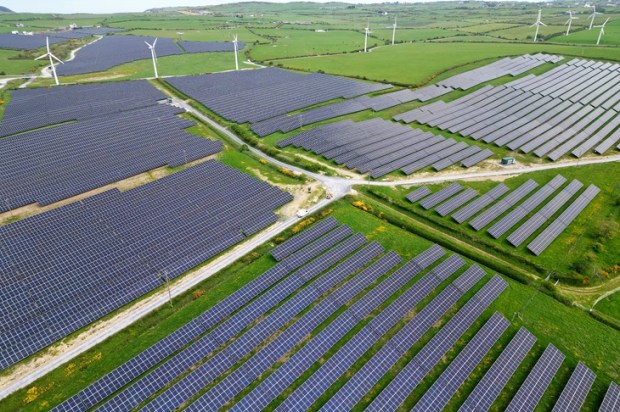
The government policy (and that of the Greens and Teals) seeks a near 100 per cent renewables supply. Though they seek to convince themselves otherwise, this will ensure electricity will cost 2-3 times that of a coal-based system even after spending trillions on new supply lines and batteries. Ludicrously, the official government position is that we need more subsidies for wind and solar but these are the cheapest forms of supply.
Not even the few within Labor’s ranks who have actually tried to assess a wind/solar future think it possible without spending something north of three times GDP on batteries and transmission. Its hand-picked Treasury officials can only make it work with a $300 per tonne carbon tax (Julia Gillard’s 2013 tax was $20 a tonne) and some heroic assumptions about yet to be developed new technologies.
But the ALP – at least in Victoria and federally – remains full-throated in promoting wind, solar batteries and transmission build-outs and, contrary to its approach with other investment, has even brought in legislation to abort consultations that were impeding this.
However, as the party in office, the ALP pragmatically also ensures subsidy support to the coal facilities that have been made unprofitable by the renewable subsidies. This is also true of Queensland, which has gone a step further in formally opting against expediting the closure of its state-owned coal stations. Australia’s coal power stations, as well as being the cheapest source of power, remain the only lifeline to preventing the sort of catastrophic blackouts seen in Spain, Texas, and Chile where renewables dominate the grid.
The official National Party policy is now to retain Australia’s commitment to the Paris Climate agreement (unlike the US) but reduce emissions to a pace matching the OECD average (roughly half Australia’s current trajectory) aiming for 30-40 per cent reduction by 2035.
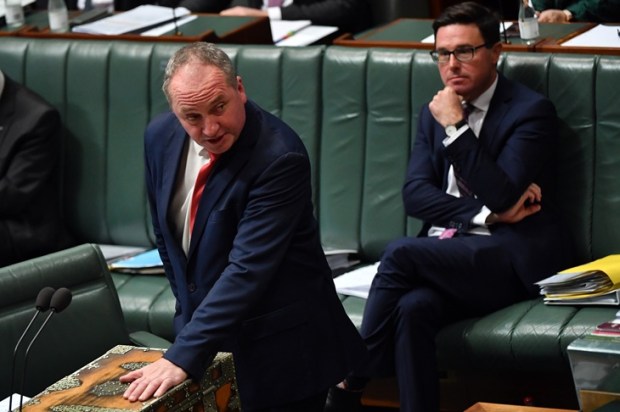
However, this cannot be the finished product. As Barnaby Joyce has pointed out, it runs afoul of the terms of the Paris Agreement, which requires ‘parties to prepare, communicate and maintain a nationally determined contribution (NDC) and to pursue domestic measures to achieve them’ with each successive NDC to progress beyond the previous one. This incompatibility was also recognised by left Liberal Andrew Bragg, who has threatened to leave the party if Net Zero is abandoned.
Matt Canavan has a similar view to that of Barnaby and is explicit in seeing a need for new coal plants, probably with government funding, to remain the backbone of supply and, along with nuclear, replace renewables.
This is compatible with One Nation’s policy which calls for Australia to withdraw from the Paris Agreement and abolish climate change agencies and Net Zero programs.
Speaking for the Liberal left, Tim Wilson appears to favour a ‘technology-neutral’ supply that oxymoronically excludes coal, one that is privately owned but built on the basis of government contracts – rather like the present supply anchored on the Capacity Investment Scheme! It should be guided by factoring in the whole price of electricity (distribution and network costs, storage and emissions), not just the cost of generation. Having abandoned his recent championing of hydrogen as the ‘fuel of the future’ he is now pushing for nuclear.
Nearly a quarter of a century ago, Tim Wilson wrote about ‘departments, academics, and non-government organisations now wedded to catastrophic climate change being real for their own survival’.
A recent spokesman for the Liberal right, Tony Pasin, has offered a policy akin to the official position of the National Party – abolish Net Zero but remain within the Paris Agreement.
However, none of these policies can restore the position necessary to restore Australia’s low-cost energy supply. Coal (like nuclear) plants with their high fixed costs cannot simply fill in the gaps of subsidised wind and solar supplies, as Canavan and Joyce recognise. While those subsidised supplies remain in place, as a result of the renewable energy target (RET) requirements or the extravagant purchase prices under the Capacity Investment Scheme, they will force coal plant to operate sub-optimally at high cost.
Placing a countervailing cost on US wind and solar was contemplated by the Trump Administration. In the UK, Nigel Farage’s Reform is drifting towards ‘renegotiating’ existing subsidy contracts without which no wind and solar facilities can be profitable. Such a policy is even more essential in a system like Australia’s, which is dominated by coal generators with high fixed and low variable costs. It is one that I on behalf of the Institute of Public Affairs proposed a decade ago.
Any new Australian consensus on energy policy may be many years away and even if centred on a variation of the Nationals/One Nation proposals it would only go part of the way towards re-establishing a low-cost electricity supply system.