The current political landscape is defined by ideological skirmishes where one side is conducting its long march while the other is being bled dry by guerrilla tactics.
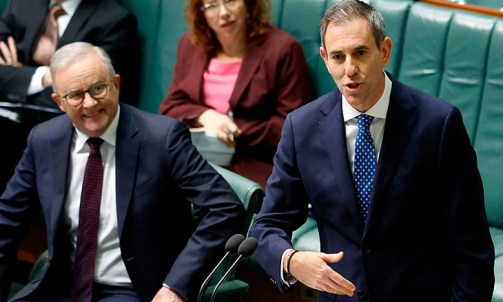
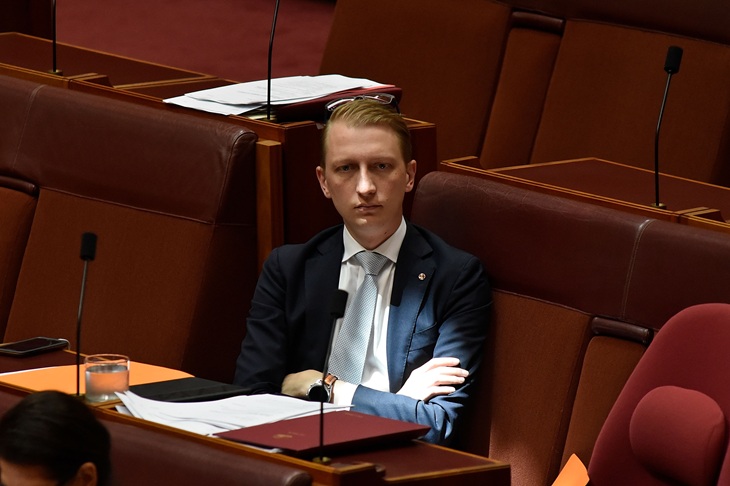
Senator James Paterson’s recent speech struck a chord for those weary of timidity in the face of progressive onslaughts. Paterson’s speech urged the Liberal Party to end its ‘apology tour’, resolve internal divisions, and recommit to its core values.
I am not convinced that the fusion of classical liberalism and conservatism is what is needed today.
Paterson warned against morphing into ‘free market Teals’ who surrender the culture wars to the left while chasing economic centrism. The Liberal Party, he argued, must not hollow itself out by accepting the left’s social agendas or offering bipartisan nods to climate alarmism. Instead, it should confidently defend freedom, tradition, and patriotism.
Recent state victories in the Northern Territory, Queensland, and Tasmania demonstrate that liberal-conservative principles still hold electoral appeal. But as Paterson notes, endless public therapy sessions and sniping undermine the party’s readiness for government.
With Labor abusing power through slashed opposition resources and opaque governance, the Liberals have a moral duty to oppose effectively, lest Australia succumb to a ‘Victorianisation’ of entrenched left-wing dominance.
The culture wars, consisting of battles over identity politics, rewriting history, and developing idiotic societal norms, are no sideshow. The culture wars are central to the fray.
Progressives have weaponised issues like gender ideology, indigenous separatism, and environmental extremism while eroding traditional institutions. Our education is effectively inculcating socialism at every turn and a hatred – this is not too strong a word – of all the things that have made Australia great since Federation.
Appeasers within the Liberal ranks, tempted by the siren song of moderation to win back Teal independents in affluent urban seats, have already alienated the party’s base. While Paterson rejects the false choice between base and centre, claiming the party must lock in its faithful members, volunteers, and everyday Australians who value family, faith, and nation before pursuing broader swings, this approach avoids contemporary political realities.
History offers lessons here. Robert Menzies forged the Liberal Party in 1944 from disparate anti-Labor forces, binding them with principles of individual enterprise and a rejection of socialism. John Howard echoed this in 1996, blending liberal rights with conservative values.
The problem, however, is no longer conservatism versus classical liberalism. John Howard’s time was after the collapse of the Soviet Union. The ‘broad church’ enabled the wets (akin to today’s moderates) and the ‘dries’ (the economic liberals) to find a place in the new world order and within Australia’s move towards competitive capitalism. This was justifiably a period of anticipated peace.
Paterson has dismissed ‘Farage-lite’ populism, which consists of abandoning fiscal discipline for protectionist nationalism, as unsustainable in Australia’s electoral system.
Until recent times, the Liberals thrived on traditional conservative ideas about limited government, free markets, lower taxes, and affordable energy. Paterson claims that by championing these principles, the party can restore the Australian Dream of generational prosperity while countering Labor’s zero-sum resentment politics.
There are two major problems with Paterson’s approach. First, the broad church is well and truly dead. And second, we may now consider ourselves justifiably in a period of anticipated war.
Times have changed, just like they always do. What we need now are generals who will defend the Australian nation-state and its heritage without apology. But these generals must ensure they are not charging machine guns with lancers on horseback while wearing colourful uniforms. Or more likely, blue-haired, gender-confused conscripts who think the proper role of government is to protect them from unsafe ideas.
Menzies had a clearer sense of the proper role of government for his time. He was pragmatic rather than dogmatic.
Menzies used government to develop mining, manufacturing, telecommunications, nuclear research, space research, education, internationalisation, and the capability to defend Australia through National Service.
The free market ideas of the 1990s served the polis of that era well. Yet Howard, a man of his times, proved himself to be pragmatic, too.
Today, however, across-the-board free markets provide no recipes for today’s kitchens, despite left-wing governments radically preparing shit sandwiches for all and sundry.
We can pretend all we like that we can use ideas from the 1990s to fix 2020s problems, but such naïve thinking defies all sense of history.
The culture wars underpin the left’s undoing of our liberal democratic institutions. Modern liberal democracy, established at the end of the eighteenth century, has proven it can adapt to changing times. But this requires leaders to take the reins while preventing technocrats, ideologues, or factionalists from reigning.
Menzies adapted, Howard adapted, and now in this post-globalisation period, it is time to adapt once more.
Paterson has shown patient and stable leadership at a time when this has been missing in the Liberal Party. But his ideas appear to be limited to what has been done before.
The geopolitical situation requires a national response. From our education system to our defence forces, there is a role for government to drain the swamp. President Trump is doing that in the US. Possibly just in time.
We must not, however, forget the culture wars. Leftist culture warriors who hate Australia won’t fight for her. If we keep creating leftist culture warriors in our schools, there’ll be nobody left to defend Old Girty.
Free trade is great. It works in times of peace. Prioritising competitiveness and wealth in times of peace makes sense. There is no point being rich and weak in times of war.
Indeed, it is a truism that to prepare for peace, you must prepare for war. This means that nation-states must not only invest in defensive capabilities, but they must prepare the hearts and minds of their citizens to defend the nation-state. Mass immigration, among other challenges to social cohesion, does nothing to ensure peace in the future.
With the left currently winning the culture wars, the right needs generals who strategise to defeat the left at their own game. Not technocrats or pacifiers who think the left has already won.
The broad church is dead and the right needs to redefine the proper role of government in the current geopolitical context, just as Menzies and Howard did beforehand. If this means that moderates need to be excised from the Liberal Party and its state divisions, then so be it.
One thing’s for sure, the Liberals must develop a vision for the future that adapts to contemporary geopolitical realities rather than old habits. If they can’t, when the fog of war descends, Australia will not only be weak, but blind.
Dr Michael de Percy @FlaneurPolitiq is the Spectator Australia’s Canberra Press Gallery Correspondent. If you would like to support his writing, or read more of Michael, please visit his website.