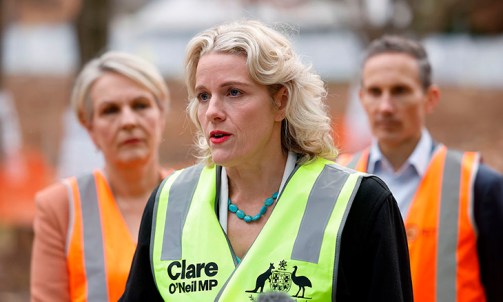
News recently broke that so-called ‘ISIS Brides’ have returned to Australia along with their children. Federal officials (including Foreign Minister Penny Wong and the Department of Home Affairs) have refused to disclose specific numbers, locations, or some repatriation details during Senate Estimates, with Opposition Senators criticising the obvious lack of transparency.
Uncovering the truth will require sustained pressure from the Coalition, and one hopes that Senator James Paterson will keep up the pressure on Foreign Minister Penny Wong.
Liberal Senator James Paterson has said the Albanese government is “responsible” for allowing the return of Australian women linked to Islamic State, claiming they quietly facilitated their arrival and withheld the truth from the public.https://t.co/4iFvLJIy93
— Sky News Australia (@SkyNewsAust) October 8, 2025
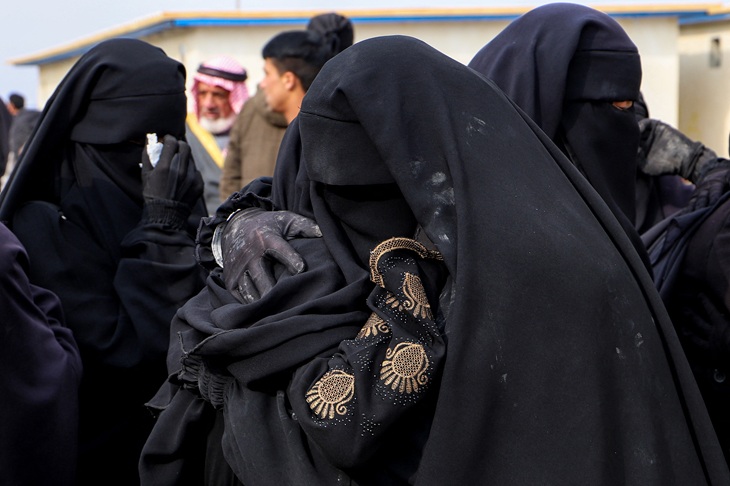
What is most disturbing is the portrayal of ‘ISIS Brides’ – Australian women who joined the Islamic State in Syria – as being unwitting victims who were ensnared by radical recruiters.
They are being portrayed as passive bystanders who deserve compassion and swift repatriation – even government assistance.
Against that myth stands the mounting research, which reveals that many ISIS women were active participants in the group’s reign of terror. Treating ISIS women en masse as innocent victims is not only naïve but also a reckless gamble with Australia’s security.
Without rigorous, individual vetting, their repatriation could import both potential terrorists and the toxic ideologies that prompted the atrocities committed by ISIS.
The evidence at hand regarding the role ISIS women played is stark and multifaceted. Rather than being confined to the domestic realm, many ISIS women took on roles that directly advanced the group’s terrorist enterprise.
Homemakers, for instance, were no benign figures; many oversaw the enslavement of Yazidi women and girls, enforcing the group’s brutal sexual slavery system (according to accounts from survivors). ISIS women ensured the smooth running of households for ISIS fighters, which freed the men for frontline combat – enabling them to violate human rights and subject their victims to degrading and dehumanising treatment. Such domestic contributions meant that women within the group were members of a terrorist organisation.
Courts in Germany and Norway have convicted women for maintaining ISIS households as acts of material support. A United States federal court similarly found an ISIS bride guilty of aiding the group through her spousal duties. It seems that these are not isolated anomalies – they reflect a systemic integration of women into the ISIS terrorist enterprise.
The ISIS propaganda machine was masterful. It portrayed women’s participation as both a divine mandate and a path to empowerment. From the beginning, the Caliphate emphasised women’s centrality to state-building. Many were recruited for traditional roles like homemaking and child-rearing, but others were brought into overtly militant positions: policing officials, recruiters, and even armed combatants. ISIS used these ‘enhanced roles’ to lure Western women. A good example is the Al-Khansaa Brigade, an all-female morality police unit established in 2014. Tasked with enforcing the Islamic State’s draconian rules on women’s dress, behaviour, and mobility in territories under ISIS rule, the brigade used whips and surveillance to crush dissent. The women were deployed as instruments of total control, and disillusioned women were recruited with the promise of authority within a patriarchal dystopia.
The evolution of ISIS women’s roles reinforces the perils we likely face from repatriates who return to Australia without proper vetting. When ISIS faced defeat, more women took to the front lines. ISIS women increasingly served as suicide bombers, propagandists, and brigade enforcers. It is apparent that ISIS women typically weren’t coerced outliers; many embraced their agency willingly, propagating the very ideologies that justified the beheadings, rapes, and genocide carried out by their husbands.
The women of ISIS thus demand scrutiny, not blanket absolution.
As asserted in a report prepared for the Center for Justice and Accountability, women’s roles in ISIS’ bloody reign must be evaluated individually across their entire ISIS tenure. It is true that there may be factors like coercion, opportunity, and evolving responsibilities. It could be that some were groomed as teens, while others were radicalised adults who later led cells. Yet the Australian government’s current policy and actions seem to gloss over these nuances.
Clearly, the government is prioritising humanitarian optics over hard intelligence.
Repatriating these women without proper deradicalisation and legal accountability risks courting disaster. It is easy to see how women hardened by years in the Islamic State could potentially mentor extremists in Australian suburbs, radicalise online communities, or even execute plots if not carefully monitored. The importation of the ISIS worldview – its glorification of violence and subjugation – poses an ideological time bomb, especially amid rising domestic radicalisation, such as the recently seen exaltation of Hamas.
The Albanese government’s compassion is understandable; no one wants to abandon citizens, least of all mothers and their children. But compassion without wisdom is folly. Other nations, like the UK and France, have adopted case-by-case repatriations with stringent monitoring, prosecuting where evidence warrants. Australia must follow suit by demanding forensic audits of each woman’s actions, from slave oversight to brigade service. Only then can we mitigate the threat.
In the end, the ‘Brides of ISIS’ narrative is a seductive myth that blinds us to reality. These women weren’t brides in a fairy tale; they were cogs in a death cult. To repatriate them blindly means that Australia courts the ghosts of Raqqa on our own soil. The stakes are too high for naivety, and our safety demands vigilance.