At some stage, one of the main US political parties lost the power to communicate.
Everything its leaders said was a lifeless boilerplate – as useless as a speech given by Erich Honecker as the German Democratic (communist) Republic limped to the fall of the Berlin Wall.
Perhaps they suddenly became the unintelligent party when they replaced ‘We the People’ with ‘Rainbow Coalitions’, which increasingly did not include ordinary people or common sense.
Nor can the Devil’s bargain of representing only some of the people in return for the increasing fanatical support of the remainder survive idealism.
Open borders was not a policy, but surely the abandonment of government. Intellectual life narrowed and became dominated by various concerns that were not open for discussion.
Arguments continued, but not where they should, in mainstream institutions.
This became less and less sustainable as the internet removed monopolies of mass communication and as the emptiness of forced opinions became more obvious to the general public. ‘This is insane!’ became a common opinion.
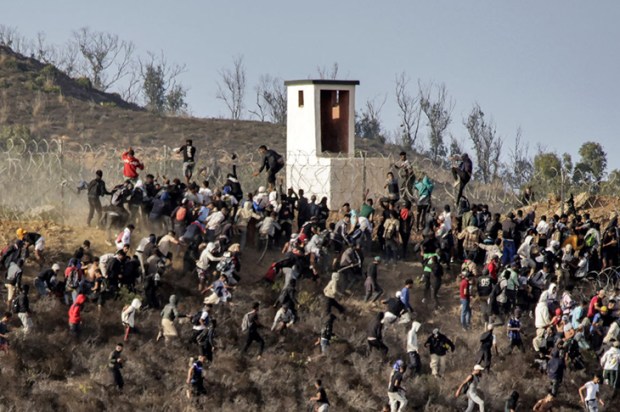
All the old, fixed notions are under siege. The US Supreme Court all-but ended ‘affirmative action’ in 2023 after it dominated US life for over 50 years. The borders are closed, and fewer migrants are apparently seeking to breach them. US Corporations and universities are reintroducing ‘We the People’…
There are two problems delaying a resolution of this long argument.
Firstly, there were decades of campaigning, which included a lot of emotional investment. How do fervent supporters come to accept that a response to a culture war is not the institution of a new war but a continuation? Particularly when everyone they know agrees with them. Very large container vessels do not turn on a dime. But political parties cannot just talk to themselves.
The formal statements of grievance that instituted the alleged ‘liberal reforms’ may remain, but concealed by modified language.
Second, nothing is forever. The boot will be on the other foot again, and it will be used. There will be payback. The Erich Honecker speeches will be brought back, but so much of what they were based on has been shattered. How to put the broken pieces back together again will be the problem, but attempts will be made.
Or the counter revolution will continue to be elected, making it difficult for evasion to continue.
The desirable, even likely, achievement of the 60-year cultural revolution and the strong response in the US will be greater acceptance there of the basic decency of Western values, and less self-hatred. Americans often paid heavily for mistakes, through for example the Civil War (1861-65) that ended slavery, in which brother fought brother, and perhaps 850,000 people died.
Some of this may have application in Australia, although we do many things differently from the US. We share the self-hatred, the challenge to Western values, the lists of alleged underprivileged that can be used to undermine the interests of anyone not listed, and share enforced uniformity of opinion.
The answer to it all can be found in ‘We the People,’ the opening words of the US Constitution. This surely overrides and renders inoperative lists of part only of the people. ‘Government of the people, by the people, for the people’ is a remarkably effective description of democratic precepts. This was Abraham Lincoln’s Gettysburg address.
Not all our idiocies are imported. We grow our own locally in one of the most urban countries in the world, despite our vast continent.
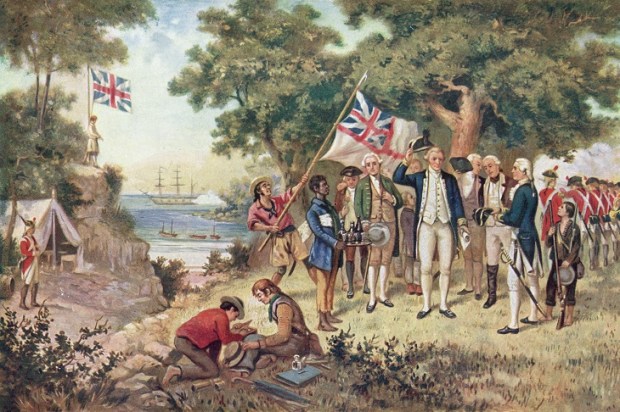
Our own urban centre idiocies include shaky finances, a presently result free ‘Productivity Roundtable’, rampant welfarism, shaky defence arrangements, lack of housing, excessive immigration including too many who seem hostile to our values, a hostility to economic growth, and a completely negative attitude to our own history. All of these things reflect the strong fantasy life of an isolated country where fewer ‘make things’ and have a practical outlook.
I have never been happy with legislating for etiquette, what are ‘nice’ opinions in the inner city or outer. Yet that is what we consistently do, from language to climate change, to foreign wars.
One strength may be that most Australians simply do not care enough. Fewer here live politics as the central fixed point of their lives. Some that do are damaging in their hostile and violent language and demonstrations.
Our government calls for more civil, less divisive or grievance politics. This is understandable, but might be more persuasive if we had not had decades of demands and campaigns which might be called those things and are not also criticised. Our local campaigns have little positive to say about Australia, its achievements, and values.
Their language leaves little room for our ‘full democracy’ and first-world prosperity which came much earlier and easier than most and is sourced from our unique history. Unlike most of the world’s population, which includes variously estimated 132.2 million displaced people and 110 wars, simple poverty, political oppression, or just lower living standards.
We have instead the luxury views of one of the most urban populations in the world.
Common sense would cure all of it if it were allowed to. While we may still have a first-rate economy, is our long-term government, bureaucracy, and intellectual life up to scratch? Nothing has yet killed the economy, not even our own ‘wafflenomics’ and deliberately high power prices. Our foreign adventures on Climate Change and other things are dangerous.
No government should just muddle through, leaving the economy to look after itself.
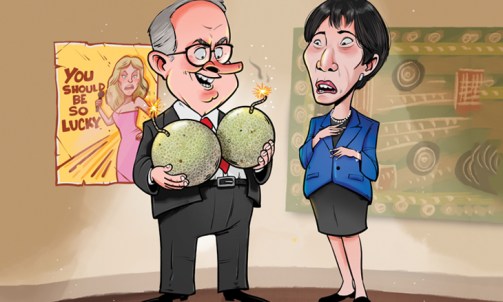
We need proportion in our campaigns to improve ourselves. It should not be necessary to contrast life here with that outside the narrow scope of first-world countries. That would genuinely be the last Erich Honecker gasp of the stupid party. As many political leaders have said, people born here have won the lottery.
Reg Hamilton, Adjunct Professor, School of Business and Law, Central Queensland University