Australia in 2025 is a temporary one-party state, and not yet a Roman emperor’s triumph with gold, elephants, flute girls, and slaves parading through the streets of Rome.
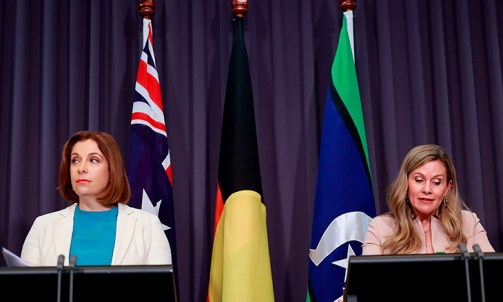
The federal government dominates Parliament and has various ways to pass legislation through the Senate.
But one-party states do not last in Australia.
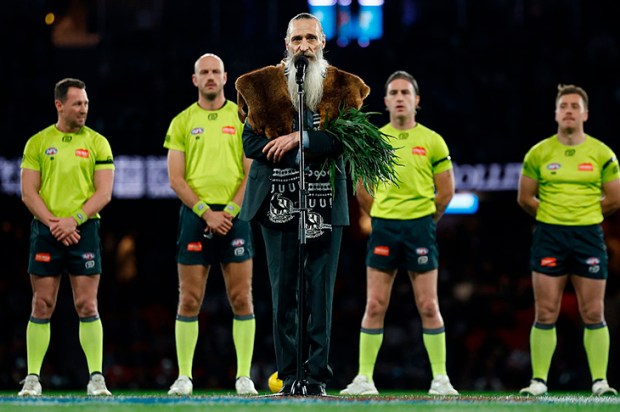
Already, the government has announced it is looking again at unpopular ‘truth telling’. This is the arrogance of power when budget deficits, falling living standards, antisemitism, and defence threats are the real problems.
Roman emperors were told ‘remember you are mortal’ during triumphal parades with cheering crowds.
But the cheering crowds are already silent. The primary vote for the government and Coalition was close to a third each, which is not overwhelming.
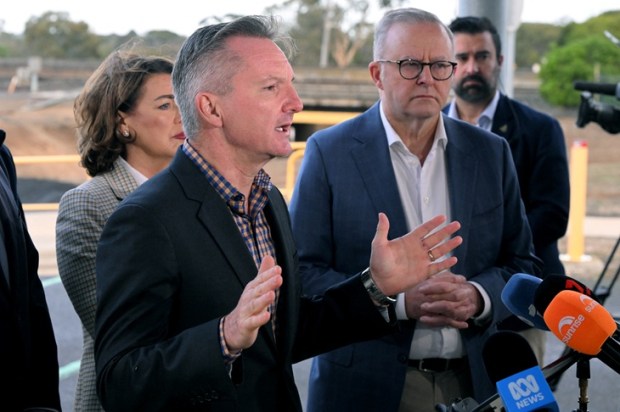
For now, the Albanese government has a wide discretion as to where to take the country.
Firstly, there is no ducking responsibility. It is the government’s alone. If the August Productivity Roundtable does not produce useful reforms to help productivity and living standards they will be blamed for a reason.
Will there be a substantial package of tax reform and lessening green and red tape?
Secondly, the government is limited by priority given to identity groups above all and climate change targets.
But beyond that, mining and housing approvals may be easier, and a whole suite of regulatory requirements streamlined.
Agencies of government regulation have been approached for ideas, as has industry, and the Productivity Commission.
We need a repeat of the successful Hawke to Howard era (1983-2004) of economic reform. That did not re-emerge in the first term of the Albanese government (2022-25). Then the priority was not boosting productivity but labour legislation and new welfare.
Conceivably, any new package of reforms may damage the government, either for an opportunity lost in the caution that has dominated recent politics, or even if they are useful. Or a hopeless ideological turn may be taken.
Many are sceptical about the results. Government Parliamentarians seem more comfortable talking about new welfare when you listen to Parliament. Will income tax be cut further?
A second area of reform should be a return to more truth in our national story, and in its celebration. The government has been cautiously moving towards celebrating a ‘progressive patriotism’ about ‘the Australian way’.
It is hindered in doing this by the perceived need to defer to activist political campaigns. Try and have a civil disagreement with some of the threatening protesters in our capital cities and see what happens. This is the third fundamental ideological restriction that progressive governments have.
Many ills result including the need to remain strictly silent on British Australia succeeding so well with colonial pastoral and democratic riches.
Australia was the triumph of the pastoralists until the 1950s. We became very rich by herding sheep and cattle.
We were also the democratic triumph of Britons far from home with our 1850s ‘one man one vote’ democracies, freely drafted by Australian colonists using the British Constitution and liberal ideas.
You would not know this from government or the education system.
It is hidden in the attic like the mad wife in Charlotte Bronte’s Jane Eyre, the truth that cannot be spoken.
But Australian history made us one people. We are not a very long and lengthening list of grievous exceptions to a fair go. Whatever nonsense campaigners say.
In fact we developed a successful democracy, economy, and society based on the interests of ordinary people, with a particular focus on not leaving anyone behind which strains our budget and beyond.
It is a falsehood to pretend that our government and democracy do not matter by ignoring their history, and that they are not a form of evolved British liberties that came to our continent in 1788.
It is shameful to manufacture history to satisfy a modern political requirement to be respectful to all.
It is a falsehood to ignore our beneficial economy. Without the pastoral boom of the 1860s, which brought good wages and eventually the welfare state, Australia would not be the sought-after country for immigrants that it has always been.
And where would government services, education, health, labour standards, be without an economy to pay for it? Non-existent.
There are three things we usually get wrong. First, we romanticise just about anyone or group that are not British or Irish.
Misusing ethnicity to antagonise the general public destroys practical attempts to solve problems. It fails on all levels.
Second, disparagement of our institutions and their development is just plain wrong yet is frequent. How could anyone think to ignore the early development of our colonial democracies? Yet our education system and intellectual life does.
Third, the pastoral boom of the 1860s led to good jobs and wages, involving both European and Aboriginal labourers. Yet our history of land development is now simply a political football.
The great events of Australian history are now under-researched and not taught to anyone.
There is an intellectual crisis in the West, with large groups of influential people insisting that things are exactly the reverse of what they actually are:
‘The front-door step is at the back,
You’re walking when you stand,
You wear your hat upon your feet,
In Topsy-Turvy Land.’
They destroy wonderful Hollywood film songs:
‘You’ve got to accent the negative,
Eliminate the positive.’
The problem is exacerbated by the baleful influence of US elite universities, where the most privileged young women and men in the world decided that they are, in fact, deeply underprivileged, even ‘intersectionally’ underprivileged, whatever that means. Topsy-turvy land again.
But nonsense on stilts falls over. Then we can have some real truth-telling. And even fix the budget.
By the Hon. Reg Hamilton, Adjunct Professor, School of Business and Law, Central Queensland University