President Trump’s weaponising of trade may simply be applying pressure to correct what he sees as unequal access for goods and to staunch the inflow of unwanted drugs and immigrants. But he often also talks about the benefits to the US of forcing imports to be replaced by domestic products. Notwithstanding a massive literature to the contrary, he also appears to believe that the foreigner, not the US consumer, ends up paying the import tax.
Trump places special attention to nations running a trade surplus with the US. This does not include Australia, which imports about twice as much from the US as it exports.
Australia also has a free trade treaty with the US – but then again so do Canada and Mexico. The limited value of such agreements was demonstrated by China overriding its own agreement with Australia and introducing embargoes following Australian government criticism of China’s domestic measures against minorities. In that case only wine, where exports were oriented to Chinese tastes and the global market was oversupplied, was seriously harmed, losing a $1.3 billion market.
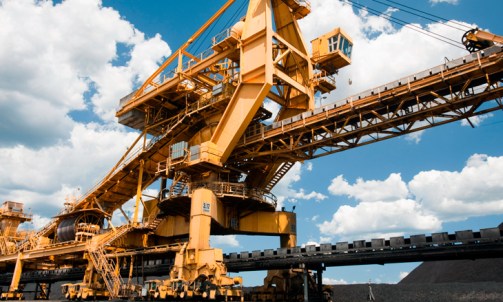
The most valuable export that was hit by the Chinese embargo, coking coal, saw a major dip but what happened was a diversion, with Russia, Mongolia, and other nations swapping export markets with Australia. The fact that coal has seen the earliest recovery in China exports likely indicates that the alternatives were costly to Chinese steel mills, which though they dominate world production are in a competitive market.
The Chinese may be cavalier in keeping to trade agreements but they are not stupid – they never contemplated closing down Australia’s $160 billion iron ore exports that comprise 70 per cent of China’s imports. Nor did Australia consider a retaliatory iron ore export embargo on China; iron ore to China comprises one-fifth of total Australian exports.
Additional US tariffs on Chinese goods will impact on Australian steel and coking coal exports. But, as with the exports hit by China’s embargo in Australia, the effect will be marginal – Australian displaced iron ore and coal inputs would be diverted to other suppliers, albeit incurring higher costs and/or slightly lower prices.
More significantly, the Trump trade priority may extend to anti-dumping matters, something that has been a focus of previous US administrations. Dumping, strictly speaking, is when a firm sells below cost and incurs losses in the process, losses that it hopes to recoup by raising its prices when its aggressive marketing drives out its competitors. Dumping was the rationalisation proffered by China for its actions banning selected Australian imports.
In fact, nobody has ever identified a business success from such strategies: the original US ‘anti-trust’ laws targeted marketing strategies by Rockefeller’s Standard Oil a century and a half ago. But in that case, the oil price steadily fell in the face of Rockefeller’s cost-cutting and, far from knocking out competitors, new entrants like Shell and Texaco emerged. Similar, more recent, cases brought against IBM fizzled out only when it was clear that the firm’s dominance had long since passed.
More modern dumping allegations maintain that it is unfair if a firm sells its products overseas cheaper than at home. International trade rules may legitimise countries who impose countervailing import duties in such cases. These can be kept in place for many years if the World Trade Organisation rules that the activity, ‘causes or threatens material injury to an established industry in the territory of a contracting party or materially retards the establishment of a domestic industry’.
In the past, Australia has not been hit by US anti-dumping actions, though in the case of steel, the US has determined that government subsidies had illegitimately assisted Australian exports but the US government ruled that the adverse effects in Australia’s case were not significant.
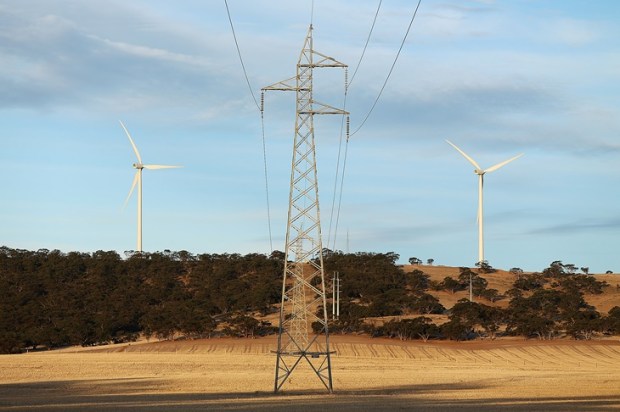
It may be a different matter with aluminium. Australia has announced a $2 billion subsidy for aluminium smelters to use green energy. Australian aluminium smelting has become uncompetitive due to policies favouring wind and disadvantaging domestic coal use.
About 10 per cent of Australia’s aluminium exports are to the US, which is the venue to some 29 per cent of global imports. This invites countervailing tariffs that would further undermine the uncompetitiveness of Australian aluminium.
Australia may gain from one aspect of China’s reaction to the US tariff increases particularly with regard to coal where the US provides 12 million tonnes (Australia, recovering from the embargo, supplies about 70 million tonnes).
The world trading system is suddenly far more complicated adding a further set of reasons why Australian government policy should be to ensure that its environmental and social policies need to be supportive of business and to ensure the nation’s advantages are not undermined.
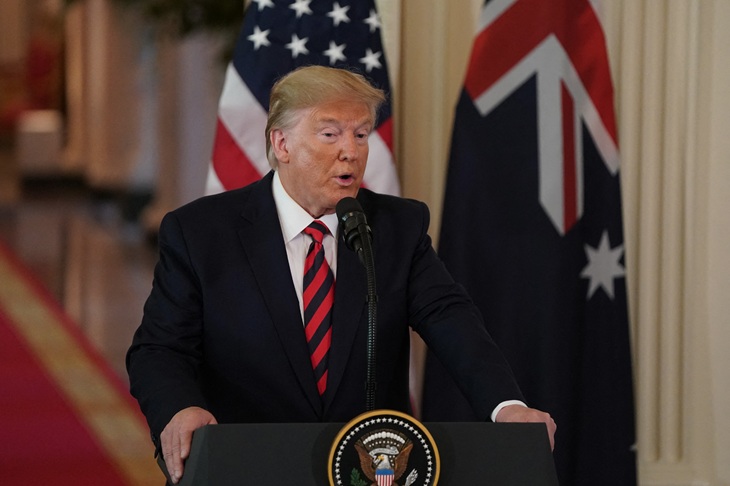
Getty Images