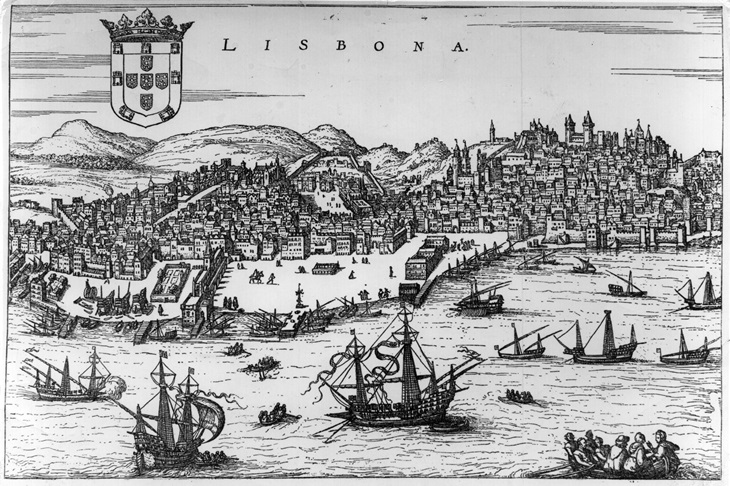
From Lisbon: Portugal, a seafaring nation, pioneered the Age of Discovery and the exploration of the New World. Synonymous with this period is the individual bravery of the early navigators who battled tough conditions to explore beyond the Pillars of Hercules and to cross the Atlantic. Until recently, Portugal forged a national identity through individual ruggedness in the cod fishing industry in the North Atlantic, and not through the identity politics that is part and parcel of the European Union (EU).
While various seafaring techniques were developed here and elsewhere, the Portuguese were able to combine numerous skills and advantages into a successful empire beginning with colonies in Africa, India, and later South America. International trade in codfish, known locally as bacalhau, was a result of the discovery of Newfoundland.
Although Portugal’s empire traces its beginnings to the 14th Century, and Vasco da Gama famously established a sea route to India, it was in the 20th Century that cod fishing became a national obsession. During the second world war, Portugal remained neutral and after some of its fishing vessels were sunk by German submarines, an agreement with the Allies saw the Portuguese cod fishing fleet painted white to indicate its neutrality while fishing off Newfoundland and Greenland.
One of the sailing vessels, the Creoula, was built in Lisbon in 1937 and served until 1973 in some 37 cod fishing campaigns. The ship remains serviceable as a Portuguese Navy training ship. Centuries after the Age of Sail, Portugal continues its longstanding sailing tradition.
Until net fishing reduced the sustainability of the North Atlantic cod industry, Portuguese fishermen spent up to six months each year in the freezing conditions of the North Atlantic to bring home bacalhau. The cod, originally fished by Vikings and imported to Portugal from Norway, remains a national dish.
If you haven’t had Portuguese bacalhau before, go to Petersham in Sydney. You can purchase salted cod from the local delicatessen or go to one of the popular local restaurants to enjoy the fish cooked by experts. Despite being introduced to salted cod by a Portuguese mate of mine, I have never had much success in de-salting the cod – too much soaking and it is too mushy, too little, and it is too salty.
Here in Lisbon, I have eaten bacalhau almost exclusively at a number of local restaurants that are less interested in the tourist market and more focused on traditional Portuguese cuisine.
Rosé (include Mateus) is a local specialty, as is Tinto Vinho (red wine) and the local beer, Super Bock. We tried a local white known as saudade, its namesake referring to a sense of longing that is a peculiarly Portuguese emotion that escapes an English translation.
I became familiar with this emotion after years of never being with the girl of my dreams until only six years ago when at the age of 49 we were finally united (after having met at age 16). I had always thought that saudade also included a sense of longing that could never be resolved, so the resolution in recent times has me stumped as to its proper feeling.
But it is apparent that saudade is synonymous with the Portuguese cod fishing tradition, and that the fisherman, while missing their families during the long months at sea, also came to miss the sea and therefore returned to it year after year, despite the hardships. Hence the lack of resolution.
What I didn’t realise was that cod fishing was a solitary job. Individual fishermen went out from the mothership for hours at a time in small wooden boats known as ‘dories’ and fished for cod on lines. The job was lonely and dangerous, and many fishermen never returned to the mothership. Yet time and again the men who survived kept returning to the sea.
Religion formed a part of the seafaring culture, too. The many churches in Lisbon are adorned with sailing ships where services were held before the ships set out for the North Atlantic. There remains a sense of nobility about cod fishing and its consumption although times have changed in the last five decades.
One thing that struck me is that despite the proud national culture forged in hard work and bravery, Portugal is now another casualty of the EU and all the identity politics and economic hardships that entails.
One local restaurant worker told us he worked fulltime yet was paid less than AUD $15,000 per year. He said that whenever anyone became better qualified, they would typically head off overseas because they could earn more and might even have the prospect of owning their own home elsewhere.
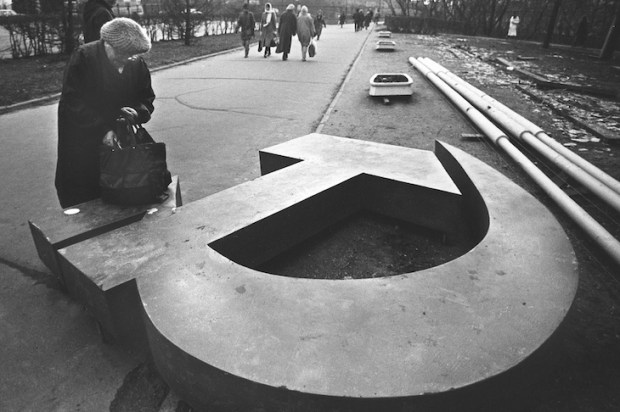
In the meantime, green-left pundits in Canberra complain that Australians, unlike their EU counterparts, do not like the idea of renting forever. I’ve heard this several times from the same people who screamed blue murder when they were stuck in their rented apartments during the pandemic lockdowns. The recent push to develop government housing, especially the Soviet-style walk-up apartments envisioned by state Labor governments, is a step backwards, in my opinion.
Not even Europeans enjoy renting forever – it is a consequence of their economy, not a choice made willingly. Almost resignedly, as in saudade, longing for a house you might never own.
What is striking about Lisbon, as the capital of one of the original Age of Discovery empires, is the faded grandeur of its architecture. It appears that the boom years led to extravagant building that could not be maintained in later years. Budapest and Slovakia share this in common with Portugal, along with their EU membership.
What struck me most, however, was the graffiti that supported Palestine, as well as Palestinian flags that adorned some of the buildings of faded grandeur. This I was unable to reconcile other than to make this observation – those Westerners who support Palestine are those who have Woke ideas about society. None of these people have had to fight for anything, let alone sit in a dory for days on end to catch a few cod fish in the North Atlantic to make a living.
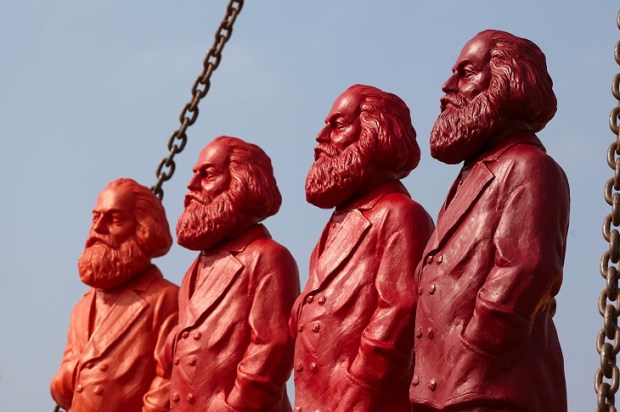
Much like we have seen in the US and Australia, there are two classes of people in Portugal – those who are happy to lean on the state, and those who want to lift themselves up to something better. But the longer the EU and its socialist ideas perpetuate European society, the more the forgotten classes will suffer as the so-called ‘better educated’ classes pursue their false ideologies at the expense of those who only want to see their children do better than themselves.
If there is one thing the forgotten people of Lisbon have taught me, it is better to forge a national tradition through bravery and hard work than to lose oneself in the inconspicuousness of socialist mediocrity.
But try some bacalhau. It’s part of Portugal’s national identity forged through individual bravery, not identity politics.
Portugal’s national identity is forged through individual bravery, not identity politics

Getty Images