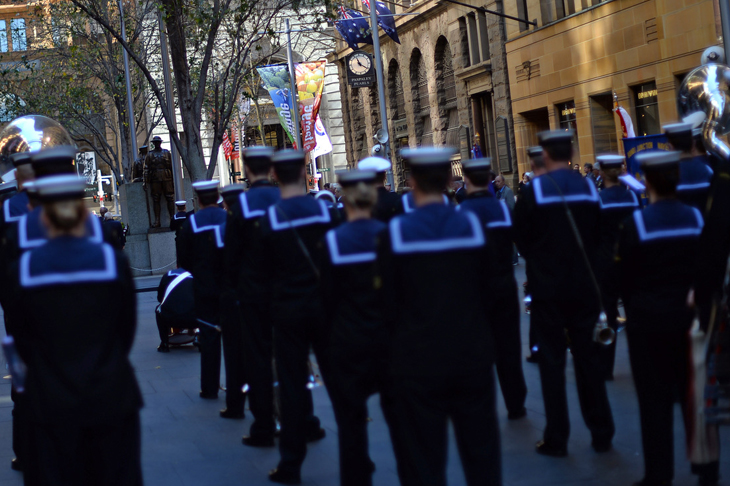
In 2020, after 78 years of injustice, an 18-year-old in the Royal Australian Navy, Teddy Sheean, received a Victoria Cross for Australia. The 80th anniversary of the HMAS Armidale action on 1 December 1942 is nearly upon us. It is the only VC the Royal Australian Navy has been awarded – but other naval heroes who deserved bravery awards were not given a medal; some were given nothing.
Although retrospective VCs might not be in order, surely the federal government should look at Stars of Gallantry for these neglected men?
Imagine today if every approval for an Australian gallantry award had to be ticked off by someone in London. That was the case in World War II. That was what our Navy had to endure. The other two forces had their awards approved in Australia. Navies take a long time to grow, and ours had been ‘parented’ by the RN. When war arrived, there was no time for revision. Fighting for its life against Germany and Italy, and later Japan, Britain was understandably under extreme pressure.
Perhaps due to that, there are at least four WWII naval personnel who could have received a VC. Some received what was called a ‘Mention in Despatches’, not a medal, rather a badge, albeit a prestigious one. Many thousands of Aussies were awarded a MID before it was phased out in 1975.
But some of the bravest Navy personnel received no recognition whatsoever.
Ship’s cook Francis Emms fought at his machine gun against Japanese aircraft until wounded, later dying aboard HMAS Kara Kara in Darwin Harbour on 19 February 1942. He received only a Mention; the VC being the only other possible posthumous possibility.
Only weeks later, Captain ‘Hec’ Waller commanded HMAS Perth in battle until it was sunk, losing his life in the process. Fighting alongside the Australian cruiser, also sunk, was USS Houston. Her Captain Rooks received the very highest American award, the Medal of Honor. In fact, no one noticed Waller had not been recommended for anything at all, except post-war when – ironically – someone from the RN in Britain noticed the anomaly. The paperwork was hurriedly filled in, only for Waller to receive a MID when a VC would have been appropriate.
And at the end of 1942 – a terrible year for our Navy – Teddy Sheean manned his 20mm anti-aircraft gun even as the corvette Armidale sank underneath him, having disregarded the order to abandon ship in an effort to save his shipmates’ lives.
At least these three were given a MID, with Sheean’s now removed and replaced by the VC. Others received nothing.
On 4 March 1942 Lieutenant Commander Robert Rankin, captain of HMAS Yarra, the sole escort of a small convoy, turned and charged the enemy – an overwhelming number of Japanese warships. Fighting in waters north of Australia, this man was a naval surveyor from Sydney, who had been ordered to command a warship. Yarra was a sloop, smaller than a destroyer, and Rankin took her into combat against a combined force of Japanese cruisers and destroyers. He was outgunned, outranged, and out-numbered, yet he fought to try to give his convoy of three vessels time to get away.
The fight was a hopeless one. Yarra made smoke to confuse the enemy’s sightings, and repeatedly fired her guns. The Japanese found the range quickly though, and the Australian vessel was mortally hit. When a salvo hit the bridge, Rankin died at his post, but his ship’s company fought on to the end as the enemy closed the range and poured in fire mercilessly. As the ship sank beneath them, young Leading Seaman Ron ‘Buck’ Taylor, from Carlton in Victoria, stayed at his gun despite the order of abandon ship, so he could defend his shipmates. 138 men went down with Yarra, with the other vessels of the convoy all sinking – few survived to be either rescued or taken prisoner over the next days.
Rankin, Taylor, and the rest of the ship’s company have received no individual recognition at all, as once again the paperwork was not done. At least, many decades later in 2013, the ship received a Unit Citation for Gallantry.
The RAN in 1942 was undermanned and terribly over-committed. If paperwork for the Yarra people was started, it was never finished. Hardly easy to follow up too, given the thousands of kilometres of separation between Australia and Britain, and with communications not what they are today. Indeed, one of the best-known naval officers of the war, John Collins, who commanded HMAS Sydney in a cruiser action in the Mediterranean, found when he inspected his own paperwork: ‘These files are far from complete. I hope that other officers’ files are not in the same state.’ If one of the most senior Navy people noted that of his own records, what hope was there for lesser mortals?
An inquiry of some years ago was not charged with examining the moral situation, merely whether procedures were correctly followed. As a result, Yarra’s people still did not receive anything, although strangely, a commendation for the ship itself was recommended. But there is an award, the Star of Gallantry, which ‘recognises acts of outstanding heroism in action in circumstances of great peril’ which could be given. It is the nation’s highest decoration for combat bravery after the Victoria Cross.
The system the Navy endured in World War II is one of the most unfair ever perpetrated on Australian military personnel. The award of Stars of Gallantry to Emms, Waller, Rankin and Taylor would help further repair this damage to our Navy.
Got something to add? Join the discussion and comment below.
Dr Tom Lewis OAM is a former naval officer and author of 18 military history books, including: ‘Teddy Sheean VC’ and ‘Attack on Sydney Harbour’, a study of the 1942 Japanese midget submarine raid. His recent book for upper primary and junior secondary age children, ‘Australia Remembers 4: the Bombing of Darwin’, was launched by 101-year-old Hudson bomber gunner Brian Winspear.
You might disagree with half of it, but you’ll enjoy reading all of it. Try your first month for free, then just $2 a week for the remainder of your first year.