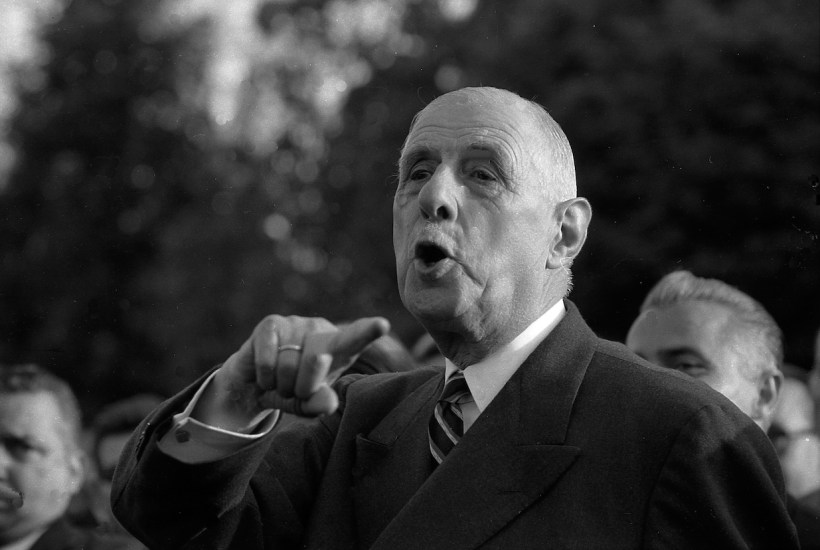
More than a half century after his death, Charles de Gaulle is making a surprising comeback.
Last Saturday, the ambitious two-part biopic about General de Gaulle’s wartime heroism received a seven-minute standing ovation at its American première in Los Angeles. Here in France, presidential candidates are boldly proclaiming their Gaullist values and vision for a nation plunged in crisis. Evoking Charles de Gaulle’s legacy is a winning electoral strategy.
Meanwhile, the great man’s beloved country house, La Boisserie, has sadly fallen into disrepair and its future remains uncertain. Charles de Gaulle’s heirs are engaged in an acrimonious family feud over the ownership and fate of the famous residence in Colombey-les-Deux-Églises, about 120 miles south-east of Paris.
De Gaulle died at La Boisserie 56 years ago, on 9 November 1970, and is buried in the village cemetery. For decades, his admirers came on pilgrimages to venerate the great statesman’s residence nestled in a wooded two-hectare property. Today, La Boisserie attracts mainly tourists.
The quarrel amongst Charles de Gaulle’s heirs is a classic family dispute over a shared inheritance. Following the death two years ago of General de Gaulle’s only son Philippe at age 102, the estate was split among his four children: Charles, Yves, Jean, Pierre. Each was bequeathed 25 per cent of the estate. Several months later, the four heirs put General de Gaulle’s personal effects under the hammer. The Paris auction house Artcurial took bids on 372 of Charles de Gaulle’s sentimental possessions – manuscripts, letters, schoolbooks, toy soldiers, badges, clocks, watches, wallets and a trove of other souvenirs. De Gaulle’s gold LIP watch, valued at €6,000, fetched a staggering €537,000 (£461,000). In total, the auction brought in €5.6 million (£4.8 million) – far exceeding expectations.
For those who were saddened to see General de Gaulle’s personal possessions auctioned off to the highest bidder, alarm bells sounded when rumours circulated about the family’s plans to put La Boisserie on the market. It was whispered that the buyer could be a Chinese billionaire or a Russian oligarch.
When the Élysée Palace got wind of these murmurs, French president Emmanuel Macron intervened. It was made known that that the prospect of Charles de Gaulle’s private residence falling into the hands of foreigners was unacceptable. La Boisserie belonged to the French nation. Macron proposed that the French state purchase La Boisserie and maintain it as a national museum. Another solution proposed that the Haute-Marne département, where the house is located, would acquire and manage the property.
Two heirs, Yves de Gaulle and his brother Jean, agreed to this arrangement. Another brother, 63-year-old Pierre de Gaulle, refused to cede La Boisserie to the French state. He insisted that the property remain under family control.
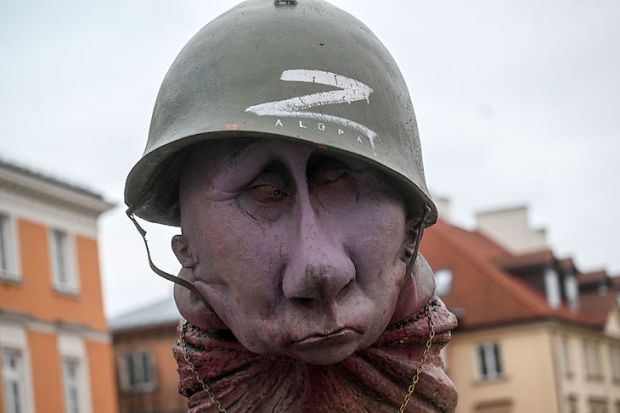
Pierre de Gaulle is an eccentric character who has long been the family outcast. He lives as a tax exile in Switzerland where his illustrious name has helped him pursue a career in finance. In France, he’s known mainly for his bizarre statements in the media, in particular his outspoken support for Vladimir Putin. He once declared publicly that he would be honoured to possess Russian citizenship. He is known to spread conspiracy theories and Kremin propaganda. He also regularly criticises Emmanuel Macron and fulminates against the global influence of the United States.
If Pierre de Gaulle’s outlandish postures are an embarrassment to the family, on the matter of La Boisserie’s future, his obstructions must be taken seriously. He acquired the 25 per cent stake of his brother Charles, a far-right politician who once ran in European elections under the banner of Jean-Marie Le Pen’s party. Following that transaction, Pierre de Gaulle now owns 50 per cent of La Boisserie. Nothing can be done without his consent.
Yves de Gaulle, impatient with his younger brother Pierre, gave media interviews to insist that the best solution for La Boisserie is to sell the property to an agency of the French state. ‘It is not my family’s house,’ he declared. ‘My grandfather belongs to history, therefore La Boisserie belongs to all French people.’
Pierre de Gaulle, meanwhile, launched a PayPal fundraising campaign to finance his scheme to ‘save’ La Boisserie. His direct appeal to social media followers appeal began with the words, ‘Françaises, Français, aidez-moi’ – quoting directly from Charles de Gaulle when addressing the French nation at the birth of the Fifth Republic in 1958. His PayPal campaign seemed to suggest that he lacked sufficient funds to buy out his brothers and take outright ownership of La Boisserie.
De Gaulle gave strict orders that these creatures were never to appear on his dinner table because ‘we do not eat animals that we know personally’
Charles de Gaulle purchased the 14-room, vine-covered stone house in the 1930s when he was still a relatively unknown lieutenant-colonel. He acquired the house, constructed in 1810, as a tranquil family haven to raise his daughter Anne, who was born with Down Syndrome. During the war, the Germans occupied La Boisserie and destroyed part of the property. After the liberation, De Gaulle undertook a major refurbishing, including the addition of a corner turret.
Following his political setback in 1946 when he resigned as head the French provisional government, De Gaulle retreated to the tranquillity of La Boisserie where he wrote his memoirs. He took contemplative strolls in the property’s park where he communed with the chickens and a sheep called Médoc. He gave strict orders that these creatures were never to appear on his dinner table because ‘we do not eat animals that we know personally.’ His cat Grigri was the only resident allowed to roam anywhere in the house. He also had a pet dog, a Corgi called Lutin (but nicknamed ‘Rase-mottes’), followed after the dog’s death by Rase-mottes II, gifted to him by British prime minister Harold Macmillan.
Following his return to power in 1958, De Gaulle returned home to La Boisserie mainly at weekends. He loathed the Élysée Palace due to its scandalous reputation for adulterous sexual affairs of previous French presidents – especially Félix Faure who in 1899 died in the Salon d’Argent while receiving oral sex from his married mistress. De Gaulle initially made efforts to find another location for his presidential residence – including Les Invalides and École Militaire – but grudgingly moved into the Élysée Palace. He regarded La Boisserie as his home.
A decade after his death in 1970, La Boisserie was opened to the public, but has struggled financially due to the high costs of maintenance. The residence’s current predicament is partly due to the late Admiral Philippe de Gaulle’s indecision, who divided the estate among his four sons instead of leaving the property to the French state. The French state has reportedly offered €1.5 million (£1.2 million) for La Boisserie.
How much money Pierre de Gaulle has raised on PayPal is unknown, but it’s unlikely that his brothers would be willing to sell their stakes in La Boisserie. For now, the fate of the house that Charles de Gaulle called home remains in limbo as the bitter family feud grinds on.