‘All political lives, unless they are cut off in midstream at a happy juncture, end in failure, because that is the nature of politics and of human affairs.’ So warned Enoch Powell in his biography, Joseph Chamberlain.
Expectations that Donald Trump is finished or even reduced to a lame duck are unlikely to be realised. What must go is the tenuous modus vivendi he maintained with his own party in the legislature. Those Democrats who imagine they won – rather than that the Republicans lost – may lack the common sense to do what the constitutional system is designed for and Americans and the free world expect: build their own consensus with a fundamentally worthy President.
Three leading conservative voices frame the catastrophe: an unvarnished autopsy of electoral collapse from Senator Ted Cruz; a fierce defence of external deterrence from commentator Mark Levin; and the grand strategic assessment of civilisational fracture articulated by master strategist Gregory Copley.
Together, they reveal an exhausted superpower empowering radical Islamists and neo-communists just when global order demands undivided resolve towards the American destiny.
The collapse of the administration’s congressional majorities was swift, merciless, and structural. Yet the autopsy depends on whether you are a parent trying to put food on the table, a believer in the destiny of the imperial republic as leader of the free world, or one of an elite band preparing to surrender to the brutal, radical, Islamist-communist alliance to which they have already rendered obeisance.
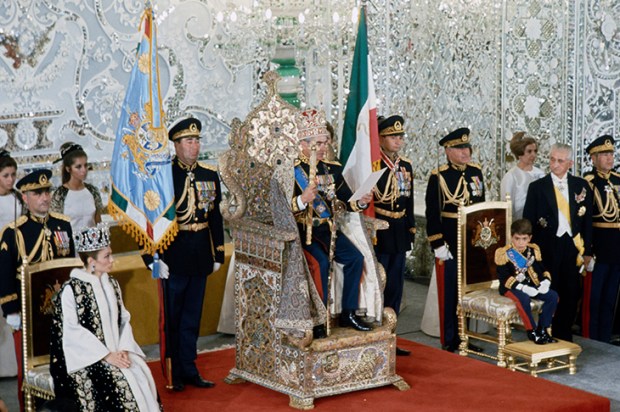
After all, Jimmy Carter, aided by the opportunism of French President Valéry Giscard d’Estaing, did precisely this with Iran, pulling the rug from under our ally, the Shah. At least Carter’s failing resulted from his naïveté rather than a deliberate betrayal of the American mission.
Meanwhile, Ted Cruz pulled no punches on the electoral defeat, calling the result a ‘bloodbath’, a ‘blue tsunami’, and a ‘Watergate-level repudiation’. He documented how compounding tariffs and runaway inflation shattered the working-class conservative coalition: ‘Food is too high, gas is too high, diesel is too high, insurance is too high, life is too high.’ The open-ended military drag in the Middle East drove fuel and energy prices to breaking point, alienating blue-collar families, Hispanics, and rural evangelicals, and triggering the unthinkable: the loss of Republican statewide dominance in Texas.
Mark Levin mounted a ferocious counterblast. He defended the military strike against Iran as an unavoidable, existential imperative against an apocalyptic regime on the precipice of acquiring nuclear capability. To Levin, the disaster was not the decision to confront Tehran, but the hesitation of administration isolationists who diluted the mission, prolonged the conflict, and handed an open goal to domestic opponents.
Gregory Copley placed the disaster in its historical context: not an ordinary midterm swing, but the violent friction of a closing historical era. In modern ‘total war’, foreign adversaries exploit internal societal divisions rather than confronting superpowers solely in open combat.
Aided by an overwhelmingly hostile legacy media, the United States has in a moment of distraction empowered a dangerous ideological faction with radical Islamist and neo-Marxist sympathies, tearing the republic away from its civilisational roots.
The central policy error was unmistakable: Donald Trump was entirely right to strike at Iran’s nuclear throat, but his administration was disastrously wrong to wage it as an open-ended war.
The existential imperative remains absolute: the mullahs must never be allowed to possess nuclear weapons or the ballistic means to deliver them. Yet America’s leadership does not and never did require repeating protracted land wars – a folly that nineteenth-century Britain usually avoided. When all diplomatic and economic remedies fail, the fast, decisive, and overwhelming application of American military power is entirely justified. What was urgently required was a surgical police action – rapid entry, catastrophic devastation of Iran’s nuclear centrifuges, followed by an immediate exit.
Instead, Washington allowed the operation to drift into what a hostile media could describe as an enervating, conventional quagmire, transforming an essential strike into an unbearable domestic burden. The American voter did not reject strength or global leadership; they rejected paying five dollars a gallon at the pump for an overseas entanglement that had forgotten its own exit door.
To fulfil its destiny as Western leader, the US must discard strategic delusion, rejecting the paralysing retreat of Buchananite isolationism. The correct posture is vigilant, armed deterrence in steadfast alliance with like-minded Western nations, reserving force for swift, devastating, punitive operations that neutralise existential threats without imperial overreach.
At home, national endurance requires the maintenance and restoration of the economic dynamism over which Trump presides. The federal government must continue to champion genuine free enterprise, unfettered by improper bureaucratic restraints, climate pieties, or stifling regulation – which should remain strictly minimal and applied only where genuinely necessary. Domestic energy production must be fully unleashed to slash household costs, kill inflation, and lift the crushing burden from working families. Above all, the nation must unashamedly reassert the fundamental standards and virtues of a Judeo-Christian society, repelling corrosive ideological subversion.
External deterrence collapses the moment household budgets break down and the domestic citadel begins to rot from within. If Washington spends the next two years consumed by Democrat-led score-settling and legislative warfare, it could validate Enoch Powell’s melancholy axiom not merely for an administration, but for the American century itself.
Got something to add? Join the discussion and comment below.
You might disagree with half of it, but you’ll enjoy reading all of it. Try your first month for free, then just $2 a week for the remainder of your first year.