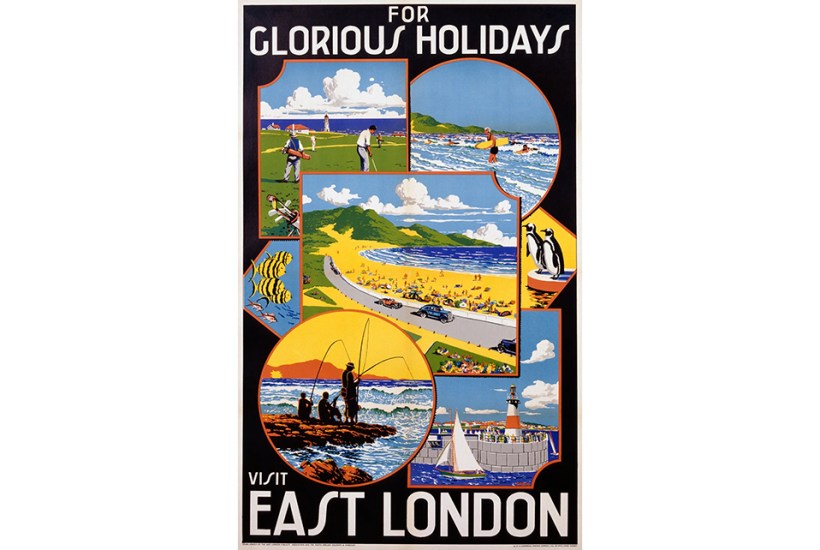
As if our hospitality industry hadn’t experienced enough government abuse, last month saw yet another blow: permission for cities to levy a tourist tax on hotel stays.
But not quite so fast. Such a tax need not be bad news: it depends on how you levy it. Done cleverly, a tax on hotel rooms could boost revenues for the classier end of the hotel industry. And I have a few ideas on how to do it.
The first rule is that you must not levy the tax as a percentage of the room cost – in which case, it will have a downward effect on people’s propensity to spend. Instead, it must be a flat fee. Say £10 a night for London, or, more ingeniously still, £20 per stay, regardless of duration. This will encourage tourists to spend more, staying in better rooms, and in the latter case, it encourages people to stay longer.
It’s called the Alchian-Allen effect, and it was first publicised in the 1970s by the two eponymous economists to explain to bemused readers of the Seattle Times why the state’s apple growers largely exported their finer produce, leaving locals with the crappier part of the crop. As they explained, the fixed cost of transportation made much less difference to the relative price of an expensive apple. A shipping cost of, say, five cents per item doubled the price of a cheaper five-cent apple, whereas five cents added to the price of a 15 cent apple only increased the price by a third.
Now consider two couples. Both have a choice of a £50 restaurant meal or a £100 restaurant meal, but one couple must also pay £50 for a babysitter. It is, perhaps counterintuitively, the couple with children who are more likely to go for the pricier meal. For any given £300, the child-free couple can choose between six cheap meals or three dearer ones. For the couple with the babysitter the choice is between three stingier evenings or two fancier ones. The opportunity cost of splurging is consequently less.
Of course, long before economists named this the Alchian-Allen effect, ordinary people had phrases to describe it. For instance, ‘In for a penny, in for a pound,’ or ‘You might as well be hanged for a sheep as for a lamb.’ (I have to confess that, growing up in Wales, I always thought the latter phrase was the wrong way round until an English friend explained it referred to stealing sheep, not the other thing.)
But it is enough to know that the makers of premium booze and tobacco have done extremely well from so-called vice taxes being applied at a flat rate. Knowledgeable wine drinkers are well aware that, within reasonable thresholds, spending a few pounds more on a bottle of wine gets you much more Barolo for your buck, since at the cheaper end you are effectively paying the government more than the vineyard.
The makers of premium booze and tobacco have done extremely well from so-called vice taxes being applied at a flat rate
Correspondingly, low-cost air travel may have increased the volume of tourists while reducing each tourist’s propensity to spend. Back when it cost you £250 to fly anywhere, your inclination was to live it large when you landed and to stay for a reasonable duration. Low-cost airlines mean people spend less time in a place – and less money. A well-designed hotel tax could correct for that.
Two further suggestions. There is a big psychological difference between ten people paying a tax once and one person paying the tax ten times. If frequent visitors could pay £50 up front for unlimited tax-free hotel stays in London, it would have an Amazon Prime effect. We might stay more often to get our money’s worth. I would also waive the tax entirely on any family booking more than one hotel room: families with children get bad value from hotels as it is.
Best of all would be to publicise the outrageously high level of your city’s tourist tax to prove that it is worth going in the first place. The tourist tax for Manchester began at £1. This implies the city isn’t worth visiting at all. If I were the Liverpool Tourist Board, I’d run advertisements announcing that their tourist tax is five times higher than Manchester’s: ‘Now come and discover why.’
Got something to add? Join the discussion and comment below.
You might disagree with half of it, but you’ll enjoy reading all of it. Try your first month for free, then just $2 a week for the remainder of your first year.