Immediately after the Berlin Wall came down and the Soviet Union collapsed, during the brief ‘end of history’ period, there were several books, from the right and the left, that covered similar territory to Paul Mason’s surprising and provocative Reds. But there has been almost nothing of the kind – a comprehensive narrative history of the ideology and the politics of communism – for a couple of decades.
Communism had seemed so dead, so defeated, so apparently unable to rise again, even to those who once purported to believe in it, that interest became minimal, confined to a few university history departments offering courses on the Cold War. As Mason writes: ‘To everyone born after 1989… communism seems like a distant nightmare.’
A generation of the left moved away from utopian socialism and Marxism – the ‘progressive’ causes of the past century – to environmentalism or gender and identity politics of various kinds. But as the political centre in the West has hollowed out and the extremes have expanded, things have begun to change. Even in Britain and the US, where communism was never as popular as it was elsewhere, booksellers have seen rising sales of the classic texts by Marx, Lenin and Trotsky, and much more interest from the young, which is why this book is so well-timed.
And so valuable. Each generation needs to be reminded about what happened in the 20th century in the former USSR, East Germany, Hungary and South America – and what is still happening in China and North Korea – so that history is not repeated either as tragedy or farce. Mason quotes the virulently anti-communist historian François Furet: ‘The rapid dissolution [of the Soviet empire] left nothing behind, neither principles, nor laws, nor institutions, nor even a history.’
Mason starts from the beginning. The trouble with communism, he argues persuasively, ‘began with Plato in the 4th century BC’. The Greek philosopher’s ideal city, Kallipolis, was originally presented as a polemic against that newfangled thing, democracy, and defined a vision of a perfect republic. Plato’s fictional state seems rather like the actually existing socialism I saw a lot of in the 1980s as I desperately looked for a decent meal and a green vegetable in Erich Honecker’s East Berlin – or any sort of meal in Nicolae Ceausescu’s Romania.
Plato envisioned a communal state, ruled by a self-perpetuating elite of wise men, populated by artisan workers, peasants and slaves. Nobody could own private property. The guardians taught the ‘noble lie’ that the system was eternal and unchangeable. They were protected by a security team, the auxiliaries, who sound not dissimilar to the KGB or the Stasi. In the ghastly 20th century, many a Kallipolis was built, and billions of people lived and died in them.
Mason is excellent on early utopian thinkers such as the Levellers, and various French revolutionary intellectuals. How different the world might have been if Charles Fourier in the 18th century, who had a vision of an absolutely equal society based on French food and free love, had been victorious over Robespierre.
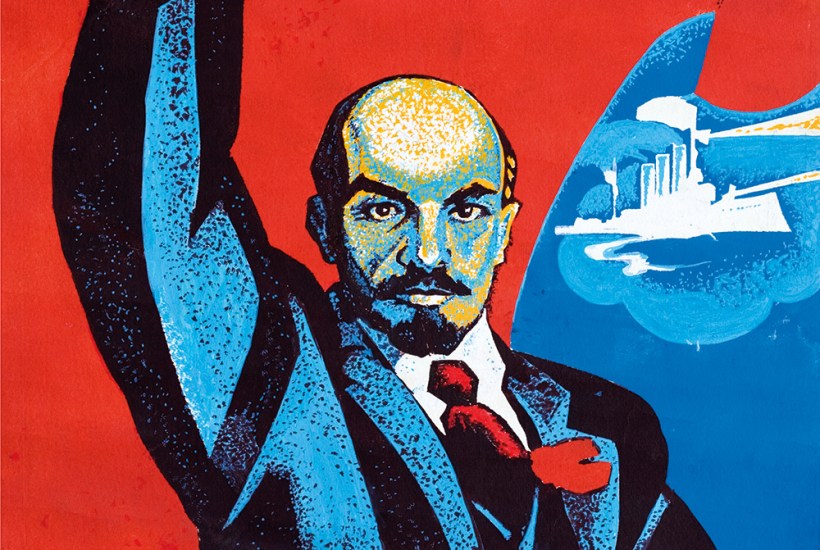
Mason is even better when he moves on to the more serious efforts of Marx and Engels to systemise ‘scientific socialism’, and on the importance of Lenin’s role in outlining the practical steps to build a revolutionary party which would be ruthless enough to take absolute power and keep it. Mason is a man of the left, and his sympathies are clearly with some form of idealised socialism. But he is an honest historian, and the story he tells is of one failed experiment after another, and the infinite corruption of nobly expressed ideals.
His chapters on Stalin’s purges in the 1930s, the postwar sovietisation of Eastern Europe, Mao Tse-Tung’s Great Leap Forward and the Cultural Revolution, and Pol Pot’s venomous rule in 1970s Cambodia – which between them caused the deaths of more than 100 million people – are heartbreaking. Even though the facts are well known they still have the power to shock.
Mason asks the questions that many intelligent, thoughtful, well-intentioned, genuine communists have debated throughout the decades their comrades were in charge: was communism a good idea implemented badly, or always a terrible idea, fatally flawed, implemented as well as it could have been? His heart says the former; his clear narrative the latter. To Mason it all went hopelessly wrong – from the French Revolution, through the Bolshevik coup, to Mao’s Long March to power – the moment the choice was made to create a brave new world at the point of a gun.
A new generation of potential communists might be reminded by Mason that it was the messianic scale of their predecessors’ ambitions that made the failures so vast and shocking. The aim was no less than to perfect mankind and put an end to exploitation of one group of people by another. It was never simply an attempt at building a new economic and social system, but offered an entirely different way of looking at the world and history.
Wherever it was tried, ‘revolutionaries’ encountered a disobliging reluctance of most people to be perfected in the way the comrades envisaged for them. When the public did not know what was good for them, the communists told them. When, annoyingly, they still would not listen, they had to be coerced, terrorised and murdered into understanding what was right. Hence the food queues in places where fertile land was plentiful and the gulags filled with dissidents.
As this excellent book shows, however many millions were killed in the attempt, the communists never managed to create a selfless human being, a homo sovieticus, happy to live in collective harmony. Mason quotes the last leader of the Soviet Union, Mikhail Gorbachev, with an obituary of his state on the last day of its existence in 1991:
Sixteen per cent of the national income went on armaments; another four on the KGB… the country was ruined, the people were kept half starved… And this was called the class approach. If that is socialism it can go to hell.
Got something to add? Join the discussion and comment below.
You might disagree with half of it, but you’ll enjoy reading all of it. Try your first month for free, then just $2 a week for the remainder of your first year.