To lose one Middle East sea lane vital for the global economy may be regarded as a misfortune; to lose both looks like carelessness. As every armchair strategist knows, Donald Trump has lost free passage through one strait: Hormuz. Last week he let another slip from his grasp, Bab al-Mandeb, taken by Tehran’s allies, the Houthis. More than a quarter of the global oil supply could now fall under Iranian control – and Trump’s war is more doomed than ever.
For those confused about Middle Eastern waterways, a look at the map… The Strait of Hormuz, conduit for a fifth of the world’s oil, is east of Saudi Arabia and south of Iran. All the way over on the other side of Saudi Arabia, on its western coast, is the Red Sea leading down to the Bab al-Mandeb Strait. This shipping lane is overlooked by Yemen, home to Ansar Allah, the helpers of God, also known as the Houthis. It has assumed increasing importance ever since President Trump got into such expensive trouble in Hormuz.
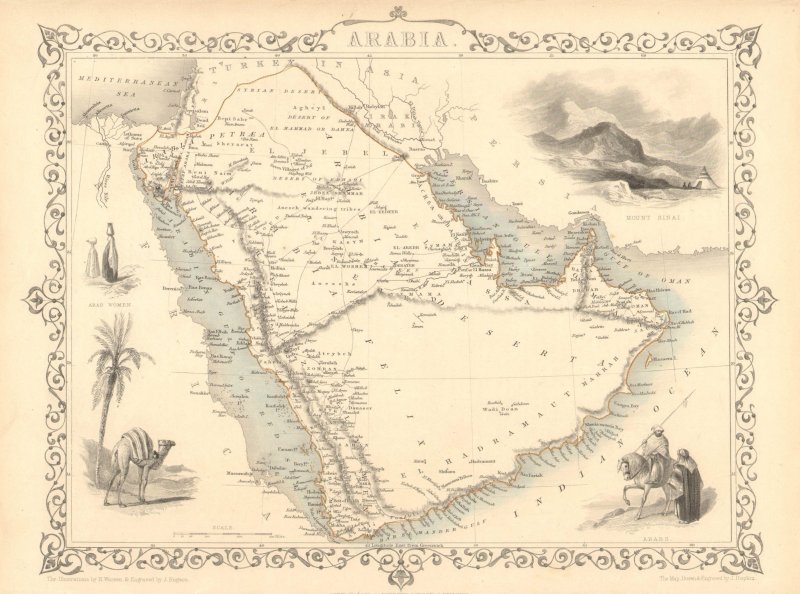 A map of Arabia (1851)
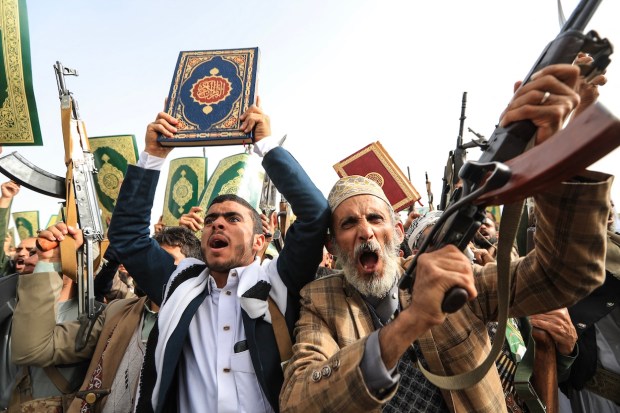
Last week, hordes of Houthi fighters, wearing flip-flops and carrying Kalashnikovs, streamed down from the mountains onto the plains of the Yemeni coast. They took the town of Mocha (from where the coffee gets its name). The upshot is that a single militiaman armed with a rocket-propelled grenade can sit in a deckchair and threaten tankers carrying up to a tenth of the world’s oil. As CNN reported, quoting a ‘regional source’, this was ‘a Saudi-American fuck-up of epic proportions’.
The Saudi ruler, Crown Prince Mohammed bin Salman, called Trump twice to beg for American airstrikes. Trump refused, perhaps remembering the last time he waged an air campaign against the Houthis, to very little effect. (The US reportedly spent more than a billion dollars on bombs and missiles targeting the Houthis in 2025. It could have paid them $50,000 each to go home and would still have saved money.) The Saudis’ own very sophisticated air force was hardly to be seen, either. They may have carried out a few airstrikes, but not enough to make a difference.
The Houthis were supposed to be stopped by the official Yemeni government forces, which had been carefully built up by Saudi Arabia and the United Arab Emirates. But with no air cover to protect them, the government forces collapsed, their soldiers fleeing in disarray across a stony desert.
There were several reasons for the rout. One is that the Emiratis pulled out their ground forces and advisers in January, following a row with the Saudis. Another is that the Yemeni army is a ragbag coalition of different groups at odds with one another. The Houthis – backed by Iranian knowhow – also put out an AI-generated fake recording of the coastal commander ordering his men to withdraw.
But the most important factor was corruption. According to one estimate, only 20 per cent of the official Yemeni strength was real: most of the troops were said to be ghost soldiers, on the payroll but not actually present. There was one perfect detail: the fleeing Yemeni soldiers did not drop their weapons when they ran; instead, they were seen selling them by the side of the road. Perhaps they even sold them to the Houthis.
Government forces were expensively kitted out with American weapons and vehicles by the Saudis and the Emiratis. The Houthis posted a video on X showing row after row of armoured troop carriers and Humvees that now belong to them. One of their commanders was filmed gleefully driving through rush-hour traffic in an MRAP – or Mine-Resistant Ambush Protected vehicle – a towering troop carrier that can protect seven infantry soldiers, but which was being used as his personal runabout.
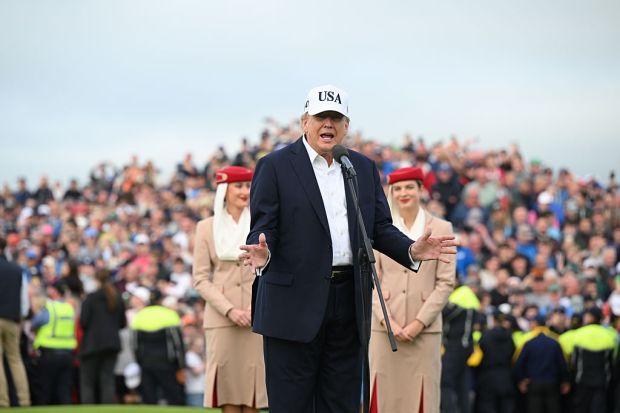
On Monday, the US vice president, JD Vance, said he was in touch with the Houthis to negotiate. That seems desperate. The Houthis are armed and funded by Iran. There’s little reason to think that Vance would get any further in talking to them than he has in talking to Tehran directly about the wider war. On his visit to Dublin, Trump himself said: ‘The Houthis called, and they don’t want to fight with us.’ A Houthi official denied there were any such contacts.
To pile on the bad news, the main east-west pipeline carrying oil in Saudi Arabia was also hit by drones over the past week. That attack was blamed on Shia militias in Iraq – which are controlled by Iran – but could have been the Houthis. Either way, even if the Iranians didn’t precisely orchestrate all this, they benefit.
The 1,200km east-west pipeline carries as much as seven million barrels a day heading to the Red Sea and then up to the Suez Canal or down to the Bab al-Mandeb Strait. As a result, the wire services reported that portside stores of Saudi oil available for export were days from running out, while repairing the pipeline will take weeks. An acute energy crisis beckons. Brent crude is back above $100 a barrel. Prices for consumers are rising.
President Trump has shown he’s prepared to start fires, but not to put them out
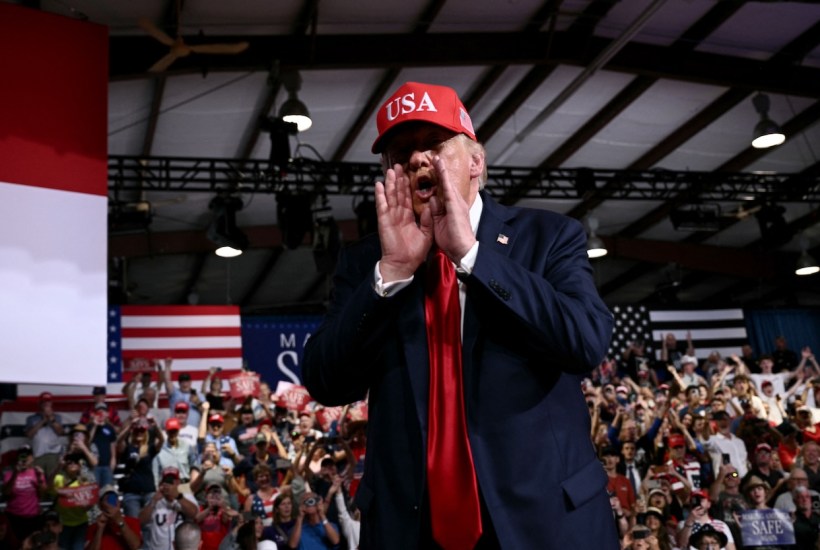
Trump used to campaign on lower gas prices. Now he tells audiences at his rallies that paying a little more at the pumps is worth it to stop Iran getting the bomb. ‘I don’t think they’re demoralised,’ he said of his supporters. ‘I think they’re very proud of the fact that I’m not letting Iran have a nuclear weapon.’ The chances of accomplishing that are fading. From Iran’s point of view, it makes sense to race to achieve a usable nuclear weapon as quickly as possible.
Trump’s MAGA base thought they had elected a president who would keep them out of foreign wars. The opinion polls say that only about three in ten voters back his handling of the Iran war – it’s amazing his support is that high. The Republicans are now expected to lose not just the House of Representatives in November’s midterm elections, but perhaps the Senate as well. Trump faces two years as a lame-duck president, under constant investigation. He will probably be impeached as well.
President Trump has shown he’s prepared to start fires, but not to put them out. The MAGA commentator Tucker Carlson said the Iran war marked the end of the American empire. More modestly, it may be the end of Pax Americana in the Middle East. The Saudis have made a new alliance with Pakistan and Turkey, though so far their new friends have not shown up to help with the Houthis.
Meanwhile, President Xi of China will have noticed that the US is running low on missiles. A former CIA director, William Burns, once said Xi had instructed China’s military to be ‘ready’ to conduct a successful invasion of Taiwan by 2027 (the 100th anniversary of the People’s Liberation Army).
That doesn’t mean Xi will actually send an amphibious army across the Taiwan Strait. But intent often follows capability, and the US has been weakened as well as humbled. The trouble with losing two straits is that someone else may be tempted to try for a third.