We think we’ve heard it all before: a European election heralded as a great victory for the right against open borders and net zero. The conservatives win more votes than any other party. But not a majority. So a losers’ front emerges to lock the winners out of power. Leftist or soggy centrist rule continues. This has happened repeatedly, most recently in Spain, Poland and Austria.
But the 6 September win by the right-wing Alternative for Germany (AfD) party in formerly East German Saxony-Anhalt was different. The AfD won a whopping 43.8 per cent, more than twice its share of the vote at the previous state elections in 2021. For the first time, only three members short of a majority, the AfD could form government. The losers are unlikely to be able to form another blocking coalition.
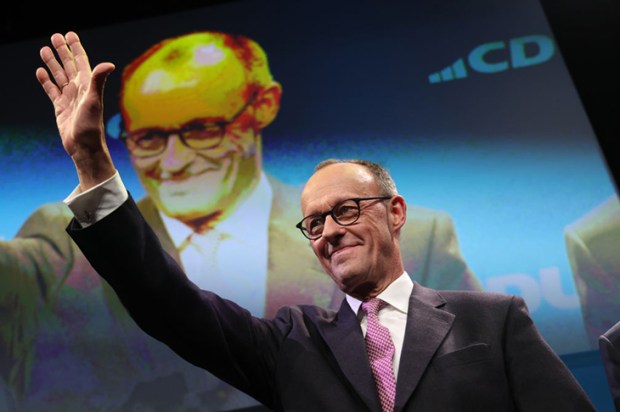
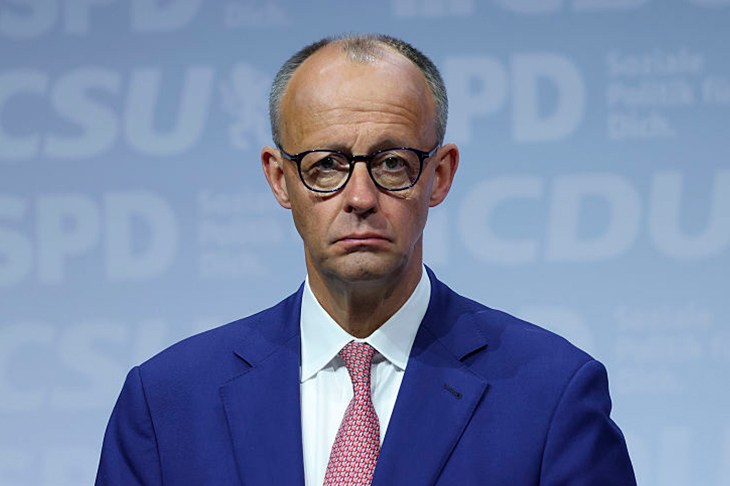
In Germany’s federal election last year, the Christian Democrat (CDU)-led traditional centre right won but fell short of a majority. AfD came second, with the Social Democrats, who led the previous government, third. Because of Chancellor Friedrich Merz’s ‘firewall’ – refusing to work with the AfD – he formed government with the rejected Social Democrats. Merz campaigned right but has governed left-lite – a gift to the AfD.
Germany’s establishment parties long believed the AfD had appeal only among unreconstructed easterners (‘Ossis’). No longer. On top of its win in Saxony-Anhalt, AfD is leading in the national polls. In last year’s national elections, the CDU and its Bavarian sister party the Christian Social Union won with 29 per cent of the vote, to the AfD’s 21 per cent. Latest opinion polls show they’ve swapped positions. And in two further state elections on 20 September – Mecklenburg-Vorpommern and Berlin – the AfD again doubled its vote in both and won the first. The CDU meanwhile everywhere suffered further humiliations.
Angela Merkel can also take much of the credit for the AfD’s rise. Just before she threw open Germany’s borders in 2015 to over a million Third World illegal immigrants, the AfD had the support of only 4 per cent of voters. Asylum-seeker numbers are no longer at catastrophic 2015-16 levels, but they’ve typically remained in the hundreds of thousands annually. About 92 per cent of the 2.8 million who’ve arrived in Germany since 2015 are still there. Asylum-seekers aren’t detained and hundreds of thousands whose claims have failed have been allowed to stay. Merz claims border crossings are now policed but lots aren’t. Many Germans are bitterly angry about all this.
On top of immigration, cost of living is a major factor in AfD support. Merkel’s insane decision to close Germany’s nuclear power industry and the end of Russian gas imports plus Green taxes mean the country rivals Britain for the West’s highest electricity prices. Germany’s historical economic pride, its car industry, is dying because of Chinese competition and pressure to shift to unpopular electric cars. Its biggest company, Volkswagen, plans to axe 50,000 jobs. The economy has barely grown this decade and unemployment, 6.5 per cent, is the highest in ten years.
Much international media coverage of the AfD is useless. The normally sensible Australian commented that victory of the ‘far right’ AfD marked the first time ‘an extremist party’ had gained power in Germany since the fall of the Third Reich. Apparently the Australian hasn’t heard of the East German communist party which during its four decades in power did extremist things like killing 429 of its citizens for trying to escape to the West. AfD policies include ditching the euro, withdrawing from the EU’s passport-free Schengen Area, reintroducing nuclear energy, and ending Green taxes and the phase-out of combustion vehicles. They call for deporting illegal immigrants, offshore asylum-seeker processing and bans on sharia courts, minarets and the call to prayer, and, as in France, Muslim face coverings in public. These policies are right wing, but they’re not Nazi. The AfD wants continued remembrance of the Nazi past, balanced with more focus on the evils of East German communism and positive episodes from German history – such as the 1944 Stauffenberg plot to assassinate Hitler. That’s not something that pleases the Führer’s fans. Nor does the AfD’s choice of leader, Alice Weidel, a strongly pro-Israel Chinese-speaking lesbian in a relationship with a Sri Lankan.
But, while the AfD aren’t Nazis, they have been Putin apologists, opposing military aid to Ukraine and sanctions on Russia. This seems to be fuelled by a desire for: the restoration of cheap Russian gas supplies; a misplaced view that Putin is a social conservative; and – incomprehensible for Westerners – nostalgia among some older former East Germans for the simple certainties of life under communism. Since Russia’s full invasion of Ukraine in 2022, other members of Europe’s right who were soft on Putin – Le Pen, Farage, Geert Wilders – have taken a tougher line. Being nice to Putin isn’t a core issue for most AfD voters, and there’s no real reason why the party might not eventually follow suit.
The AfD’s wins and CDU losses put further pressure on Merz’s ‘firewall’. His dilemma, if he sticks with it, is it leaves him no alternative but coalitions with the left, tarnishing the CDU’s once-conservative brand and surrendering the right-of-centre field to the AfD. Merz has previously accepted parliamentary support from the AfD and, even though he’d face hysterical criticism from the Social Democrats, he might in desperation U-turn and accept the end of the firewall. There’s a good chance the CDU will descend into civil war on how to respond to the AfD challenge and that Merz is on the way out.
The AfD’s win is the latest milestone in Europe’s steady rightward shift. That shift doesn’t exclude occasional reversals – such as the narrow 13 September win by the left in Sweden, a result heavily influenced by its massive support from the huge immigrant population. And yet more big wins for the right may be on the way. In France, unlike Le Pen’s last shot at the presidency in 2022, polling shows her ahead of all three potential rivals to win the deciding second round. That could change and other parties could yet again manoeuvre to block the radical change Europe’s indigenous voters increasingly want. But that task’s beginning to look increasingly difficult.
Got something to add? Join the discussion and comment below.
@markhiggie2
You might disagree with half of it, but you’ll enjoy reading all of it. Try your first month for free, then just $2 a week for the remainder of your first year.