Summer is on its way out and, like almost everyone else in my part of London, we fled the noise of the Notting Hill Carnival – in our case, to enjoy the seaside. I brought four excellent Chardonnays to sip in West Wittering while playing board games and listening to the rain lash against the windows. Autumn is certainly around the corner. And there are some excellent options from across the New and Old Worlds to ease the transition from sunshine to grey.
It would be remiss to consider a nice Chardonnay without first stopping in Burgundy, the home of so many of the greats. We can come to the upstarts a little later. The 2021 Bourgogne Blanc from Jean-Marc Boillot has a little hint of age, a little hint of oak and a little hint of Puligny-Montrachet, but without the price tag. At just over £30 a bottle, it’s good enough to represent a treat without wrecking your bank account.
There are some excellent options from across the New and Old Worlds to ease the transition from sunshine to grey
For a similar oak variety and for just a little more cash (£38), Chateau Du Cray’s Montagny 1er Cru Le Cornevenet is a complex and barrel-fermented Chardonnay produced by a family-owned negociant founded in 1947. Both work well with a friend on a Friday night or on a Sunday with a roast chicken as the evening sets in.
If Burgundy offers that classic Chardonnay hit of oak, then California offers the alternative style which has become more popular. The Fess Parker 2024 Chardonnay from Santa Barbara County, just over an hour north of Los Angeles, is remarkable for the lightness of its oak taste. Creamy, with hints of apple and pear, it’s a wine from the part of the world made famous by the film Sideways. While that led to the sufferance of Merlot and the surge of Pinot Noir, it’s been a boost to fabulous white producers in the region.
An even more impressive Californian Chardonnay is found in Napa Valley and called Tether. I’ve managed so far to avoid using the word ‘buttery’ – but for this one, made by Anna Monticelli, I have to let myself down. A little more expensive – this is approaching £50 a bottle – it’s a scrumptious, almost tropical, Californian option.
Last month, the sudden death of the writer and oenophile Matthew Jukes was a cause of anguish to many, not least to his wife and four children. I never met him but having grown up reading him, watching him on TV and listening to him on the radio, one felt one almost knew him. His book Change the Way You Think About Wine is worth seeking out. As the inimitable Jancis Robinson wrote: ‘The wine world will be immeasurably impoverished without him.’
At just 58, Jukes has gone far too soon. He was also, rather incongruously, a winner of the Producer of the Year at the World Alcohol-Free Awards last year. Seeing the way much of the world was going in drinking less, he set out to create a decent alternative to wine without the sugariness that had always let down alcohol-free drinks. The result was his line of Jukes Cordialities, in red, white and rosé. And to those who feel that all sounds too puritan, he touted the white variety, after a night on the good stuff, as the best hangover cure in the world.
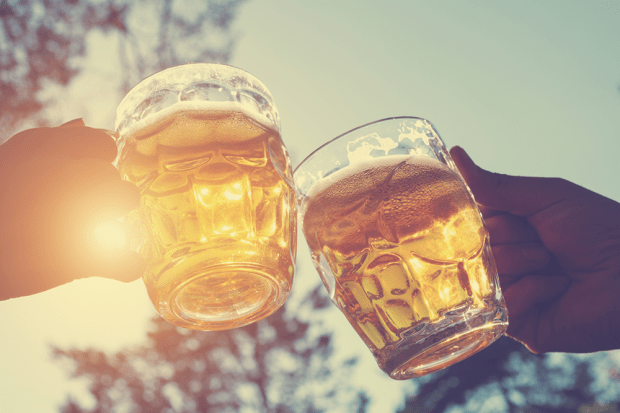
Jukes’s obituaries claim he tasted 40,000 wines a year and held a cellar of nearly 1,000 bottles. But asked to name the wine he would take when washed up on a desert island, he went for an Adelaide Hills Chardonnay. Australia may have been overlooked here, but whether it’s Burgundy, Santa Barbara or the Napa Valley, any of these will taste better when toasted to a great man.
Got something to add? Join the discussion and comment below.
You might disagree with half of it, but you’ll enjoy reading all of it. Try your first month for free, then just $2 a week for the remainder of your first year.