I was hacked by the Chinese a few years ago. Security at News UK, where I was employed on the Sunday Times, told around 20 journalists that our emails had been compromised. An agency of the Chinese state was searching for information on our coverage of Chinese issues, including Beijing’s crushing of Hong Kong and the decision to sanction members of parliament. To be honest, I’d have been pretty offended if I hadn’t been on the list.
Frankly, if the Chinese want to know what I know, they can take out a subscription to The Spectator, just as they could have bought a copy of the Sunday Times. But this is what you expect from the Chinese, isn’t it? The same regime that put a honey trap on one of Gordon Brown’s advisers and stole his phone on a prime ministerial trip to Shanghai a few years ago.
Contempt for the media is ultimately contempt for the public’s right to know
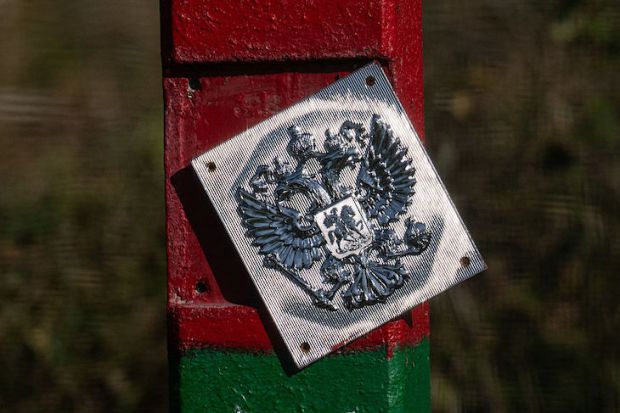
Or the Russians, who handed out power packs and dongles riddled with spyware at summits to the press and Downing Street staff in the hope that anyone was stupid enough to plug it into their computer. On one such trip, everyone in No. 10 duly handed this kit to security, except a former director of communications, who had merrily given it to his kids to use in his home computer.
Or Qatari intelligence, who were so ham-fisted when I covered the 2003 Iraq War for Central Command in Doha that you could hear clicks and voices on the line when I phoned the Express newsdesk each day.
So contempt for the media is what you associate with autocratic regimes. It is disappointing then to see the way disregard for journalists going about their business now grips the UK government, police, security officials and several of those who want to rule over us.
It should not need stating, but apparently it does, that media freedom to expose things which the powerful would prefer to remain hidden is a bulwark of a free society. Scrutiny is good for politics but also for politicians. It makes them better. ‘If you don’t want to read it on the front page of the Daily Mail, don’t do it,’ a former Tory spad used to advise his ministers.
It should not be a huge surprise, given its utterly dire track record in recent years, that the Metropolitan Police does not understand any of this. Which may explain why they spent four months investigating claims of harassment against Jack Grove of Times Higher Education, who had had the temerity to politely ask Jason Arday, Cambridge University’s professor of Walter Mitty studies, to answer a few questions about claims of plagiarism. ‘We dropped the ball on that one,’ Mark Rowley, the Met Commissioner admitted.
Then consider the recent behaviour of some of those on the right who are prominent defenders of freedom of speech when it comes to saying things which upset the left. It was reported last week that Arron Banks, a close associate of Nigel Farage and his deputy Richard Tice, hired a private investigator to look into Gabriel Pogrund of the Sunday Times, arguably the best investigative reporter in the country (and, full disclosure, my friend). Since it emerged that Farage accepted a £5 million ‘gift’ from crypto billionaire Christopher Harborne, Pogrund has exposed donations from Farage’s close associate ‘Posh George’ Cottrell. Pogrund showed, inter alia, that Farage was openly contemplating a return to politics when the money was handed over, which suggests it should have been declared when he became an MP.
Farage was asked about his approach to the media at a press conference on Monday. He said: ‘The relationship between people in politics and the press is potentially a fractious one. I have always taken the view that you shouldn’t moan too much because it’s like a sailor complaining about bad weather, and you take the rough with the smooth.’
He went on to complain about his family being ‘put through hell by irresponsible journalism’. Fair enough. All politicians hate their families being asked questions, but those questions wouldn’t even have arisen if he had heeded the advice of that former spad.
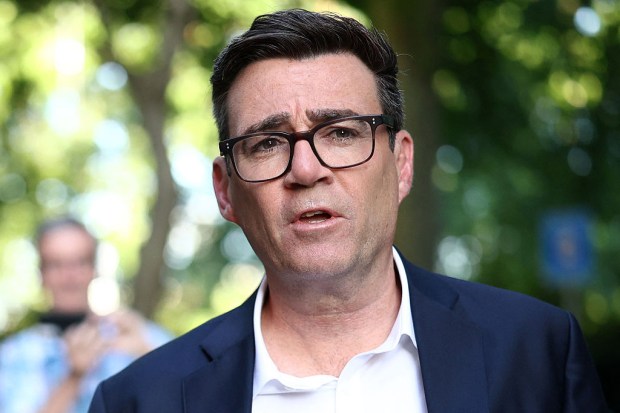
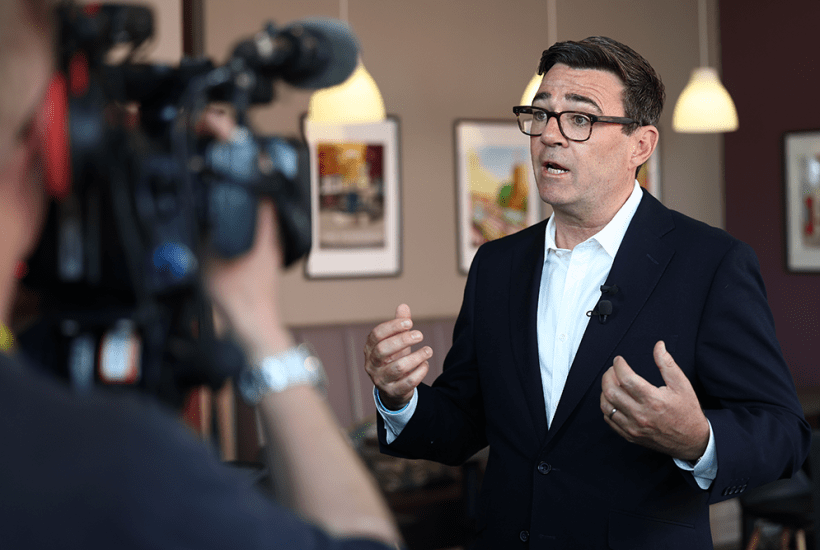
Contempt for the press is a virus not confined to wannabe leaders. Andy Burnham seems to prefer communing with the public through TikTok than by doing media interviews. He does this well, but it is worth saying that we have had a succession of prime ministers selected by their parties without much public scrutiny and we might have had more success picking a random person out of a bus queue.
The virus is also infecting Whitehall. Another reporter I know, who wrote something embarrassing about a former prime minister, was warned that his phone had been hacked – and not by the Chinese. Security sources say British intelligence doesn’t generally target British journalists, just as the spooks aren’t supposed to target MPs. But a source confides that if the powers that be want to go after you ‘they get a friendly agency to do it instead’. This is code for getting America’s NSA to do what GCHQ should not. Is this really how we want to proceed? The Cabinet Office, of course, does not comment on security issues.
It is not just journalists who are treated like this. MI5 told former employee James Wolff, one of Britain’s best new spy writers, that he could not ‘reveal’ that GCHQ is located in Cheltenham in his latest novel – a fact present in every report ever written about the listening station.
I realise a lot of the public hate the media, particularly those of us who are judged to be ‘mainstream’ (which broadly translates as ‘experienced’). Nevertheless, pretty much every scandal to engulf our last five premiers has come from old-fashioned reporting – mostly by the print press. Contempt for the media is ultimately contempt for the public’s right to know.
Richard Hermer, the former attorney general, is hardly most Spectator readers’ favourite political figure. But at last year’s Parliamentarian of the Year Awards, where he was crowned peer of the year for his outsize influence over the Starmer government, he said that one of the planks of human rights he most cherished was ‘freedom of the press’ and The Spectator’s ability to write ‘disobliging’ things about him. If he gets it, is it really too much to ask that the police and politicians get on board too?
Got something to add? Join the discussion and comment below.
You might disagree with half of it, but you’ll enjoy reading all of it. Try your first month for free, then just $2 a week for the remainder of your first year.