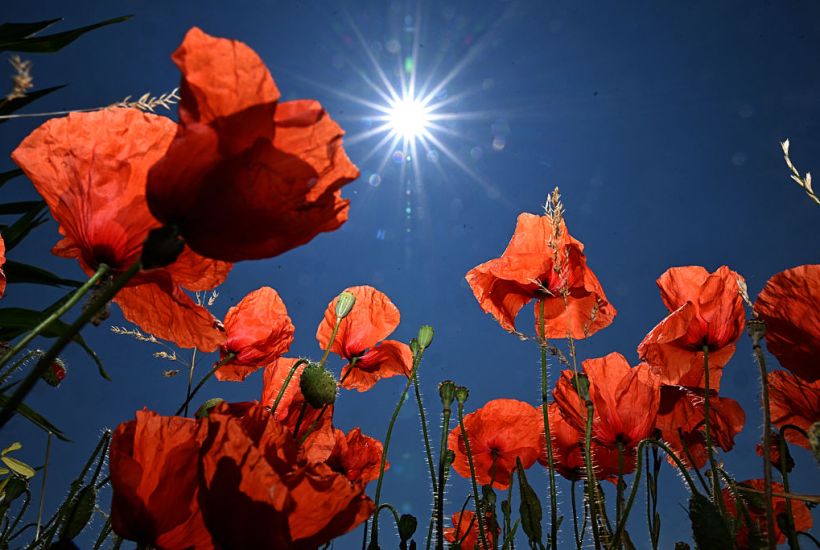
Writing in the Daily Telegraph James Morrow pointed out that the Albanese government suffers from ‘tall poppy syndrome’– dividing the world in ‘workers’ (good) and ‘investors’ (bad). The changes to negative gearing and capital gains tax seemed designed to hurt anyone who has worked hard all their lives in order to invest a little to provide for the future. Morrow writes: ‘Albanese’s appeals to the worst elements of Australia’s old tall poppy sentiments fit squarely into this frame.’ This whole ‘tall poppy’ language is certainly ours – it is an Australian coinage. It first appeared in print in 1841 in a Victorian newspaper (the Portland Guardian published in the city of Portland on the far south-west coast of Victoria). I had a talkback caller on my radio show claim this expression is not Australian at all – it goes back to ancient Rome, he said. The truth is that the last king of Rome, Tarquinius Superbus, did have a policy of weakening a captured city by slaughtering its leading men. But this was never labelled as anything to do with ‘tall poppies’. However, the journalist, or editor, who wrote the story in the Portland Guardian all those years ago may well have known the story of Tarquinius and had this in the back of his mind when he wrote about how ‘tall poppies’ were treated. But the compound noun ‘tall poppy’ definitely remains an Australian coinage. The longer expression ‘tall poppy syndrome’ is much later, but it is also ours – coined in 1979 to mean disparaging and denigrating successful people. This had to be a much later coinage because ‘syndrome’ was not applied to a combination of opinions and behaviour until around 1955. By the way, Tarquinius was the last king of Rome because his behaviour was so horrific it provoked the rebellion that created the Roman Republic. Let’s hope all oppressive governments crumble in much the same way!
Got something to add? Join the discussion and comment below.
Contact Kel at ozwords.com.au
You might disagree with half of it, but you’ll enjoy reading all of it. Try your first month for free, then just $2 a week for the remainder of your first year.