The death of that fabled cricketer Sir Garfield Sobers – one of the greatest all-rounders who ever lived – is a reminder of the zenith of prowess a sportsman can achieve. And of course with Sobers it went far further than that. The 1960–61 Test series that pitted the West Indies against Australia was a touchstone moment for Australia. Children sat in the darkness in front of a house with a television set broadcasting for the neighbours, eating their icy poles as their elders said these were the greatest opponents Australia had ever encountered, they were blood brothers of the Australians because they played to win which was another way of saying that they played the game for its own sake.
You didn’t have to be a cricket fan to feel the spellbinding effect. It was only a handful of years since the Melbourne Olympics had made the White Australia policy seem like a bad joke – and the comradeship with the West Indians consolidated this because it partook of the gallantry of great sportsmen who saw themselves as equals.
Not that there’s any obligation to love the cricket. The poet and editor Peter Rose – the son of the great Collingwood coach Bob Rose – said once to that exquisite individualist Robert Dessaix that his great dream would be to see a whole Test series, game by game, city by city. Robert, a man who is very much master of his own magic, said, ‘I’d rather have an operation.’ Opposed positions, but there are plenty of readers who swear by both Peter’s The Rose Boys and Robert’s Night Letters.
The question of whether a sports hero could equal an artistic performer is an old one. Think of Dawn Fraser at the height of her powers, think of Cathy Freeman. Aren’t these fabulous performances that would equal those of an actress like Meryl Streep or Katharine Hepburn?
Well, C.L.R. James, the great West Indian sportswriter, argued yes. You could take a great cricketer, a Bradman figure, and say he was the equal of John Gielgud in a great Shakespearean role. Why? Because the risks and the achievements are so parallel and the awe they inspire is comparable. What James was less sure about was whether the game could be about anything, whether an innings, however sublime, could carry meaning the way a play does. Would either be true of a couple of great comedians, let’s say Peter Cook and Dudley Moore at the height of their powers?
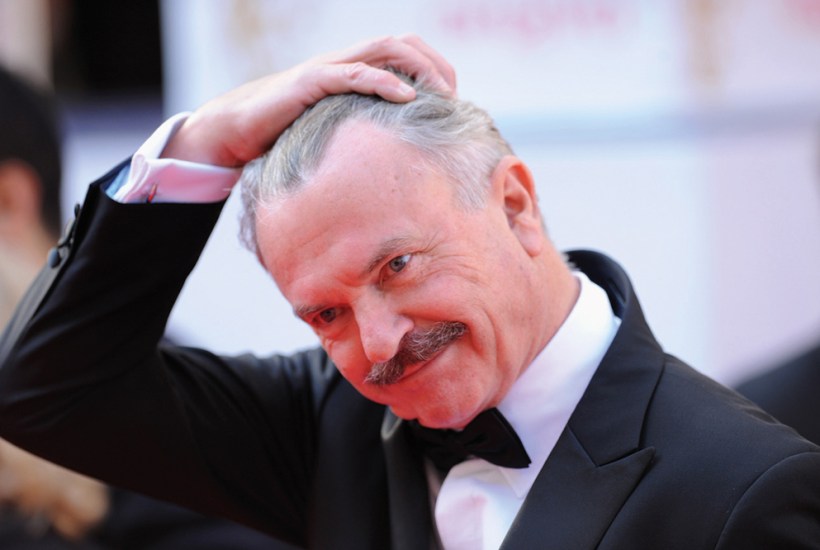
Sam Neill directed one of the television versions of Shane Maloney’s Murray Whelan detective novels – The Brush-Off – and despite the fact he had made significant documentaries for New Zealand television, said that he was appalled by the buck-stops-here aspect of directing. It wasn’t that he couldn’t do it, it was the nerve-racking aspect of having to.
Meryl Streep is an actor who doesn’t have many peers, and in Fred Schepisi’s Evil Angels, the film of John Bryson’s account of the Lindy Chamberlain case, she is extraordinary – and Sam Neill plays her husband Michael Chamberlain with a brilliant histrionic sympathy for his star. Streep is an abundantly talented actor – watch her in Mike Nichols’ film Angels in America if you’re in any doubt – but she was attacked, in Australia, for sounding rather Kiwi-ish when she declared, ‘A dingo took my baby!’ In fact, the accent was absolutely accurate and Sam Neill – with his very attractive high antipodean accent, not quite British to imperial ears – defended her staunchly.
The attack on Streep’s accent was a bit like a miniature version of the verdict in the lunatic trial. Robert Richter said of the George Pell trial that it was only paralleled by Lindy Chamberlain, meaning an inexplicable, indefensible miscarriage of justice. The judge, Muirhead, had summed up in Lindy Chamberlain’s favour, John Harber Phillips – a nervous Collingwood supporter – was so confident that she would be acquitted that the future Chief Justice of Victoria ordered crates of champagne. This was the man who wrote a book about Ned Kelly in which he said whatever was responsible for the death of the bushranger, it was not the rule of law.
If you want a relaxing but riveting example of Sam Neill’s skill as an actor who can don the silk of the Bar, try the three seasons of The Twelve, especially the first two. The one with the most brilliant and serpentine plot is the first one, with Kate Mulvany, in which a woman is accused of killing a girl in her charge but there’s only circumstantial evidence and no body.
But the most glittering season of The Twelve is the second one, with Frances O’Connor as Sam Neill’s barristerial opponent. Whether in intimacy or with rapier-like drama they testify to the fact that high Australian can be one of the most attractive accents on earth, magnetic and without the flaws of our American and English cousins. Sam Neill insisted on his right to find the right accent in The Hunt for Red October, the submarine film with Sean Connery as Scottish as he chose.
It is interesting how famous films become quarries for re-interpretation. Just at the moment we’re engrossed by AppleTV’s Cape Fear, with a riveting Javier Bardem in the Robert Mitchum role. It’s easy to forget how much our intimacy with actors – and with film and television in general – shapes our perceptions of the world. Robert Mitchum was the greatest of the Philip Marlowes who impersonated Chandler’s hero and he is also the genius of an actor who did Charles Laughton’s The Night of the Hunter, one of the greatest pieces of American dramatic art, something that might have been dreamt up by Mark Twain in a dark and lyrical mode. Those fingers, one marked love, the other hate, the place where dreams clash.
Last week also saw the death of Giorgia Moll, who was in a film that is itself a quarry: arguably the greatest of Jean-Luc Godard’s, Le Mépris (Contempt) – which has Brigitte Bardot, Jack Palance and that great director Fritz Lang as himself. And what’s he directing? You guessed it, a film of The Odyssey.
Got something to add? Join the discussion and comment below.
You might disagree with half of it, but you’ll enjoy reading all of it. Try your first month for free, then just $2 a week for the remainder of your first year.