National cultural institutions are entrusted with preserving a country’s historical memory. When they lose sight of that mission, the consequences extend far beyond the gallery walls.
In a powerful essay for the Weekend Australian, art historian Christopher Allen argues that the National Portrait Gallery has relegated many of the historical figures who shaped the nation in favour of exhibitions organised around contemporary themes. His charge is not simply that important portraits have been taken off the walls, but that the gallery is no longer presenting Australians with a coherent visual account of their own history.
The National Portrait Gallery, or NPG as it is also known, was conceived very differently. Established under the Howard government in the late-1990s, with then arts minister Richard Alston playing a leading role, it owed much to the vision and generosity of the Victorian philanthropists Gordon and Marilyn Darling.
The gallery’s founders understood that a national portrait gallery was more than an exhibition space. It was a place where Australians could encounter the men and women who shaped the nation’s story – from the colonial era through Federation in 1901 and into modern Australia.
That understanding appears to have weakened over time. The contemporary Gallery gives greater prominence to Indigenous Australians and other groups, such as the LQBTQ lobby, that were historically under-represented.
Nothing inherently objectionable about that. Indeed, a national institution should strive to tell a richer and more inclusive story of Australia. The problem arises when expanding the narrative comes at the expense of historical continuity.
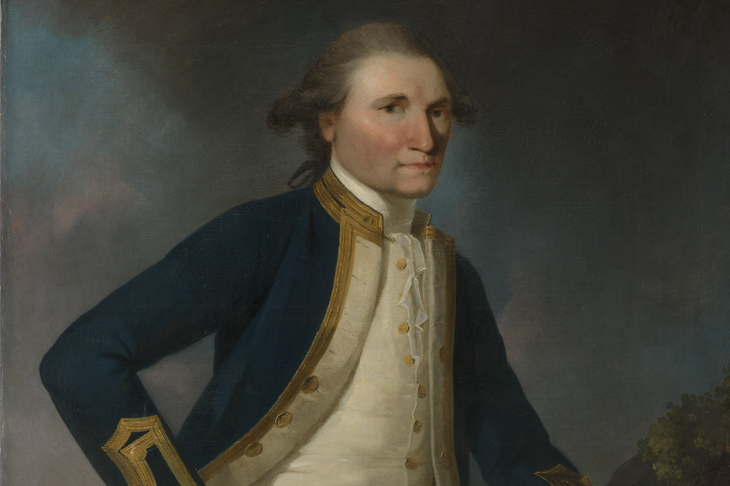
As Allen observes, visitors can now walk through the gallery without encountering many of the figures who defined our first century and a half after the First Fleet’s arrival in 1788. Instead, exhibitions are increasingly organised around contemporary themes rather than historical significance. The result, to put it mildly and politely, is a gallery that tells a fragmented story of the nation rather than a coherent one.
The latest edition of Portrait, the NPG’s magazine, illustrates the shift in emphasis. Its centrepiece is a glossy eight-page profile of a drag queen named Courtney Act. The question is not just whether this puff piece about a performer amounts to popular culture, but one of balance. Is this the sort of editorial priority the gallery’s founders envisaged? Does it reflect the breadth of Australia’s national story?
The change has not gone unnoticed. I am reliably informed that at least one long-standing philanthropist has withdrawn support for the gallery because he believes it has drifted from its original purpose.
After all, a national cultural institution, far from primarily reflecting the concerns of the present, should preserve and explain the inheritance of our past. It should not seek to diminish that historical inheritance, but to present it in a way that invites curiosity rather than indifference.
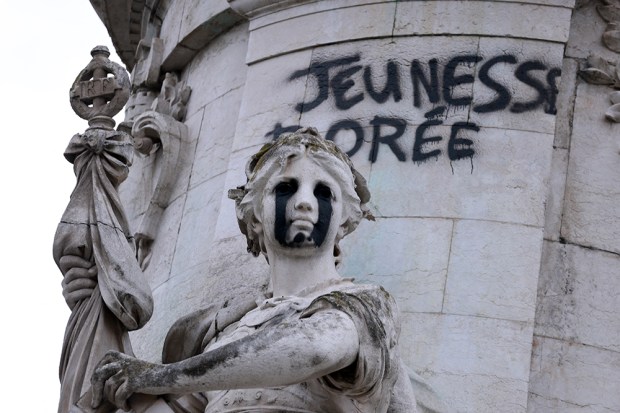
None of this will come as a surprise to readers elsewhere in the Anglosphere. In Britain, as in America and indeed much of Europe, galleries and museums have increasingly manipulated their exhibitions to reflect contemporary political ideology rather than historical significance. The only surprise about what has happened in Canberra is that it took so long.
Take Britain’s National Portrait Gallery, where the choice of portraits of those within living memory generally avoids any controversy. There is a greater emphasis on people of colour, on women and on figures from popular culture than on prime ministers and prominent intellectuals and thinkers.
The version of the past increasingly presented by the NPG – and by many British galleries too – is essentially a sanitised one. Historical figures associated with colonialism, slavery, pre-Federation Australia or views now regarded as racist are often either omitted from prominence or accompanied by explanatory notes – or health warnings — inviting visitors to judge them through the lens of contemporary moral values.
The underlying assumption is that gallery-goers cannot simply encounter these figures as products of their own age, appreciate the portraits as works of art, and then make up their own minds by reading further.
Instead, exhibitions are increasingly being repurposed to advance a moral, political or ideological interpretation of history, rather than allowing visitors to draw their own conclusions.
Professor Simon Heffer, one of Britain’s leading historians and art connoisseurs, highlights the National Trust (NT), which cares for hundreds of the UK’s historic houses and collections. Following the death of George Floyd in 2020, the NT increasingly sought to reinterpret Britain’s past through the prism of slavery, colonialism and race.
In Heffer’s view, the result has been a tendency to judge historical figures less by the standards of their own age than by those of ours, often blurring important distinctions in the process. The NT’s approach reflects a broader intellectual trend across British cultural institutions: the belief that museums, galleries and historic houses should not merely preserve the past but actively reshape public understanding of it.
Australia has not followed Britain’s path to the same extent. But the direction of travel is unmistakable. A moderate and liberal-minded free society such as Australia should not tolerate it.
The National Portrait Gallery can tell a fuller story of Indigenous Australians, migrants and contemporary Australia without forgetting the explorers, governors, scientists, artists and political leaders who shaped the nation. A mature country should be capable of doing both.
Got something to add? Join the discussion and comment below.
You might disagree with half of it, but you’ll enjoy reading all of it. Try your first month for free, then just $2 a week for the remainder of your first year.