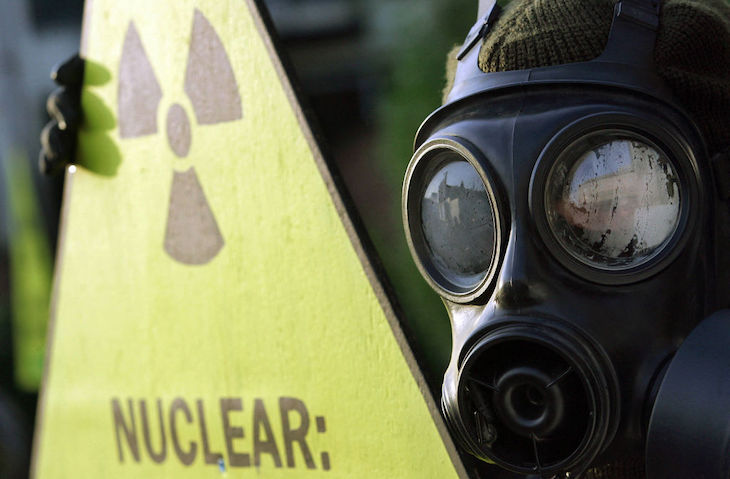
It was 20 years ago last month that the then Prime Minister Tony Blair announced that nuclear power was “back on agenda with a vengeance”. His white paper proposed to generate 40 per cent of Britain’s electricity in this way, double the proportion then made up by nuclear. It was on the advice of the then Chief Scientific Adviser, David King, who saw nuclear power as a big part of the battle against climate change.
The company has already spent £700 million on measures to reduce its impact on wildlife, including a ‘fish disco’
Two decades on, an alternative scenario is beginning to look more and more likely: that Britain will have to spend a few years, at least, with zero nuclear power. The latest snag in Britain’s strangled nuclear renaissance is a demand that EDF, the developers of Hinckley C nuclear power station, the first to be built in Britain for more than three decades, create new areas of salt marsh to counter the plant’s effects on the local fish population.
The company has already spent £700 million on measures to reduce its impact on wildlife, including a ‘fish disco’ – an acoustic deterrent which government review last year estimated would save precisely six lamprey, 0.083 salmon and 0.028 sea trout per year. But now Natural England – the government’s nature quango, with significant powers over the planning system – has reportedly put pressure on Hinkley to buy up large areas of farmland fronting the Bristol Channel and flood it in order to create new habitats for fish and birds. The nuclear plant, it seems, will not be allowed to operate until it has done so.
This will very likely push back Hinkley C’s opening date still further. You cannot create salt marsh in an instant. EDF, the French developer of the project, originally boasted that we would be cooking our Christmas turkeys with electricity generated by the plant in 2017. It has already been pushed back to 2030 at the earliest, thanks to problems with the design: EDF’s other European Pressurised Reactor (EPR) projects in Finland and Normandy also suffered severe delays. If Hinkley’s opening date gets delayed another five years that will put it beyond the projected closure date for Sizewell B, the last nuclear plant to be opened in Britain, in 1995. It will also put it well beyond 2030, the date by which Ed Miliband, the Energy Secretary, has promised to decarbonise Britain’s power grid. Given that Hinckley is supposed to generate at least seven per cent of Britain’s power, this is a serious impediment.
Miliband will no doubt try to blame nimbys and ‘climate deniers’ when he fails miserably to deliver on his promise. But the far greater threat to his plan comes from environmentalists: not just the ones who are demanding new salt marshes near Hinkley and who have opposed other nuclear projects, but the ones who blocked proposals for tidal barrages and lagoons in the Severn.
There is an inherent tension between the demands of decarbonisation and other environmental issues, but this is seldom acknowledged. There are large numbers of people and organisations who are all for green energy in theory, but who are bitter opponents of it in practice. It has been entertaining to watch as Green MPs oppose new pylon lines required to feed wind and solar energy around the grid, and as Lib Dems turn into staunch opponents of solar farms in their own backyards.
Given that the government has promised to reform the planning system to reduce the ability of environmental concerns to undermine what it sees as critical national infrastructure projects, it might just be added that this would not have been possible without Brexit. The all-powerful EU Habitats Directive has been responsible for squashing or delaying many an infrastructure project across Europe. Ministers – every one of whom campaigned for Remain – may care to reflect that they are only now able to reform the planning system thanks to Britain no longer being bound by it.