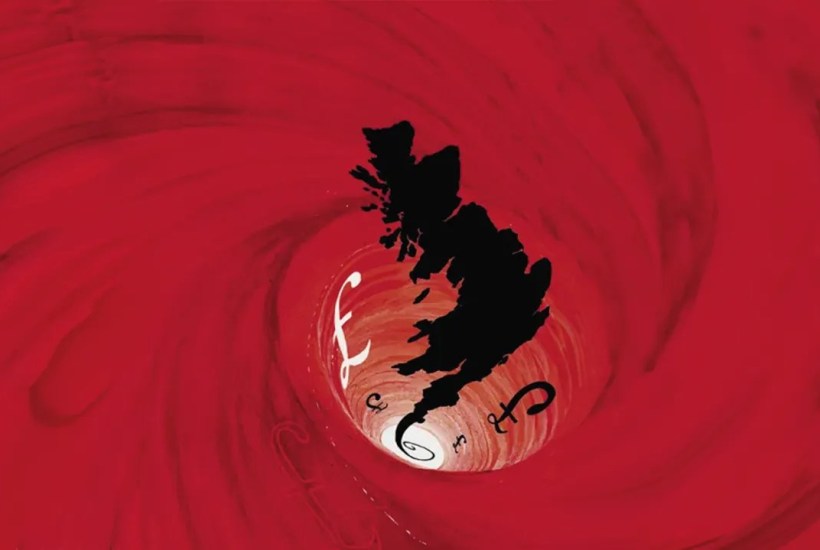
This has been an abysmal decade for Britain. Even if you are sanguine about the economic impact of Brexit, which the public voted for ten years ago today, you cannot argue it has ushered in an era of triumphant governance. There has been policy distraction, endless leadership churn and a huge decline in political trust. As a country, we are poorer and therefore angrier than we were a decade ago.
I’ve lost count of the number of conversations I’ve had, on the left and right, where everyone has nodded about the problem of the triple lock, then proceeded to argue for it publicly
Given all this, it is unsurprising that the voters of Makerfield voted for Andy Burnham. In focus groups he represented hope – not so much for a different future but for a return to a nicer past. Reform represents the same, though through the lens of immigration and crime. People want to get back to what things felt like a couple of decades ago, because in tangible and intangible ways life felt better then.
That is jarring to write. For my whole life, and probably yours too, we have assumed that we would do at least as well as our parents, and our children would do better than us. Individual circumstances might intervene, but if we did the right thing by our family, they would thrive.
No longer. In a report for the Prosperity Alliance – a coalition of FTSE chairs and civic leaders to help drive growth – we have looked at specific outcomes for people in the UK in the last few decades: where they live, their age and their earnings.
The most shocking thing we found is that someone turning 30 this year is earning 7 per cent less in real terms than a 30-year-old 20 years ago. A pensioner, meanwhile, is earning 6 per cent more. And that’s before you get to a current 30-year-old’s pension (which is likely to be much worse) or current rates of home ownership (well down) and taxation (well up).
This goes beyond stagnation – it is active decline. Twenty more years of this, and I would be genuinely surprised if our democracy survived.
Every politician, policy maker, commentator and business person I know is worried about this. Over lunch, we talk about our children’s futures and we are frightened. We work hard to try and help our children. We save for them. We’d happily die for them – jump in front of a train, or wrestle wild bears for them. But we refuse to make the big generational choices that could make their lives better.
I’ve lost count of the number of conversations I’ve had, on the left and right, where everyone has nodded about the problem of the triple lock, then proceeded to argue for it publicly. Where we’ve shared worries about the amount of money the NHS is soaking up, when we don’t have the money to pay for it and it will have to come from more taxation on the young, with more borrowing they will shoulder. Where we’ve shuddered at the mounting bills for HS2, or for nuclear power plants, and watched housing development in London crash through the floor, but still not felt able to act.
I’m complicit, of course. I don’t want to exaggerate my importance in the political world, but I’ve written policy documents; election pledges and promises on funding I didn’t think our children could afford.
Why does this happen? Often, we blame the public. We assume all arguments are doomed before making them. And it is true that the public do not understand the extent of the problem. They care deeply for their children and grandchildren, but are unaware of what we are bequeathing them. They are understandably sceptical about whether ‘growth’ will help them personally, and they see waste wherever they look – whether it’s from HS2 or asylum hotels. They assume that the lack of improvement is down to simple incompetence or malice on the part of politicians rather than an unwillingness to articulate and make hard choices.
But I am convinced we can do better. Plenty of economic resets have been achieved in the past, and difficult choices were made. Hate or love them, Thatcher’s policies in the 1980s, Blair’s public service reforms and Cameron’s austerity in 2010 were difficult choices, argued to a public willing to accept some pain and controversy. It is perhaps why they lasted, in the end, longer than more recent prime ministers.
We can’t leave it too late. An election campaign is not a good time to introduce hard truths. They must be explained and argued over years. If we do not start now, I dread to think what inheritance we will leave behind.
Burnham’s political strengths include communication and empathy, and the ability to inspire optimism; Badenoch is developing a deserved reputation for intellectual clarity and honesty; and Farage wishes to upend our system and replace it with a better one. I hope that they can, between them, find the courage to say what they all, and we all, privately know to be true about what is required to leave the next generation better off than the last. Or God knows what our children will end up saying about us.